Blog

  • To get latest updates please click: mypeoplesreview.com

    To get latest updates please click: mypeoplesreview.com

    Our site visitors are requested to click <mypeoplesreview.com> to get the latest updates. 
     

  • PM Oli’s China visit, much talks but unclear agendas

    PM Oli’s China visit, much talks but unclear agendas

    By Our Reporter

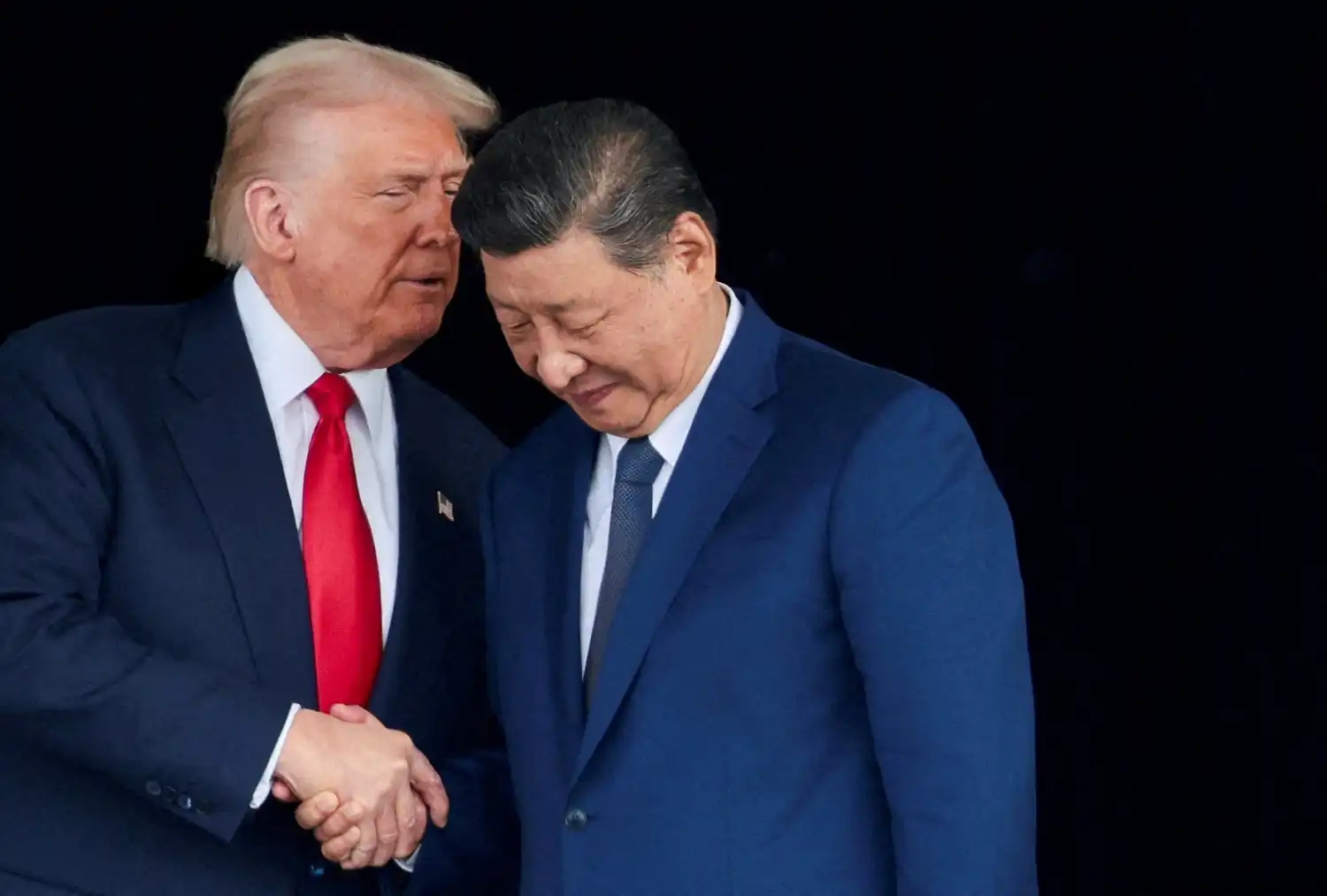
    Prime Minister KP Sharma Oli is flying to China on an official visit next month after his attempt to visit India failed.

    As PM Oli is visiting China prior to India, which is a breach of tradition, his proposed visit has been one of the much-talked-about issues in Nepal.  When the government has not made public the agenda the PM will discuss in China, nor has he held any consultation with diplomats and experts by the time this story was prepared. Yes, he has discussed the issue in his party and with the representatives of the Chinese companies in Nepal.

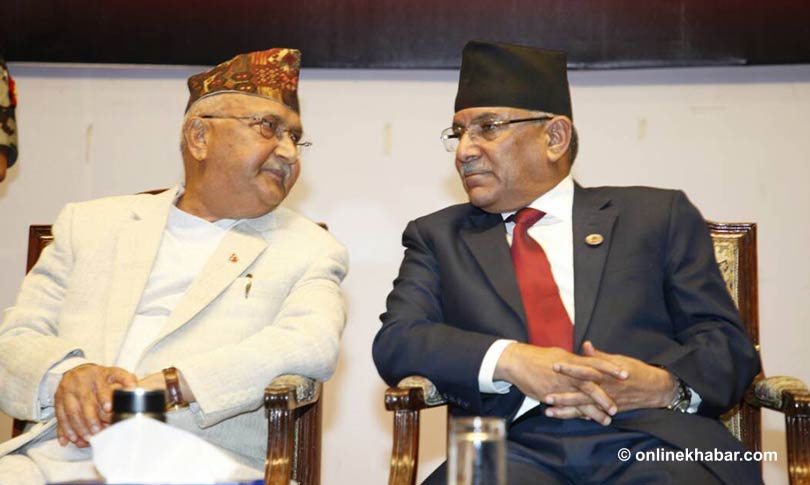
    Instead, his visit has also been dragged into controversy by Maoist Chairman and former Prime Minister Pushpa Kamal Dahal. In an interview with ‘The Hindu’ an Indian English daily, on November 14, Dahal said that PM Oli was trying to use a ‘China Card’ and labelled the proposed China visit as a ‘proof of immaturity’.

    A former Prime Minister should not have made such a comment on the foreign affairs issue. Prime Minister’s party CPN-UML has condemned the comments of Dahal by issuing a statement in English language stating that  Dahal’s remarks were baseless, irresponsible, and deeply damaging to Nepal’s sovereign image and foreign policy.

    Although it is unfortunate that Nepali leaders lack uniform views on the country’s foreign policy and the country’s performance in the diplomatic sectors has been weak over the years, the comments also reveal the enmity between the chairmen of the two communist parties of Nepal.

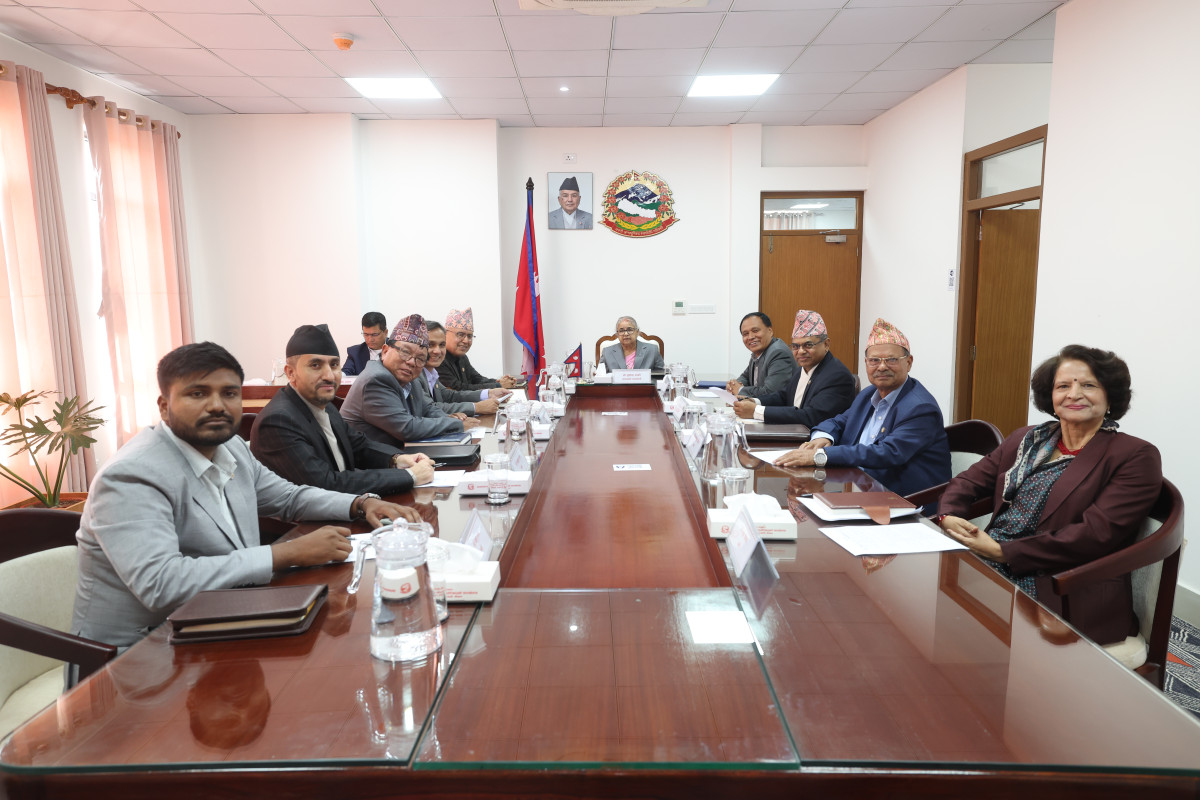
    As the date for the visit is nearing, it is not still clear what issues the Prime Minister will discuss with the Chinese leaders. It has already been seven years since Nepal inked the BRI with China, but no project under it has been implemented. Even the agreements inked during Chinese President Xi Jinping’s  Nepal visit in October 2019 have not come into effect. As such, PM Oli may ink further agreements to push forward the projects under the several agreements. However, the ruling Nepali Congress and the CPN-UML have not developed uniform views on implementing the projects with NC outright rejecting to build projects with loans from China. NC wants only grants, and the government in which the Finance Minister was from the NC, could do nothing to initiate any process to implement any BRI projects. Now Oli has formed a high-level political mechanism before his China visit and Foreign Minister Arzu Rana, who is the wife of NC chief Sher Bahadur Deuba, is given the responsibility of making preparations for his visit. Still, it is uncertain what issues he will discuss and what projects he will bring from the northern neighbour. Earlier, former Foreign Minister Narayan Kaji Shrestha had made preparations to implement the BRI project, but the government collapsed.  As the present government is a coalition of NC and UML, PM Oli cannot do anything going against NC, which is against taking loans from China under BRI. Therefore, it is not sure whether PM Oli’s visit to China will be successful in convincing the Chinese establishment.

  • Finance Minister’s worry for failing to meet revenue target

    Finance Minister’s worry for failing to meet revenue target

    By Our Reporter

    Deputy Prime Minister and Finance Minister Bishnu Prasad Paudel seems worried about the poor revenue collection.

    It is evident from his frequent instructions to the concerned government officials to carry out their works effectively to collect tax as per target.

    Addressing a programme organised on the occasion of the ‘National Tax Day, 2081’ recently, he said that the performance of the Inland Revenue Department and the subordinate offices must not be slow off the mark. Minister Paudel also expressed dissatisfaction over the performance of the Department and its subordinate bodies. “Be more serious to achieve revenue target,” Paudel said.

    The Minister’s concerns look relevant considering the revenue amount collected in the first four months of the current fiscal year. Only around Rs. 323.27 billion has been collected in the first four months of the current fiscal year 2024/25.

    According to the daily report of the Financial Comptroller General Office under the Ministry of Finance, the revenue collection of the government stands at Rs. 323.27 billion which is 22.78 per cent of the annual target (Rs. 1,419.30 billion).

    Out of this, tax revenue stood at Rs. 289.92 billion or 22.58 per cent of the target and non-tax revenue stood at Rs. 33.35 billion or 24.69 per cent of the annual target.

    Of the total revenue collection target of Rs 1,419.3 billion, the target has been set to collect Rs. 1,284.2 billion under tax revenue and Rs. 135.09 billion under non-tax revenue in the current fiscal year.

    However, revenue collection has increased by 16 per cent during the first four months of the current fiscal year as compared to the same period last fiscal year 2023/24. But it is not enough to meet the increasing expenditure.

    During the review period of the current fiscal year 2024/25, no grant amount was received.

    The government has set a target to receive Rs. 52.32 billion in grants in the current fiscal year.

    However, the government has obtained Rs. 5.77 billion under other recipients in the first four months of the current fiscal year.

    During the review period, the total income of the government stood at Rs. 329 billion. This is 22.36 per cent of the annual receipt target of the government.

    During the review period, the government has spent around Rs. 415 billion. The government is in deficit in the first four months of the current fiscal year due to higher expenses than the total income.

    The government budget is in deficit of Rs. 86 billion during the review period. During the review period, there has been a deficit in the budget due to less revenue collection than the target.

    The government has spent only 22.31 per cent budget in the first four months from the total budget of Rs. 1,860.30 billion for the current fiscal year.

    Of the total budget expenses, capital expenditure stands only at 9.8 per cent of total allocation in the first four months of the current fiscal year.

    Of the Rs. 352.35 billion allocated under capital expenditure, only Rs. 34.53 billion has been spent by November 16, 2024.

    The recurrent expenditure of the government stood at 25.65 per cent (Rs. 292.52 billion) during the review period. The government has allocated Rs. 1,140.66 billion under the heading of recurrent expenditure for the current fiscal year.

    Likewise, the government has spent Rs. 87.96 billion under the heading of financing in the first four months of the current fiscal year.

  • By-elections a test on political parties’ popularity

    By-elections a test on political parties’ popularity

    By Our Reporter

    The local level by-election for 44 positions of 34 districts has begun with 410 candidates registering their nominations on Sunday. The by-election is taking place on December 1.

    Of them, the chief of the Okhaldhunga District Coordination Committee was elected unopposed.

    Nomination registration of the candidates was completed peacefully, the Election Commission (EC) said on Sunday night.

    Of 410 candidates, 289 are party candidates and 121 independent candidates.

    According to the EC, candidacy nominations were registered for various posts across multiple districts, including two female candidates for the position of Kailali District Coordination Committee chief and one male candidate for the post of Okhaldhunga District Coordination Committee chief. NC candidate was elected unopposed in Okhaldhunga.

    For eight vacant posts, including chairs and deputy-chairs of rural municipalities and a mayor and a deputy-mayor of two municipalities, a total of 84 candidates—35 women, 48 men, and one from the ‘other’ gender category—registered their nominations.

    Similarly, a total of 323 nominations were filed for 34 vacant posts of ward chairs in rural municipalities and municipalities. This included 29 women, 293 men and one ‘other’ candidate.

    According to the EC, Dhanusha District’s Dhanushadham Municipality Ward-1 saw the highest number of candidates, with 21 individuals contesting for the post of ward chair while only three candidates each filed nominations for the ward chair posts in Putha Uttarganga Rural Municipality Ward-2 of Rukum (East) District and Surma Rural Municipality Ward-4 of Bajhang District.

    The by-election will provide an opportunity for the political parties to test their popularity. However, in Kirtpur Municipality in Kathmandu, the Rastriya Swatantra Party, which has been claiming to be the most popular party, did not file a nomination for the post of mayor and two ward chairs. Although the party said that it did not file nomination in Kirtipur, a dispute between the local committee and central committee led to the situation as the local committees recommended the name of the candidate against the will of the central committee.

    But in Kathmandu 16, RSP filed nomination for the ward chair.

    Obviously, the Nepali Congress and the UML are the main contestants in almost all positions. Surprisingly, the two parties have filed common candidates for the post of vice chair in Putha Uttagaga Rural Municipality in Rukum East and a ward chair of the same rural municipality. NC did not file nominations for this position while UML did not file nominations for the posts of the District Coordination Committees in Okhaldhunga and Kailali. NC had earlier decided not to forge an electoral alliance in any election.

    Of the 44 vacant positions, Maoist candidates had won in the 2022 elections, and the party will be finding it difficult to retain them as the party had won the seats in the support of NC as NC and the Maoist Centre had forged electoral alliances. The same can be applied for NC.

    It is said that UML is in comfortable positions in many of the local levels where the by-elections are being held.

  • Durga Prasain detained on the eve of his planned demonstrations in Kathmandu 

    Durga Prasain detained on the eve of his planned demonstrations in Kathmandu 

    By Our Reporter

    Like last year, The CPN-UML and Durga Prasain supporters are planning to hold a rally in Kathmandu on November 22.

    However, the police arrested Prasain on Tuesday on the charge of cybercrime.  

    Prasain has been kept in the custody of the Singha Durbar Police Circle, Kathmandu.

    The Central Investigation Bureau (CIB) of the Nepal Police detained him on Tuesday from his residence in Bhaktapur. Following the arrest, the CIB handed him over to the Cyber Bureau for investigation.

    Police sources revealed that Prasain claimed to be a cancer survivor and cited health issues to request hospitalisation following his arrest to avoid custody.

    However, during a health check-up at Bir Hospital, doctors determined that his condition did not require hospitalisation, leading the police to place him in custody at the Singha Durbar Police Circle. Prasain was presented to the court on Wednesday seeking a detention permit as police failed to receive the permission on Tuesday.

    On Monday, Prasain called YouTubers to make allegations against Prime Minister KP Sharma Oli, claiming that the PM had investments in Cambodia’s telecommunications company, Axiata Pvt. Ltd. He also presented some documents as evidence during the press briefing.

    Preliminary investigations by the police suggest that the documents were forged. Due to serious allegations made against the Prime Minister based on false details, Prasain has come under investigation.

  • Road accidents on the rise

    Road accidents on the rise

    By Our Reporter

    The number of road accidents has been on the constant rise since the end of the Dashain festival. Although no fatal road accidents occurred during Dashain even when the roads were badly damaged by the heavy monsoon rains of September 28 and 29, the number of accidents soared immediately after the end of Dashain. Not a single day passes without at least a fatal road accident.

    Surprisingly, most road accidents occur in Karnali and Sudurpashchim Provinces. If we look at the latest records, Kalikot, Dailekh, Surkhet and Dadeldhura have witnessed the most accidents, In most cases, poor road conditions are blamed for the rising number of accidents. Similarly, poor conditions of vehicles also lead to accidents.

    Above all, the monitoring of the vehicles and roads is also poor. It is said that police deployed along the Karnali Highway tend to only collect money from the drivers instead of penalizing them for the wrongdoers, and most of the accidents occur on the same highway.

  • G20’s focus on contributions of ‘Global South’

    G20’s focus on contributions of ‘Global South’

    This photo taken on Nov. 16, 2024 shows a G20 logo displayed in Rio de Janeiro, Brazil. The 19th G20 summit is scheduled from Nov. 18 to 19 in Rio de Janeiro. Photo: Xinhua

    The 19th G20 Summit is being held in Rio de Janeiro, Brazil, from November 18 to 19. Chinese President Xi Jinping said at the summit that China has announced the decision to give all the least developed countries having diplomatic relations with China zero-tariff treatment for 100 percent tariff lines. President Xi previously stated that development must be placed at the center of G20 cooperation. This echoes this year’s G20 theme, “Building a Just World and a Sustainable Planet,” established by Brazil, the G20 presidency. This allows the world to see that this G20 Summit will continue to focus on development issues, leading to more positive expectations from the global community.

    The summit has three central topics: combating hunger, poverty, and inequality; addressing climate change with a just transition; and reforming global governance. Two of the three topics are directly related to development, highlighting an important change in the G20 in recent years, that is, it has gradually transformed from an emergency consultation platform for crisis response into a long-term and effective governance mechanism dedicated to promoting a more just, inclusive, and equitable global economic system. Another more important historical change is that the voices of “Global South” countries have become louder, with more demands from developing countries being reflected in G20 agendas. Many in the Western public have also taken note of this shift.

    Achieving such a transformation is not an easy task. Especially in recent years, with the rise of unilateralism and protectionism, frictions among various parties have increased, and geopolitical issues have frequently taken the spotlight, squeezing the space for pragmatic cooperation within multilateral platforms. However, the G20 did not go into this direction. As early as the 2016 G20 Hangzhou Summit, China, as the host country, placed development at the core for the first time, effectively promoting the G20’s shift from focusing on economic issues to addressing a diverse range of topics, including development. This trend continues to this day. Then United Nations secretary-general Ban Ki-moon commended China for taking the G20 Summit to another level of inclusiveness.

    In recent years, China has been promoting such a transformation. For example, it has proposed and advanced cutting-edge agendas such as the digital economy and artificial intelligence, while also introducing topics like green finance. China has consistently upheld true multilateralism, advocating for mutual respect, equal cooperation, and win-win outcomes, effectively countering the interference of unilateralism and protectionism within the G20.

    Today, the G20, while focusing on economic and development issues, has further increased its attention to building a more equitable and reasonable global governance system. This has earned the G20 greater credibility and support, making it more vibrant and dynamic. The G20 was born out of crisis, but it has not diminished with the passing of that crisis; instead, it has gradually grown into a cooperative platform dedicated to fundamentally addressing crises. The reason for this evolution is evident: It aligns with the expectations of the vast majority of countries around the world, which is to promote a bright future of peace, security, prosperity, and progress for the world.

    The G20’s focus on development issues not only helps countries in the “Global South” achieve greater development, but it is also beneficial for Western developed countries. The total economic output of G20 members accounts for approximately 85 percent of global GDP, and their trade volume represents 80 percent of the world’s total. This group includes both affluent developed nations and emerging economies that are rising rapidly. We have observed that even some voices in the West, which are often biased, have had to acknowledge the important role of the G20, emphasizing that dialogue on the G20 platform must be prioritized. This is why China has repeatedly emphasized at G20 summits the need to continue prioritizing development and to consistently support and strive to bring development issues back to the core of the international agenda.

    From Hangzhou to Rio, development remains the most central topic that garners the most attention at the G20 summits. Achieving greater consensus and tangible results on development within the G20, an important platform for international economic cooperation today, is what all parties expect and what the public desires.

    Whether addressing the tensions in global industrial and supply chains, the negative impacts of unilateralism and protectionism, or tackling the effects of the lag in global governance reform on the development of the “Global South,” the G20 summit provides a precious opportunity for discussion. All parties should cherish this opportunity, put forward more pragmatic measures, and continuously strive for tangible results.


    Global Times

  • Access to climate education is a matter of justice

    Access to climate education is a matter of justice

    By Alexia Leclercq

    In his poem The Right to Dream (1995), Uruguayan writer Eduardo Galeano imagines “how the world will be in 2025”. He dreams of a better future where there is respect for nature, equality and peace.

    Unfortunately, 2025 is coming up and we are nowhere near fulfilling Galeano’s dream. In fact, we increasingly find ourselves in a situation where the survival of human civilisation is at stake. This year alone, millions of people worldwide experienced extreme climate events, groundbreaking temperatures, genocide, and deadly exposure to toxic chemicals and pollution leading to mass death, injury, displacement, poverty, and trauma.

    While the near future seems bleak, our education systems are nowhere near providing children with the right tools and knowledge to help them understand it.

    Schools continue to be battlegrounds for the building of societies, and education can either be utilised to uphold the status quo or to create a just and sustainable future. Across the world, far-right and authoritarian regimes have consistently attacked access to public education, books, race and gender history, and more.

    Even in places where this is not happening, education systems are simply inadequate to prepare new generations for living in an era of climate change and taking action on it.

    In a world where climate disasters are disrupting access to education, where eco-anxiety is prevalent among youth, and where pollution affects the health of millions of children, we must ensure that young people are equipped to tackle the climate crisis.

    The Global Education Monitoring Report at UNESCO and the MECCE Project’s recent global mapping showed that the world scored only 50 percent on a test on how extensively education systems cover climate change in their curricula and syllabi. It also showed that most of the content related to climate change is still only taught in science classes and is not covered across other subject areas.

    Attending public schools in Texas, I saw this playing out in practice. I saw how climate change was briefly mentioned and only framed as a future issue that will affect polar bears. The solutions that were brought up didn’t go beyond recycling and reducing one’s carbon footprint.

    It wasn’t until I interned for the Young Scholars for Justice (YSJ) programme, launched by the women-led People Organized in Defense of Earth and Her Resources (PODER), that the pieces began to fall into place. The YSJ curriculum centres on environmental justice organising, the history of movements led by people of colour, local Indigenous cultures, and a critical analysis of sociopolitical structures.

    Through various lessons, art and poetry workshops, guest speakers, and organising initiatives, I was able to put words to describe the what, why, and how of the inequalities I had experienced and observed around me.

    It was also the first time I realised that traditional knowledge is a critical part of climate solutions. The cosmological stories of plants, tree spirits, bodhisattva etc passed down to me from my Hakka and Indigenous Taiwanese ancestors were full of wisdom. The cultural knowledge I had grown up with was valuable outside my home.

    In the following years, I became involved with numerous campaigns, from fighting against the petrochemical industry and for access to clean and affordable water, to advocating for a fossil fuel phaseout and cumulative impact policies.

    The climate justice education I received from PODER, from my mum’s stories, my community, my radical professors, and from organising allowed me to turn despair into action. I see education as a practice of freedom, as an opportunity to reclaim culture, rewrite history, and reimagine our world.

    I believe it is imperative for all school students to have access to comprehensive climate education, one that centres on traditional ecologies, justice, critical consciousness, social-emotional learning, STEAM (science, technology, engineering, art and mathematics) and action. This is what led me to co-create environmental justice curricula and programming alongside other people of colour.

    Even in the face of book bans, attacks on diverse histories and climate science, we have to keep working to ensure communities have access to critical education. This is especially important now, as a new administration which espouses climate denialism will soon take power in the United States.

    We must go beyond simple awareness of the climate crisis to understanding its sociopolitical root causes and solutions. This is why I am supporting the call to action being signed by young people and supported by UNESCO for climate education to adapt so that we can all become empowered changemakers.

    We owe it to the next generation to provide them with the tools and knowledge needed to tackle the climate crisis and systemic oppression. Only then can we imagine and build a different world – and I sincerely hope that our future generations will continue to dream. Who knows, perhaps in 2055 Galeano’s dream will come true.


    Al Jazeera

  • Non-functioning system

    Non-functioning system

    On/Off the Record

    By P.R. Pradhan

    Deputy Prime Minister and Finance Minister Bishnu Paudel is in tension since the government couldn’t meet the revenue target even after widening the taxation umbrella. The government, on average, is borrowing loans worth two trillion rupees each month as it failed to collect the targeted revenue but was unable to reduce the non-productive sector expenditure.

    Due to the lack of funds allotted for capital sector expenditure, the factories producing construction materials are unable to operate in full phase. This has created a serious recession in the domestic economy. When industrialists are not taking loans from banks, the reserve at the banks has inclined. Due to the failure to increase development sector expenditure, such a situation has been witnessed.

    The main reason is that the nation adopted an expensive political system, paying salaries, allowances, and other facilities to around 40 thousand elected representatives and their aides. It has increased general sector expenditure. It is sure that if we continue practicing the present political system, the nation is going to be bankrupt soon. The government has encouraged using digital currency, but on this also it has imposed VAT. The nation aims to increase the foreign tourist arrivals, but it has imposed VAT on the air tickets. Nepal has become an expensive destination, and even the Indian tourists chose Singapore and Bangkok instead of visiting Nepal due to the expensive air tickets. Such a practice has contributed to the economic recession further.

    Now, political leaders who advocated for federalism by introducing seven provinces and 753 local bodies have failed. Maoist Center’s Chairman, Pushpakamal Dahal, is now advocating for a directly elected executive chief to end present anomalies. Dahal is talking about the American model where the elected senators cannot become ministers and the president nominates professional experts as secretaries (ministers). In this way, Dahal believes that corruption in the country can be controlled. We believe that in Nepal like small and economically weak countries, a directly elected president can be harmful. To control corruption, the anti-corruption body should be made autonomous and powerful. The present coalition government, led by the two largest parties, has been formed with the agenda of amending the constitution. Understandably, the largest parties have also felt that the present system is non-functional. Meanwhile, Province Chief of the Lumbini Province, Krishna Bahadur Ghartimagar, addressing a function in Butwal, remarked that for the success of federalism in Nepal, there should be only three provinces and less than 500 local bodies. Ghartimagar, who became the Province Chief from the NC quota, opined that the National Assembly should be removed and the posts such as Vice President, among others, should be scrapped away. Ghartimagar’s idea is to cut down unnecessary economic burdens for the country, which is justifiable.

    First of all, the government should try to reduce unproductive sector expenditure by increasing capital expenditure. It is possible only after either reducing the number of provinces and local bodies or scrapping the federal structures. Operating the system by taking debts is nonsense. First of all, the nation’s economy should be strong and self-reliant. The economy should be based on domestic production. Heavy taxation should not be imposed on citizens.

    The 2015 constitution was written by the Westerners and imposed in Nepal just to destroy a sovereign and independent nation’s rich culture, civilization and economic structures. The Indo-Western theory is to keep Nepal-like countries permanently poor and rely on their “kind” support. Therefore, it is obvious to strengthen the domestic economy at any cost. We have seen many countries with rich natural resources engaged in conflict and civil war. They are unable to harness their rich natural resources following the foreign powers’ conspiracy. Nepal should take lessons from the collapse of these countries in conflict, as our country is also very rich considering the god-gifted enormous natural resources; unfortunately, we are unable to harness them.

    One thing the Nepalis should be convinced that foreign powers don’t come here to build our country. We, the Nepalis, should build our nation ourselves. To make the nation prosperous, this political system should be scrapped as soon as possible, introducing a system suitable for the country. In this regard, we still advocate for the revival of the 1990 constitution, in which all the political powers will have the space.

  • Economic Strategy

    Economic Strategy

    To raise the pride and prestige of the nation and the people, the nation should be economically vibrant and militarily powerful. If we cannot empower our military, the nation should declare a zone of peace alike Switzerland. The focus of the political parties, their leaders and leaders in government should be economically empowering the nation.

    Nepal is sandwiched between two giant and powerful nations, India and China. We have no choice except to maintain balanced relations with the two neighbors, however, the two neighbors have different attitudes towards their small neighbors. China, an emerging superpower, wants to make rich its neighbors so that they can consume its products, on the other hand, the Indo-West strategy is to keep Nepal like weak and poor country a permanently poor so that the poverty-ridden countries will bow down to them and those powerful countries can continue their dominance forever.

    Prime Minister K.P. Sharma Oli, after a long wait from India for an invitation to visit there, has finally decided to pay a visit to China. The Nepali officials are preparing the talks agenda and the most important agenda is whether to accept the projects under BRI or not. The Nepali Congress wants the introduction of the projects under BRI should be on grant, whereas, the UML wants the projects should be under the soft loan. However, the government seems under strong pressure from the Indo-West powers for not accepting the BRI, PM Oli is in a dilemma.

    How Indians are treating us, is open to all. These days, India has curtailed importing the cement produced in Nepal. Nepali entrepreneurs were also exporting shoes to India. That has also been stopped. Nepal is demanding new air routes and operation of the Instrumental Landing System (ILS) already installed at the Bhairahawa International Airport, but there is no response from the Indian side. Understandably, the Indian intention is to keep Nepal permanently poor and finally either bring Nepal under the India-protected nation or even annex the country by investing in the political leaders.

    To fight against such a foreign strategy, Nepal should focus on making its economy strong. First of all, we should focus on establishing industries substituting foreign products by giving special incentives to the investors. Investment should be made in reservoir-based multiple hydropower projects such as Budhi Gandaki by ourselves. Nepal’s water should be utilized at a maximum level. These are the bases for the economic development of the nation. If we become rich, if our income is secured, our political parties don’t need to take money from the Indians either for election or for other reasons. This is the main mantra for Nepal. We must operate the Nepal Airlines directly linking different foreign destinations and not to forget, it is obvious to construct the proposed Nijgadh International Airport, a game changer of the Nepali economy.