







By Our Reporter
For decades, Nepal’s foreign policy has rested on a familiar formula: maintain balanced relations with India and China, stay non-aligned in global power competition, and seek economic benefits from all sides without becoming part of geopolitical rivalries.
Prime Minister Balen Shah’s government insists those principles remain unchanged. Yet its recent actions have sparked a debate over whether Nepal is witnessing not just a change in diplomatic style but the early stages of a foreign policy reset.
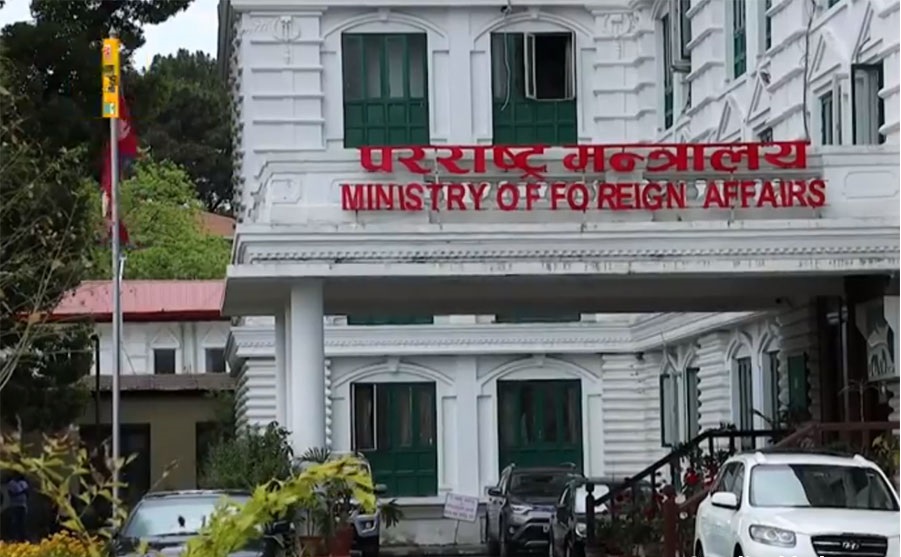
The signs are difficult to ignore. Two months into office, Balen has avoided one on one meetings with foreign diplomats, limited overseas visits by ministers and lawmakers, left numerous ambassadorial posts vacant and ordered reviews of diplomatic missions abroad. Foreign Minister Shishir Khanal has openly spoken of the need for diplomatic reform and greater focus on economic diplomacy.
The message appears clear: Nepal’s foreign policy machinery should produce measurable outcomes rather than simply maintain protocol and ceremony.
In many ways, that argument has merit. For years, critics have complained that Nepal’s diplomatic network became bloated, politically appointed and disconnected from national priorities. Foreign visits often generated headlines but few concrete results. Diplomatic appointments frequently rewarded political loyalty rather than professional competence.
A performance-based approach could help correct some of those weaknesses. Auditing embassies, reducing unnecessary spending and linking diplomacy to trade, investment, tourism and labor markets would reflect how many countries increasingly conduct foreign affairs.
The government’s emphasis on sovereignty and strategic independence may also resonate with many Nepalis. As competition between the United States, China and India grows, pressure on smaller states has increased. Nepal has often struggled to avoid being drawn into debates involving competing strategic interests.
By stressing neutrality and equal distance, the government appears to be signaling that Nepal will not automatically align with any major power bloc. That position is largely consistent with Nepal’s long-standing non-aligned tradition. Yet, diplomacy is not only about independence. It is also about engagement.
This is where concerns begin to emerge. Nepal is not a major power capable of shaping regional events through economic or military influence. Its leverage comes largely from diplomacy, goodwill and relationships. Regular engagement with neighboring countries and development partners is therefore not a luxury. It is a necessity.
Critics argue that refusing meetings with visiting foreign representatives’ risks creating an impression of distance rather than neutrality. The two concepts are not the same.
A neutral country remains actively engaged with all sides. Switzerland, often cited as a model of neutrality, maintains extensive diplomatic engagement around the world. Neutrality does not mean avoiding conversations. It means conducting those conversations without taking sides.
For Nepal, maintaining communication may be even more important because of geography. India remains Nepal’s largest trading partner and transit route. China has become an increasingly important source of investment and infrastructure cooperation. The United States, European Union, United Kingdom, Japan and other partners continue to play major roles in development, education, migration and trade.
Any perception that Kathmandu is becoming inaccessible could generate uncertainty among partners who are accustomed to direct political engagement.
Another question is whether Nepal can realistically pursue a more assertive foreign policy without strengthening its institutional capacity. Foreign policy succeeds when political vision is backed by capable institutions, professional diplomats and clear strategic objectives.
That challenge remains substantial. Nepal’s foreign service has long faced complaints about limited resources, political appointments and frequent policy inconsistency. Reforming those institutions may ultimately matter more than changing meeting schedules or diplomatic customs.
The larger geopolitical environment also complicates matters. The international system is becoming increasingly fragmented. Competition between Washington and Beijing is intensifying. India is pursuing a more active regional role. Conflicts in Europe and the Middle East continue to reshape global priorities. Economic security is becoming as important as military security.
In this environment, Nepal’s traditional balancing strategy faces new tests. The government’s idea of turning Nepal from a buffer state into a bridge for economic cooperation is attractive. But achieving that goal requires strong engagement with all major partners rather than reduced interaction.
For now, it may be too early to conclude that Nepal is rewriting its foreign policy. The core principles remain largely intact. What appears to be changing is the method, with greater emphasis on efficiency, economic outcomes and strategic independence.
The success of that approach will depend on whether the government can strike a balance between reform and engagement. If it improves diplomatic effectiveness while preserving strong ties with all major partners, Nepal could strengthen its position in a more competitive world.
If communication gaps widen, however, the country risks confusing neutrality with isolation. For a small state situated between powerful neighbors, that would be a far more difficult path to navigate.

Login to add a comment