







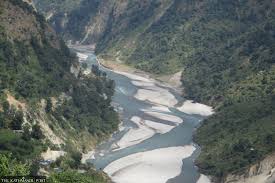
Kathmandu, June 6: Uncertainty has emerged over the construction of the 1,200-megawatt Budhigandaki Reservoir Hydropower Project, widely regarded as Nepal’s most strategic project in terms of national pride and energy security.
The confusion resurfaced after Finance Minister Dr. Swarnim Wagle, through the national budget presented on May 29 (Jestha 15), announced that the government would move forward with the formation of the Budhigandaki Hydropower Authority.
Officials at the Ministry of Energy say that the budget provision has created fresh uncertainty at a time when a company had already been established, an investment modality prepared, and efforts to arrange financing were underway.
“The investment modality has already been finalized and discussions on financial management are ongoing. At such a time, the budget has introduced the idea of establishing an authority. Transforming the company into an authority will take time because the law itself will have to be amended,” said an official at the ministry. “There is no certainty about how long that process will take.”
The investment modality was finalized last December, nearly four years after the company was established. After the Cabinet approved the investment model, the company began discussions with various banks and financial institutions to raise the required funds.
What Does the Energy Minister Say?
Energy Minister Biraj Bhakta Shrestha insisted that the announcement to shift the project to an authority model would not halt its basic groundwork.
“The budget has allocated resources in such a way that the essential work that must be carried out will continue, regardless of whether the project is ultimately implemented through an authority or not,” he said.
Shrestha stated that the government plans to establish an autonomous authority because it wants to develop Budhigandaki not merely as a power-generation project but as a multipurpose development project.
“If Budhigandaki is viewed solely as a project for electricity generation, it is not financially viable. The cost per megawatt comes to between Rs. 350 million and Rs. 400 million, whereas other projects currently cost around Rs. 200 million to Rs. 220 million per megawatt. We believe costs could decline even further in other projects,” he said. “However, the state does not evaluate everything solely on financial grounds. It also considers energy security and broader multidimensional benefits. That is why we want to transform Budhigandaki into an integrated project under an empowered authority.”
According to him, discussions are ongoing on ways to reduce the project’s overall cost.
“This project is extremely important from a strategic perspective. We are also examining whether the dam height can be reduced. The assessment so far suggests that lowering the dam may not have a significant impact on the project’s objectives while helping to reduce costs,” he said.
People’s News Monitoring Service.

Login to add a comment