







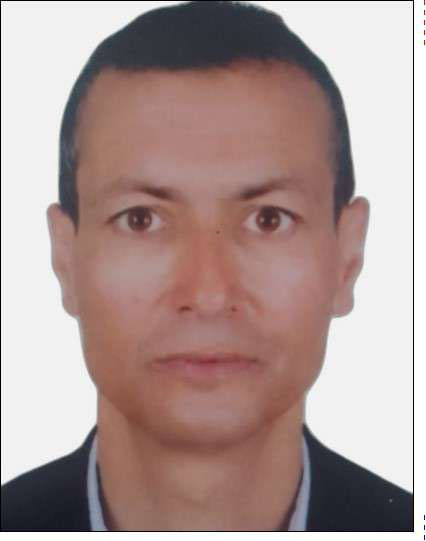
By Deepak Joshi Pokhrel
In recent years, South Asian nations have experienced a new wave in their political landscapes, giving the impression that youth are the driving force behind meaningful change. Be it Sri Lanka, Bangladesh, or Nepal, large numbers of frustrated young people in these countries have taken to the streets against misgovernance, corruption, and nepotism, forcing governments to succumb to their demands. Recently, Indian youth have joined this trend.
Unlike other South Asian countries, however, the protest movement in India offers a contrast. While young people in Nepal raised their voices against rampant corruption, and Bangladeshi youth expressed dissatisfaction with nepotism and poor governance, the protest against the sitting government in India began in a different way.
The fact that Indian youth were unhappy with the government, persistent misgovernance, and divisive politics became evident last month. During a court hearing, the Chief Justice made an inflammatory remark comparing unemployed Indian youth to cockroaches and parasites struggling to find jobs. Although the chief justice later clarified his statement, it sparked widespread criticism. This further angered and frustrated Indian youth, leading to the formation of the Cockroach Janata Party.
The Cockroach Janata Party is a satirical, youth-driven political movement in India. Its main objective is to represent unemployed and frustrated young people while criticizing the institutional and political system through humour, memes, and online activism. The movement was born out of the controversial remarks made by the Chief Justice of India during a court hearing. The chief justice compared unemployed youth to cockroaches and parasites struggling to find employment.
Some of the key agendas of the CPJ include employment generation and job creation. It also demands reforms in examinations and recruitment processes. Furthermore, government accountability, anti-corruption measures, youth political participation, and peaceful democratic activism are among its other key priorities.
Within just two days, the movement reportedly attracted more than 15 million followers—more than Prime Minister Modi himself, who has nearly 8 million. The name is a parody of the Bharatiya Janata Party, replacing “Bharatiya” with “Cockroach” to symbolize people who feel ignored, ridiculed, or crushed by the political system. From rural areas to major metropolitan cities, young people are joining the movement to express their anguish, anger, and dissatisfaction with what they see as misrule and misgovernance under the BJP-led government.
Over the years, India has grappled with several challenges. Unemployment, poverty, and pollution are among the most visible problems. Likewise, allegations of state-controlled media, recurring disputes among tribes in northeastern India, and human rights concerns are among the other challenges facing the country. Against this backdrop, the emergence of the CPJ is understandable.
One thing, however, is clear. The emergence of the CPJ is not the result of an overnight development. Rather, it is the outcome of years of frustration and dissatisfaction with the BJP-led government. In other words, it had long been in the making, waiting for the right moment to emerge. When the chief justice compared young people to cockroaches and parasites during a court hearing, the CPJ appeared shortly thereafter.
Amid the growing popularity of the CPJ, an important question arises: Will the movement fade away in due course, or will it evolve into a political party capable of challenging the status quo? This is the question political observers are attempting to answer. Experience suggests that such movements often fail to provide a viable alternative, creating a vacuum that is eventually filled by individuals who lack sufficient political capital.
Irrespective of whether the CPJ eventually evolves into a formal political party or vanishes altogether, it has already accomplished something meaningful. For years, Indian youth have often been portrayed as chronically online and politically disengaged. They are frequently labelled as individuals who merely vent their frustrations on social media. The CPJ, however, has demonstrated that many young people are concerned about governance, accountability, political participation, and rising unemployment. More importantly, they have sent a clear message that they possess the ability to bring about meaningful change through peaceful and democratic means.
What began as a response to the chief justice’s inflammatory remarks has now evolved into a movement that could potentially reshape Indian politics. Nearly eight decades after gaining independence from British rule, the country continues to face numerous challenges. Rising unemployment, corruption, poverty, and restrictions on the media remain among the most significant. A large segment of the population feels ignored and excluded from the country’s overall development. According to the latest UNDP Human Development Index report, India ranks 130th out of 190 countries. Likewise, India ranks 157th out of 180 countries in terms of press freedom. Given India’s growing global prominence, many would consider these statistics troubling.
The government led by Narendra Modi should not underestimate the movement by dismissing it as merely an online phenomenon without substance. Nor should it assume that it is simply a meme that will disappear over time. Such a perception could pose a significant risk to the BJP-led government. Prime Minister Modi appears to be facing declining popularity among some sections of the electorate. This was reflected in the 2024 general election, in which his electoral margin in his constituency reportedly declined compared to the 2019 election. Any misstep could further erode his popularity ahead of the next general elections.
The CPJ appears to be evolving into a serious challenge to the BJP-led government. The Indian National Congress ruled India on several occasions but failed to understand the day-to-day struggles of ordinary people. After the Congress failed to deliver on public expectations, the BJP came to power promising to transform the nation. Yet many people now argue that the BJP, too, has disappointed them. As a result, they appear to be searching for an alternative—and who knows, that alternative could eventually be the Cockroach Janata Party if it develops into a formal political party.

Login to add a comment