







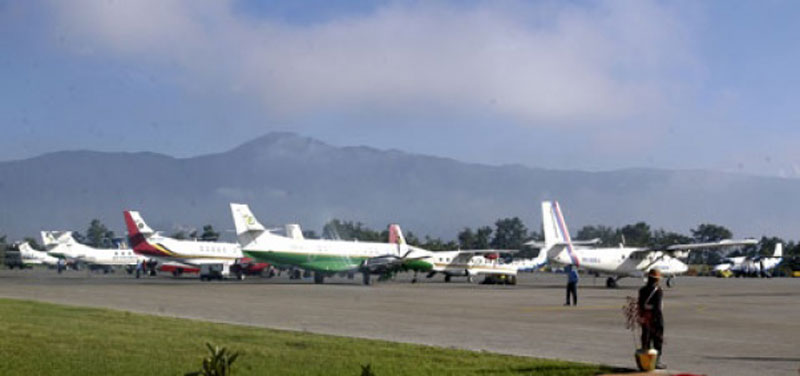
Kathmandu, Oct 1: Every Dashain, Nepalis rush home to celebrate with family, but for many air travelers the festive journey turns into a headache. Domestic airlines report tickets to most destinations sell out a month in advance, and even costly fares are hard to secure.
On the Kathmandu–Dhangadhi route, passengers are paying more than Rs 17,000 for a one-way ticket. Kathmandu–Biratnagar flights are going for nearly Rs 9,700. Dhangadhi resident Nisha Pandey said she spent days searching before finally buying an overpriced ticket. Her bigger worry now is how she will manage the return trip. Basant Raj Joshi from Bajhang faced the same struggle, while Sangeeta Sapkota of Morang gave up and took a bus after failing to find an air ticket to Biratnagar.
Complaints over inflated fares surface every year. The Civil Aviation Authority of Nepal (CAAN) says it has directed airlines repeatedly to keep fares within the government-set range. CAAN spokesperson Gyanendra Bhul said airlines are not allowed to charge more than the ceiling. For Dhangadhi, for example, the maximum authorized fare is Rs 17,000 but tickets have recently been available at Rs 12,500 on some carriers.
By law, the Ministry of Culture, Tourism and Civil Aviation sets the minimum and maximum fares based on CAAN’s recommendation. Airlines can price tickets anywhere within that range, but charging below or above it is illegal. For example, the current Kathmandu–Biratnagar fare is set between Rs 5,100 and Rs 9,700.
Still, passengers complain that during peak season airlines cluster fares at the upper end. Airlines defend the practice, citing high operating costs. Nepal has the most expensive aviation fuel in South Asia. Carriers also point to rising airport fees, the 13 percent tax, and increased costs for spare parts due to the Russia-Ukraine war.
Another factor is flight imbalance. Planes fly full from Kathmandu to provincial cities before the festival but return nearly empty, raising per-seat operating costs. With only about 30 aircraft serving major routes and 10 for remote areas, capacity is limited. CAAN estimates 10,000 domestic passengers fly daily, and annual passenger numbers stand at 4.5 million domestically and 5 million internationally.
During Dashain, Tribhuvan International Airport is handling record volumes, with more than 450 flights daily compared to the normal 350. Domestic airlines including Buddha Air, Yeti Airlines, and Shree Airlines insist they have not exceeded the official cap, though they admit tickets are scarce on busy routes.
Industry groups argue the solution lies in policy reform. Airlines say fares can only be reduced if the state offers subsidies on fuel and taxes. CAAN has also proposed creating an aviation fund to support airlines during peak festival demand. Without such measures, officials say, Dashain travel woes will keep repeating every year.
People’s News Monitoring Service

Login to add a comment