







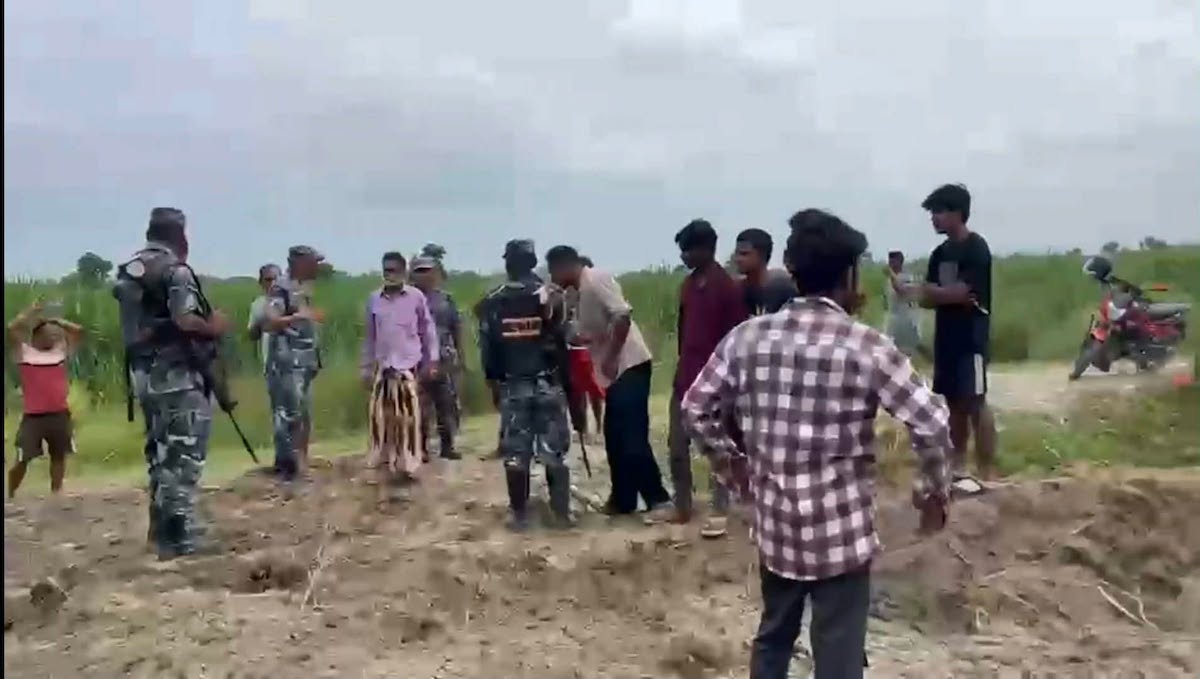
Kathmandu, Aug 1: India’s Sashastra Seema Bal (SSB) has dismantled a temporary embankment built by locals to protect Nepal’s Susta area in West Nawalparasi from erosion by the Narayani River.
Residents constructed the sandbag barrier on July 31 after the river began eating away at farmland and settlements. According to Yogendra Gautam, coordinator of the Susta Protection Youth Campaign, a group of 10 to 15 plainclothes SSB personnel tore down the structure on Sunday morning.
The incident follows an earlier dispute over permanent embankment construction. Work was underway on a one-kilometre riverbank protection project, but two months ago the SSB blocked construction of an additional 132-metre section linked to the main embankment.
As erosion intensified at the same location, locals built the temporary sandbag barrier. Gautam said the SSB later removed it, triggering a confrontation between Indian personnel and local residents.
Superintendent of Police Govinda Khati of Nepal’s Armed Police Force, Nawalparasi Battalion No. 26, said security personnel were deployed after reports that the Indian side had removed soil piled near the no man’s land. Officers from both sides then held discussions to ease tensions.
With no boundary pillars in Susta, security authorities from Nepal and India have been using a silk cotton tree as a temporary border marker. According to SP Khati, the Indian side objected to the embankment, claiming it extended beyond another tree about 200 metres away from the agreed marker. Local residents, however, insist the soil was placed about 50 metres behind the point identified by Indian authorities and was intended solely to stop river erosion.
About 400 households live in Susta, Ward No. 5 of Susta Rural Municipality, across the Narayani River. Nepal has begun a Rs 115 million embankment project to protect the village, while work on an additional Rs 14.6 million, 132-metre extension remains stalled because of objections from the Indian side.
Susta covers 40,980 hectares. Locals currently use only about 7,000 hectares, while around 14,500 hectares are under Indian encroachment and another 19,480 hectares remain disputed.
People’s News Monitoring Service

Login to add a comment