







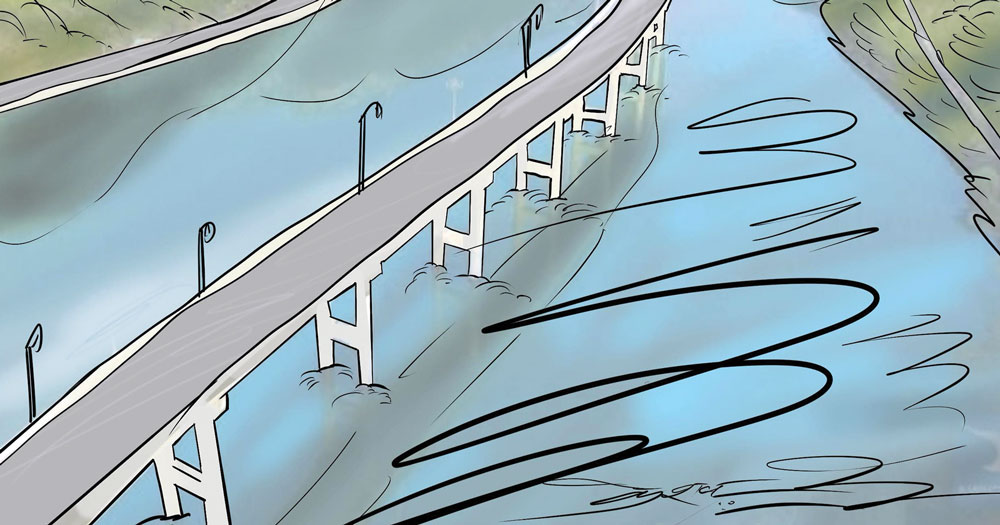
Kathmandu, August 3: A proposal to construct a viaduct—an elevated, bridge-like structure—over the Bagmati River and designate Chobhar as the starting point of the Kathmandu–Terai/Madhesh Expressway has emerged as a technically feasible and flexible alternative to bypass the longstanding disputes in the Khokana area of Lalitpur.
If implemented, the proposal would allow the project to avoid the contentious issues surrounding land acquisition, compensation, and the preservation of Khokana’s cultural heritage while enabling construction of the expressway. According to experts associated with the project, this approach could remove major obstacles and help complete the national pride project more quickly.
Construction has yet to begin at the originally proposed starting point in Khokana due to persistent disputes over land acquisition, compensation, and the protection of cultural heritage. Since 2017, the project has faced repeated protests and obstructions in the area, and the inability to resolve these disputes has continued to delay its implementation.
National Planning Commission member and former government secretary Engineer Arjun Jung Thapa said constructing a viaduct over the Bagmati River could effectively resolve the controversy. He explained that the total cost of building a viaduct would be roughly equivalent to the combined expenses of acquiring land, paying compensation, and constructing the road through Khokana.
“Building a viaduct costs about the same as constructing a bridge,” Thapa said. “Constructing a six-kilometer viaduct along the river would cost around Rs. 29 billion. If the viaduct is not built, approximately Rs. 15 billion would be spent on land compensation alone, with construction costs amounting to nearly the same figure. Overall, the total cost of the road and the viaduct would be almost identical.”
Former joint secretary and senior engineer Rajendra Sharma Kafle said that viaducts have become a widely accepted engineering solution around the world and could help bring the stalled project to a conclusion while overcoming multiple uncertainties.
He noted that the elevated structure would improve traffic flow on the expressway while preserving the area’s geography, settlements, and long-term sustainability. According to Kafle, the viaduct could be constructed entirely within the Bagmati River’s right-of-way, minimizing disruption to surrounding communities.
He also suggested that, once the viaduct reaches Chobhar, a short tunnel could be built to connect the expressway directly to Balkhu. This alignment, he said, would establish a faster and more direct connection to Kathmandu without affecting residential areas or historically significant sites.
Kafle further explained that constructing a high, straight bridge over the river would simplify road alignment and reduce the number of sharp curves. It would also protect the road from floods and landslides, making year-round transportation more reliable.
Because the route would pass above the river rather than through developed areas, houses and private land along the riverbanks would remain largely unaffected, resulting in time savings during construction and operation. He added that the travel time between Kathmandu and Nijgadh could be reduced even further under the proposed alignment.
However, Kafle cautioned that building a long viaduct over the river would require a robust structural design tailored to the Bagmati River’s flow and geological conditions. Comprehensive environmental assessments would also be necessary to evaluate the project’s potential impacts on the river’s natural flow and aquatic ecosystems.
To avoid the Khokana dispute, the government has already been discussing an alternative alignment through the Pharsidol–Dukuchhap area as another possible route for the expressway.
People’s News Monitoring Service/Gorkhapatra daily

Login to add a comment