







As Beijing and New Delhi pursue gradual normalization, their growing convergence on BRICS and the Global South highlights a shared interest in stability, development and a more multipolar world order.
By Sharachchandra Bhandary
The June 22 meeting in New Delhi between Chinese Foreign Minister Wang Yi and Indian National Security Adviser Ajit Doval, held on the sidelines of the BRICS National Security Advisers’ Meeting, offers fresh evidence that Asia’s two largest nations are seeking to place greater emphasis on cooperation and strategic dialogue despite longstanding differences.
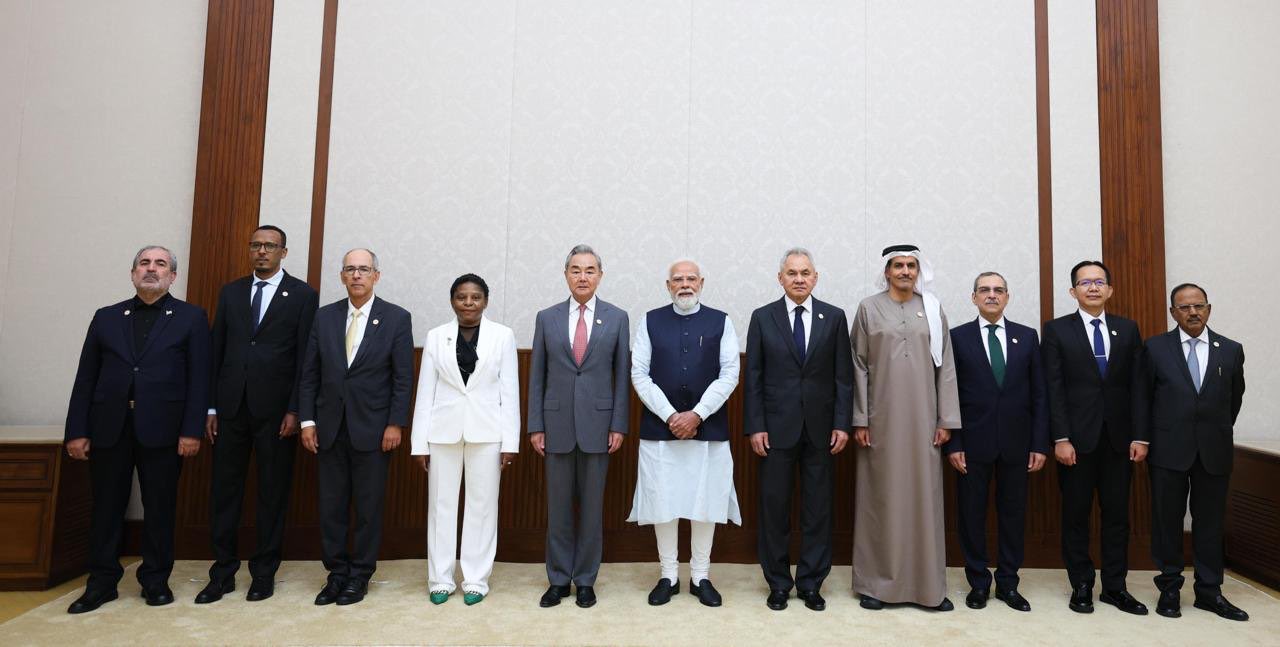
The meeting was significant not only because it brought together two senior officials from countries whose relations have experienced periods of tension in recent years, but also because it took place within the framework of BRICS, a grouping that both Beijing and New Delhi increasingly view as an important vehicle for advancing the interests of the Global South.
Against the backdrop of an evolving international order and growing calls for a more representative system of global governance, the discussions reflected a convergence of interests on regional stability, economic development, multilateral cooperation and the role of emerging powers in shaping the future international landscape.
According to Chinese Foreign Ministry spokesperson Guo Jiakun, Wang Yi stressed that China and India should view their bilateral relationship from both a long-term and global perspective. As the world’s two most populous countries, he argued, the two nations bear responsibilities that extend beyond their bilateral concerns and have implications for the broader developing world.
Wang Yi’s remarks highlighted China’s belief that Beijing and New Delhi should take concrete measures to implement the important understandings reached by their leaders, deepen cooperation and contribute to the modernization and development of the Global South. He also emphasized the need to respect each other’s core interests, properly manage sensitive issues and ensure that the boundary question does not overshadow the overall relationship.
The emphasis on managing differences while expanding cooperation reflects a pragmatic diplomatic approach. Although the boundary dispute remains a sensitive issue, both sides appear increasingly aware that prolonged tensions can constrain economic opportunities and regional stability. By advocating that the border issue be placed in an “appropriate position,” Beijing is signaling that disagreements should not define the entirety of bilateral ties.
The Indian side conveyed a similarly constructive message. According to official statements, the two sides reviewed recent developments in bilateral relations and noted progress toward gradual normalization. Doval underlined that stable, predictable and constructive bilateral relations contribute to building trust and better understanding between the two countries.
His remarks are significant because they suggest that New Delhi also sees value in sustaining engagement despite unresolved challenges. Trust-building has long been a central obstacle in China-India relations, and the acknowledgment of gradual normalization indicates that both sides are attempting to stabilize the relationship through sustained dialogue.
Notably, both countries placed considerable emphasis on BRICS. Wang Yi described BRICS countries as leading representatives of the Global South and called for the grouping to promote multipolarity, safeguard the legitimate rights and interests of developing nations and contribute to a more just and equitable international order. China also expressed support for India in carrying out its responsibilities as BRICS Chair and in strengthening the BRICS mechanism.
For his part, Doval underscored the strategic importance of the grouping, stating that BRICS is “no ordinary group.” He noted that the bloc represents approximately 4.2 billion people and contributes an estimated US$31.5 trillion to global wealth. Such figures highlight the growing economic and demographic weight of emerging economies in shaping the future international system.
That the Wang-Doval meeting took place on the margins of the BRICS National Security Advisers’ Meeting is itself significant. It illustrates how multilateral platforms can create opportunities for sustained dialogue between major powers, even when bilateral issues remain unresolved. In an era marked by geopolitical tensions and strategic competition, such forums provide valuable channels for communication and confidence-building.
The convergence of Chinese and Indian views on BRICS is particularly noteworthy at a time when many developing countries are calling for reforms in global governance institutions. Both countries appear to recognize that BRICS can serve as an important platform for amplifying the voice of the Global South and promoting development-oriented cooperation.
Doval further emphasized that India’s chairmanship would focus on advancing practical cooperation, supporting the priorities of the Global South and contributing to a safer, more secure and inclusive world. His remarks suggest that New Delhi intends to utilize the BRICS platform not only for economic collaboration but also for addressing broader security and development challenges.
The discussion on security cooperation reflects another important area of convergence. According to the Indian side, BRICS has a vital role in deepening cooperation on issues ranging from terrorism and cybersecurity to emerging technologies. These challenges increasingly transcend national boundaries and require collective responses from major developing countries.
What emerges from the New Delhi meeting is a growing realization in both Beijing and New Delhi that the costs of confrontation outweigh the benefits of cooperation. As two ancient civilizations, neighboring powers and emerging economic giants, China and India have much to gain from stable relations and much to lose from prolonged estrangement.
The timing of the engagement is also noteworthy. At a time when the international system is undergoing profound transformation, both countries appear to be exploring avenues for cooperation without abandoning their respective national interests. Such an approach reflects political maturity and strategic pragmatism rather than an expectation of immediate resolution of all outstanding issues.
For smaller countries in South Asia, including Nepal, a constructive China-India relationship is of considerable significance. Stability between the region’s two largest powers can contribute to a more favorable environment for trade, investment, connectivity and economic development. Reduced tensions between Beijing and New Delhi would also help create conditions conducive to regional cooperation and shared prosperity.
The meeting therefore demonstrates that despite areas of disagreement, China and India continue to identify substantial common ground on international issues. Both countries support a greater role for emerging economies, advocate stronger representation for developing nations and recognize the importance of maintaining stable bilateral relations.
While significant challenges remain, the messages emerging from New Delhi suggest that both Beijing and New Delhi are increasingly focused on managing differences, expanding areas of cooperation and strengthening multilateral platforms such as BRICS. In a period marked by geopolitical uncertainty and shifting power balances, such an approach could contribute not only to bilateral stability but also to a stronger and more influential Global South.
The broader significance of the meeting lies in the recognition that cooperation between China and India is not merely a bilateral matter. As two major civilizations, emerging economies and influential voices of the developing world, their ability to engage constructively will have far-reaching implications for Asia, BRICS and the evolving international order. The future of the Global South may well depend, in part, on the ability of these two Asian giants to look beyond their differences and work together in pursuit of common goals.
The author is Executive Editor of Rastriya Samachar Samiti (RSS), the National News Agency of Nepal, and writes on international affairs, diplomacy and regional geopolitics.
The author is the Executive Editor of the National News Agency (RSS).

Login to add a comment