







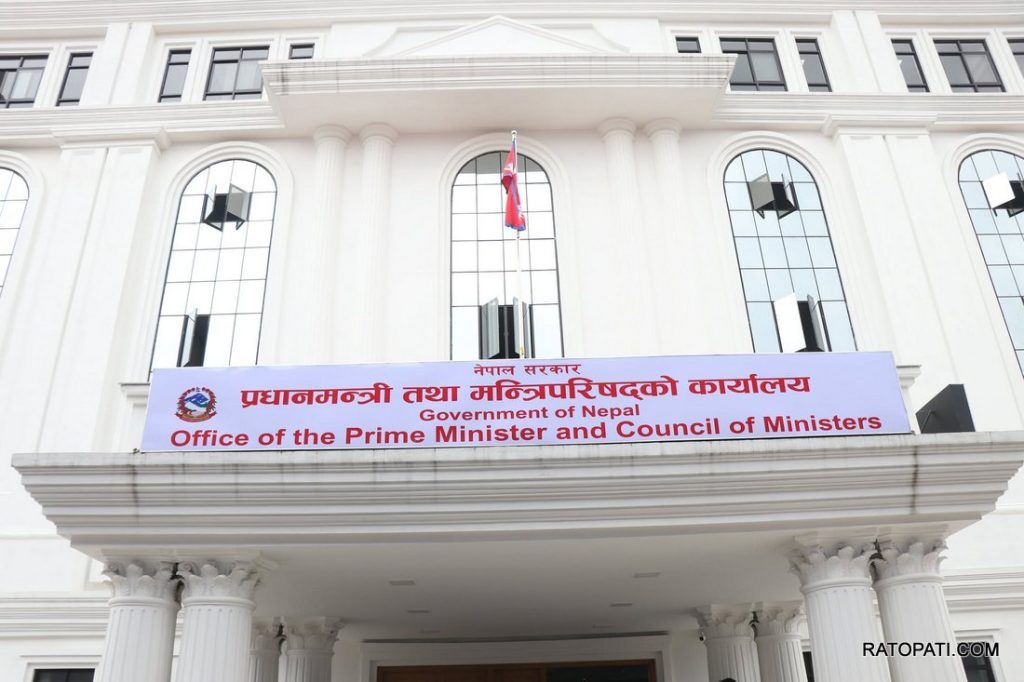
Kathmandu, June 21: Despite an ordinance aimed at easing decision-making in the Constitutional Council, appointments to key constitutional bodies remain stalled.
A day after President Ramchandra Paudel issued the ordinance amending the Constitutional Council Act, the council met on May 7 and recommended Manoj Kumar Sharma for chief justice. Since then, no further meeting or recommendation has been made, even though 19 positions across constitutional commissions remain vacant.
The Constitution requires the council to recommend appointments before vacancies arise, yet several bodies have been without leadership for months. The Chief Election Commissioner post has been vacant for 14 months. Chairs of the National Natural Resources and Fiscal Commission, Tharu Commission, Madhesi Commission, and Muslim Commission have remained unfilled for about 15 months. Multiple member positions are also vacant in the National Dalit Commission, National Inclusion Commission, National Human Rights Commission, National Women Commission, and the Commission for the Investigation of Abuse of Authority.
Most commissions are operating below their mandated structure of a chair and five members.
The delay has triggered scrutiny of Prime Minister Balen Shah, who chairs the Constitutional Council. Critics question why an ordinance introduced to streamline appointments has not been used beyond the chief justice recommendation.
Opposition leader and council member Bhisma Raj Angdembe said he has not been informed of any new meeting and that discussions appear limited to the judiciary appointment, with no follow up on other vacancies.
Former Supreme Court justice Balram KC said limiting the ordinance’s use raises questions about intent. He argued that once the legal framework was amended, the government should have moved to fill all vacancies instead of restricting action to one post.
Prime Minister’s press and research adviser Deepa Dahal said the government remains focused on governance priorities and has not fixed a date for the next council meeting, though it plans to proceed with appointments.
The Election Commission, which conducted the March 5 House of Representatives elections under acting leadership, said its work continued despite two vacant commissioner posts. Acting Chief Election Commissioner Ram Prasad Bhandari said the body can function with fewer members and has proposed structural adjustments.
The National Natural Resources and Fiscal Commission, central to fiscal federalism, has been operating with only one member since April 22. It handles revenue sharing, grants, and fiscal coordination between federal, provincial, and local governments.
Acting chair Bipin Raj Niraula said key recommendations had already been completed before vacancies deepened, though staff turnover has affected efficiency.
Other commissions focused on human rights and inclusion say prolonged vacancies limit them to routine work. Former National Inclusion Commission chair Ram Krishna Timilsena said newer constitutional bodies are not prioritised and are often viewed as political products of the constitution drafting process rather than essential institutions.
The ordinance reduced the council quorum from five members to four and allowed decisions with support from three members including the chair. The council includes the prime minister, Speaker, Chief Justice, National Assembly Chair, Deputy Speaker, and opposition leader.
Despite this change, disagreements persist. Even in the meeting that recommended the chief justice, some members expressed dissent.
The ordinance is now under parliamentary review. It will lapse if rejected by either house or if no action is taken within 60 days. It was tabled in Parliament on May 11 along with other ordinances, but has seen little progress so far.
People’s News Monitoring Service

Login to add a comment