







By Our Reporter
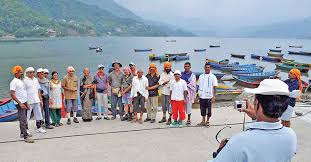
A new tourism trend is unfolding across Nepal. Roads leading to Pokhara, Muktinath, Swargadwari, Supadeurali and Janakpur are witnessing an unprecedented influx of Indian pilgrims. Social media videos of visitors cooking meals by the roadside or resting in open spaces have sparked debate in Nepal. Some argue that such tourists contribute little to the economy. Others see something much bigger: the emergence of a religious tourism market that could reshape Nepal’s tourism industry.
The numbers alone deserve attention. Muktinath recently received around 30,000 Indian pilgrims in a single day, while Swargadwari welcomed more than 10,000 visitors on a peak day. Such figures would have seemed unimaginable a few years ago. What Nepal is witnessing is not a temporary surge but part of a wider shift in travel patterns across India.
Several factors are driving this rush. Rising incomes among India’s middle class have expanded domestic and international travel. State governments in India are also supporting religious tourism through subsidised pilgrimage schemes, particularly for senior citizens. Better road connectivity between Nepal and India has made travel easier and cheaper. At the same time, Nepal offers something that many Indian pilgrims seek: sacred sites linked to Hinduism and Buddhism, mountain scenery and a sense of spiritual authenticity that remains largely untouched by commercialisation.
Destinations such as Muktinath and Pashupatinath carry deep religious significance for Hindus. Janakpur is closely connected with the story of Sita and Ram. Lumbini attracts Buddhist pilgrims from across South Asia. Pokhara, meanwhile, has emerged as both a transit hub and an attraction in its own right. Pilgrims who come for religious reasons often extend their journeys to enjoy lakes, mountains and local culture.
For Nepal, the opportunity is enormous. India is one of the world’s largest outbound tourism markets. Even a small fraction of India’s population can generate millions of visitors annually. Unlike long haul tourists who arrive seasonally, religious tourists travel throughout the year. This creates steady demand for transport services, food, accommodation, retail businesses and local products.
The argument that pilgrims spend little money misses the broader picture. A traveller does not need to stay in a luxury hotel to support the economy. Pilgrims hire vehicles, purchase fuel, buy food, pay road tolls, shop for religious items and use local services. Small businesses along highways and around temples often benefit the most. The economic impact spreads beyond major cities and reaches rural communities that rarely receive large numbers of international visitors.
Another benefit is promotion. Every pilgrim carrying photos and videos back to India becomes an informal ambassador for Nepal. In the age of social media, personal recommendations often carry more weight than expensive advertising campaigns. A positive travel experience can encourage entire families and communities to visit.
Yet the pilgrimage boom has also exposed Nepal’s weaknesses. Many destinations struggle with accommodation shortages, poor sanitation, inadequate parking and limited information services. Vegetarian food remains difficult to find in many areas despite the fact that a large share of Indian pilgrims follow strict dietary practices. The images of roadside cooking are not necessarily signs of unwillingness to spend. They often reflect a lack of suitable facilities.
Border management remains another challenge. Visitors frequently complain about inconsistent treatment, confusion over currency exchange and limited tourist information at entry points. Such problems can damage Nepal’s reputation even before a visitor reaches a destination.
Environmental pressure is also growing. Thousands of visitors arriving in a single day can overwhelm fragile mountain ecosystems and local infrastructure. Waste management, water supply and crowd control are becoming urgent concerns at several religious sites.
Nepal now faces a choice. It can treat the current influx as a temporary phenomenon or recognise it as a strategic opportunity. The second approach offers far greater rewards.
The government should accelerate plans to build inns or dharmashalas and affordable accommodation at major pilgrimage centres. A nationwide database of vegetarian restaurants should be created and promoted through digital platforms. Tourist information in Hindi, Nepali and English must be available at border crossings and along pilgrimage routes. Local governments should improve sanitation facilities and establish crowd management systems during peak seasons.
Nepal also needs targeted marketing. Religious circuits linking Pashupatinath, Janakpur, Muktinath, Lumbini and other sacred sites can be promoted directly to Indian states running pilgrimage programmes. Tour packages combining spirituality with nature tourism could encourage longer stays and higher spending.
The pilgrimage rush has become a new reality. Nepal’s challenge is no longer attracting Indian visitors. It is preparing for them. If managed well, today’s pilgrims could become the foundation of a stronger, more resilient tourism economy for years to come.

Login to add a comment