







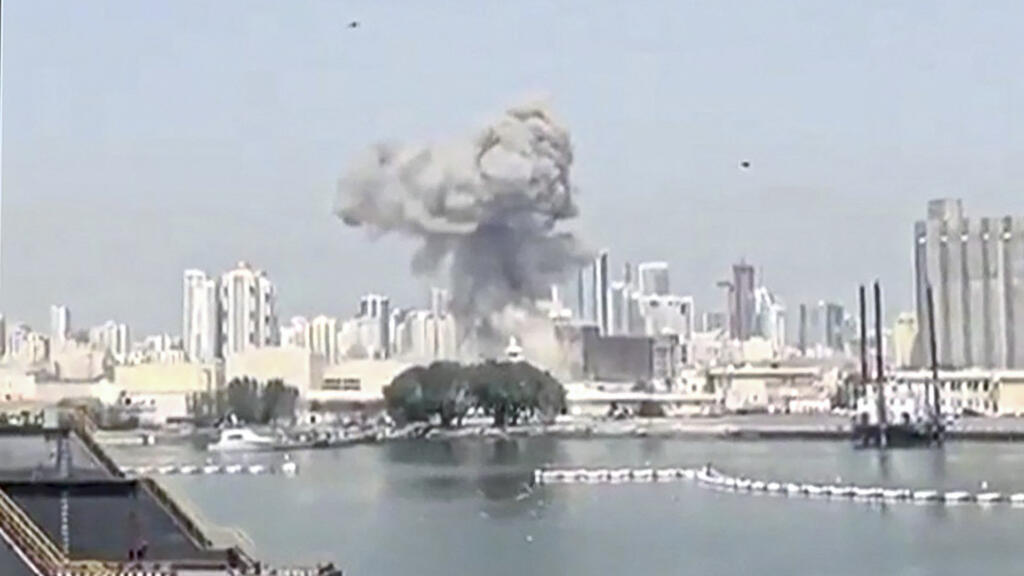
Kathmandu, June 10: The war in the Middle East has escalated once again. Following US airstrikes, Iran launched large-scale retaliatory aerial attacks targeting American military installations across the region. The US strikes came after Iran shot down a US military helicopter. Iran then responded by attacking US military sites. The latest confrontation has dealt a major blow to US President Donald Trump’s diplomatic efforts to halt the conflict, which had been ongoing for several months.
Air raid sirens sounded across Kuwait early Wednesday morning. The Kuwaiti military said its air defense systems had been activated and were successfully intercepting hostile aerial targets. Authorities urged residents to move to safe locations and follow official instructions. According to Iranian media, Iran’s Islamic Revolutionary Guard Corps (IRGC) targeted the Ali Al Salem Air Base in Kuwait using drones.
Similarly, Bahrain’s Interior Ministry confirmed through social media platform X that warning sirens had been activated, urging citizens to remain calm and seek shelter. The IRGC claimed it had carried out a drone attack on the US Navy’s Fifth Fleet, stationed in Bahrain.
Iran also claimed to have launched a long-range solid-fuel missile at the Al Azraq military base in Jordan, which hosts US troops. No reports of air raid sirens have emerged from Jordan. Earlier in March, satellite imagery reportedly showed that a radar system belonging to a US THAAD missile battery in Jordan had been destroyed in an Iranian attack. According to a CNN investigation, at least 16 US military facilities have been damaged by Iranian strikes over the past two months alone.
The US Central Command (CENTCOM) said it carried out defensive airstrikes in response to Iran’s attacks. US Air Force and Navy fighter jets launched precision missile strikes against Iranian air defense systems, ground control stations, and surveillance radar sites near the Strait of Hormuz. Washington described the operation as a “proportionate response” to Iranian provocations. Iranian officials, meanwhile, said the US strikes destroyed communication towers and water storage facilities in the Sirik and Jask regions. Iran’s foreign minister warned the United States to leave the Middle East immediately.
Despite the escalation, some diplomats believe the latest exchange may ultimately help reduce tensions rather than expand the war. They argue that the United States wanted to send a message that the downing of its helicopter was unacceptable, while Iran’s response appeared calibrated and accompanied by signals that its operation had concluded. This, they suggest, could leave room for renewed diplomatic engagement.
The growing tensions have rattled global financial and commodity markets. Japan’s Nikkei index fell 0.9 percent, while South Korea’s Kospi dropped 2 percent. Crude oil prices, however, rose by around 1 percent.
Brent crude climbed to $92.29 per barrel, while US West Texas Intermediate (WTI) crude reached $88.97 per barrel. Market analysts warn that prices could rise further if oil infrastructure or shipping routes suffer additional damage. ( Agencies)
People’s News Monitoring Service

Login to add a comment