







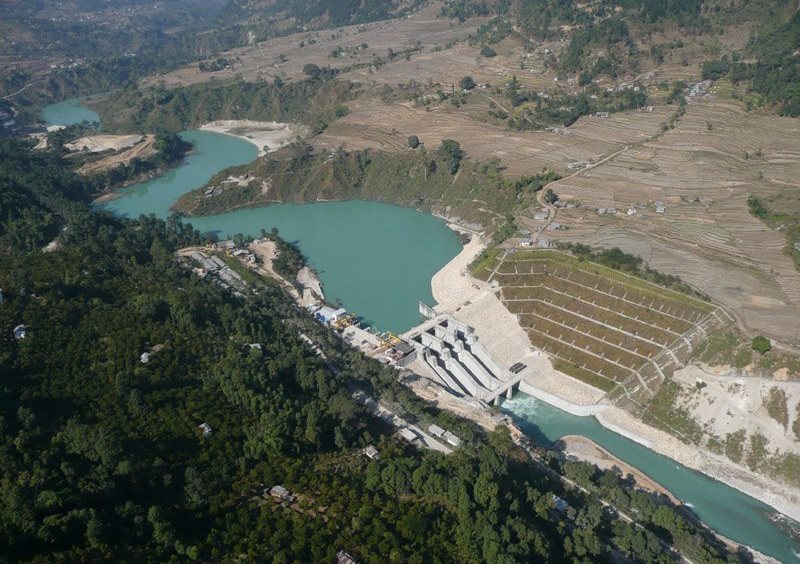
Kathmandu, May 9: Nepal’s electricity generation capacity has expanded to 4,296 MW, following an additional 418 MW added over the past nine months, according to the Ministry of Energy, Water Resources and Irrigation (MoEWRI).
The updated figure covers production from both the Nepal Electricity Authority (NEA) and private sector developers, while excluding trial-phase projects and energy from alternative sources not yet fully integrated into the national system.
Officials estimate the installed capacity could surpass 4,500 MW before the current fiscal year ends, driven by ongoing expansion efforts.
Large-scale development is also underway, with power projects totaling around 3,000 MW currently under construction. Similar capacity is in the pipeline at different stages of planning and approval, signaling continued growth in the sector.
Transmission infrastructure has also expanded significantly. Around 7,360 circuit kilometers of 66 kV and above transmission lines have already been completed. In addition, substations with a combined capacity of 14,323 MVA are operational. Lower-voltage infrastructure has also grown, including roughly 8,225 circuit kilometers of 33 kV lines and substations totaling 3,308 MVA capacity.
Energy access has now reached nearly universal coverage. About 99 percent of the population has electricity access through the national grid or alternative energy systems. Per capita consumption has also risen, reaching 450 kilowatt hours.
In terms of energy trade, Nepal exported 2,918 gigawatt hours of electricity while importing 590 GWh, reflecting growing regional power exchange. Renewable expansion continues as well, with solar capacity reaching 62.7 MW and micro and small hydropower contributing 55.3 MW.
The Nepal Electricity Authority reports that electricity leakage has been reduced to 12.5 percent, supported by ongoing system upgrades and enforcement campaigns.
The government has stated that future priorities include strengthening substations, upgrading transmission networks, and adopting technical measures to further reduce energy loss across the system.
People’s News Monitoring Service

Login to add a comment