








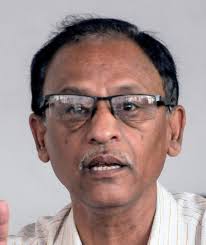
By P Kharel
Islamabad might choose to dump the South Asian Association for Regional Cooperation for a space to its advantage and liking in Central Asia. Should that happen, India would bear the blame and brunt of the organisational deterioration. Other SAARC members will be pulling their hairs for standing silent and inactive, kowtowing to the New Delhi’s own bidding at the expense of the entire region.
For more than a decade, the world’s most-population region, where every fifth of humankind lives, is without a regional body involving all its members as a combine. No one dared to bell the Indian cat. Pakistan stood as the enforced loner but now in a position to reckon with.
Terrorist acts in Kashmir attracted heavy criticisms from most countries but not one, except India, pointed Islamabad as the mastermind behind the violence. New Dehi was reduced to a lone voice.
Instead, it faced the heat and burn accusations from Canada and the US of killing a Sikh leader in Ottawa and trying to bump off another Sikh leader in the US, for leading campaign for carving out an independent Khalistan in the Punjab state in India.
Sikh leader Jarnail Singh Bhindranwale was assassinated by Indian security personnel who raided the sacred Amritsar Golden Temple and riddled the Free Khalistan campaigner with a hail of bullets. Angered by the holy temple’s “desecration”, Sikh militant groups expanded their organisation and had Prime Minister Indira Gandhi assassinated by her own two Sikh security guards on the morning of October 31, 1984.
IMMINENT CHANGE: The situation is, however, bound to change by the 2030s, when wider options are available up on the north along the China border. Geopolitics is destined to change and New Delhi’s stranglehold on its landlocked neighbourswill loosen not out of choice but because of the northern option. A railway line from Shanghai to Tehran was inaugurated in 2025, covering a distance of 10,000km that take 15 days to travel shortens transportation by almost half when compared with seaborne transportation.
A conflict that has set in motion an awakening in the comity of nations, the joint US-Israel war on Iran triggered on February 28 carries implications that change the power dynamics in the world order reinforced by the post-World War II decades.
Billed as a game changing event, the US-Iran duel with Iran received fuel by the superpower’s failure to end it in “five or six days” and is dogged prolonged by a determined Iran that acquires a new international profile as West Asia’s power to reckon with.
Wars fuel American economy. Without American entry, Israel would have been exposed for its own strength. Recklessly loud-mouthed and acting hastily, Donald Trump is billed as the worst American president in a century.
Pakistan has developed warm relations with the White House and also with Tehran. India is left in the cold for deluding itself as one of the great powers that could play a peace broker or truce facilitator. India’s Prime Minister Narendra Modi, in power for 12 consecutive years, seemed to believe in sycophants who saw him as a “Biswa Guru” [Global Guru].
LEFT IN THE COLD: When the crunch comes, New Delhi is left in the cold. Norwegians used to mediate between the Sri Lankan government and the island nation’s ethnic Tamil militants for more than three decades. India’s deep involvement in the conflict never gave a chance for any real peace talks. The Tamil guerrillas did not propose its name for a widespread belief that New Delhi had trained and financed them. The government in Colombo could not even bear to hear anyone daring to broach the idea of roping in India for facilitating peace talks.
As is wont with most South Asian capitals, Colombo is clearly inching towards Communist China as a higher level than its current ties with New Delhi are.
A fast and loose tongue, Trump a fortnight ago dismissed India as a “hellhole”. The world’s most-populous country was dismayed over the uncalled-for comment from the most power country’s president with the thinnest skin most sensitive to the slightest hint of anyone daring to distance from his political, military or economic prescription.
India’s primitive thinking has stalled its progress by decades. At least the Indian Congress under Nehru and Gandhi knew where it was going. Under Bharatiya Janata Party rule, the country’s foreign policy is simply drifting at this crucial time, when a world order of the multipolar type is in the offing, hastened by the Ukraine war and the Iran war.
LEFT IN LURCH: Amidst the Gaza killings and rising tensions in Iran, Modi went to Tel Aviv to address its Knesset. Barely 36 hours later, the US, with Israel in active partnership, launched a shocking attack on Iran even as talks between the US and Iran had been going on for some days.
The US and its key NATO allies turned a blind eyeon Israel enabling it to develop nuclear weapons. But the same lot becomes belligerent to others toying with the same ideas without the hope of receiving any foreign help unlike the staggering American aid in military weapons and other equipment for eight decades that Israel has been receiving.
Against the above-backdrop is the recent upshot in Pakistan’s international profile to be viewed. Is Pakistan on a permanent economic and ethnic crisis? That is what its opponents would like to paint it with. It is true that the economy is in not very good shape but far from collapsing.
No award from guessing correcting as which country portrays it as a terrorism-sponsoring nation. But one conclusion can be drawn: Pakistan’s role and profile from Central Asia to West Asia and Muslim world is likely to be increase as new power equations develop in a changing world order.

Login to add a comment