







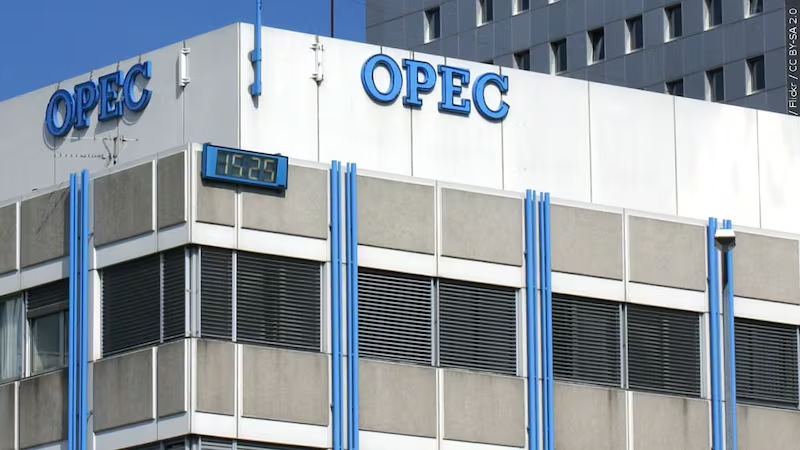
Dubai, April 29: The United Arab Emirates has announced it will withdraw from OPEC effective May 1, amid ongoing conflict in the Middle East and a global energy crunch.
As OPEC’s third-largest producer, the UAE’s departure could further weaken the group’s influence over global oil supply and pricing, according to Associated Press.
The UAE has long expressed frustration with OPEC’s production quotas. Despite expanding its production capacity, it has struggled to sell more oil under the group’s restrictions.
According to Reuters, the move is likely to strain internal cohesion within OPEC and widen the rift with Saudi Arabia, widely seen as the cartel’s de facto leader. Relations between the two countries have reportedly cooled in recent years.
UAE Energy Minister Suhail Mohammed Al Mazrouei said the decision aligns with the country’s long-term energy strategy. He described it as a policy choice based on a thorough review of current and future production plans.
Leaving OPEC frees the UAE from quota limits, allowing it to increase oil output more flexibly. However, analysts suggest the immediate impact on global markets may remain limited due to disruptions in the Strait of Hormuz.
Still, experts warn that the exit of a high-capacity producer like the UAE could weaken OPEC’s ability to stabilize the market.
The move may also be seen as a win for Donald Trump, who has repeatedly criticized OPEC for driving up oil prices.
The UAE joined OPEC in 1967 and currently produces around 3.4 million barrels of oil per day. Analysts say its capacity could rise to nearly 5 million barrels daily.
Beyond energy markets, the decision is expected to influence regional power balances and leave a lasting mark on global oil politics. (Source: AP)
People’s News Monitoring Service

Login to add a comment