








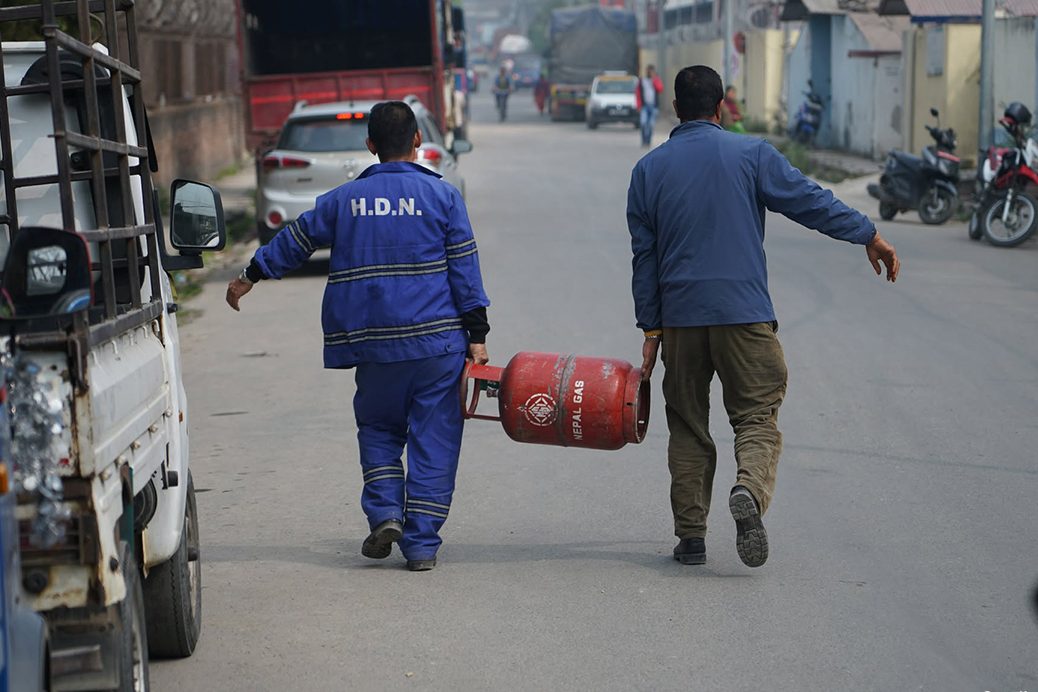
Kathmandu, March 20: Cooking gas shortages have spread across Nepal, forcing people to queue for hours with empty cylinders, while authorities and suppliers continue to blame consumers for hoarding.
The Nepal Oil Corporation, along with gas producers and distributors, claims the shortage is driven by households stockpiling two to 15 cylinders. On the ground, the burden has fallen hardest on families that rely on a single cylinder. What began as a shortage in the Kathmandu Valley about two and a half months ago has now expanded nationwide.
The crisis comes amid rising global tensions after a joint US and Israeli strike on Iran on February 28, which has unsettled energy markets. Still, Nepal’s shortage predates these developments, though the international situation has added pressure.
Nepal depends entirely on India for fuel imports. While India itself faces supply strain, it has not halted exports to Nepal. The Oil Corporation says daily supply meets demand on paper, yet the shortage persists.
In response, authorities introduced half-cylinder distribution from March 12, aiming to stretch supply. The move has done little to ease public frustration, with long lines continuing and many still unable to obtain even half-filled cylinders.
Gas shortages are not new in Nepal. The country faced severe crises during the 2015 blockade and again at the start of the Covid 19 lockdown in 2020, both times prompting similar rationing measures. Each episode exposed weak storage capacity and heavy import dependence.
Experts say the current shortage is less about supply and more about systemic failure. The market is flooded with millions of excess cylinders, yet regulators have failed to manage or remove them. Over the years, both traders and consumers have accumulated extra cylinders during crises, worsening distortions in distribution.
Former Nepal Oil Corporation deputy executive director and petroleum expert Sushil Bhattarai rejects the blame on consumers. He says the government has little control over the distribution chain, which remains dominated by private players.
According to him, the real problem lies in supply logistics and entrenched syndicates. Nepal relies entirely on Indian transport systems, and coordination failures among suppliers frequently disrupt distribution.
He also warns that Nepal lacks sufficient storage to withstand even a short-term supply shock. Policy confusion has compounded the problem, with no clear direction on reducing dependence on liquefied petroleum gas despite growing hydropower capacity.
The ongoing shortage, experts say, reflects long-standing mismanagement rather than a sudden disruption, raising questions about accountability in a system that continues to fail consumers.

Login to add a comment