







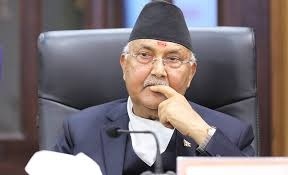
Kathmandu, March 13: The CPN UML has suffered a result even worse than the 2008 Constituent Assembly election, sparking open debate inside the party about leadership change.
Several leaders have begun raising the issue through social media, interviews, and public remarks. The discussion gained traction after Vice Chair Bishnu Prasad Paudel and Deputy General Secretary Yogesh Bhattarai said the party must rethink both policy and leadership.
Paudel urged party workers not to lose hope and promised to push for reform. In a social media post, he said the party must seriously review its past mistakes and reshape its policy, leadership, organization, and working methods in line with public expectations.
Bhattarai expressed a similar view. He said voters had peacefully rejected the party’s policy and leadership through their ballots. According to him, the party must transform itself and work to regain public support.
In an interview with Himalaya Television, Bhattarai warned that the party might face unpleasant decisions if Oli does not step down. As pressure grows from senior leaders, the debate has begun to spread among grassroots members as well.
A social media post by Basudev Ghimire, who lost the election from Rupandehi 3, reflects that frustration. Comparing UML leaders with the Panchayat rulers, he wrote that the regime was collapsing but its loyalists kept repeating that everything was fine.
Despite the criticism, General Secretary Shankar Pokhrel has defended the leadership. In a social media post on Thursday evening, he urged party members not to fall for what he called misleading narratives about the party’s weakness.
Pokhrel said reviews of the results in all 165 constituencies have already begun and a broader evaluation will follow. He also asked party members not to believe media reports that he claimed were aimed at weakening party unity.
So far the party has not made any formal decision. Signals from Pokhrel and other leaders suggest that Oli is unlikely to resign. Party publicity chief Min Bahadur Shahi said the issue will be discussed in upcoming meetings. According to him, the secretariat may call a central committee meeting to review the election outcome.
Shahi admitted the result was unexpected but said the party must accept the voters’ verdict.
The election outcome has been particularly damaging for Oli. The UML chair and former prime minister suffered a heavy defeat in Jhapa 5, a seat he had easily won in past elections.
Senior Rastriya Swatantra Party leader Balen Shah won the seat with 68,348 votes, while Oli secured only 18,734 votes. The nearly 50,000 vote gap is among the largest margins recorded in Nepal’s parliamentary elections.
Across the country, UML candidates performed poorly. The party won only nine seats, mainly in parts of the Koshi hills and some areas of Sudurpashchim where the influence of the Rastriya Swatantra Party remains limited. Forty-nine UML candidates even lost their deposits.
The proportional vote result also shows a sharp decline. According to the Election Commission, UML secured 1,453,149 votes, about 13.46 percent. This is the party’s weakest result since it began contesting elections in 1991.
Even during the Maoist wave in 2008, the UML had secured over 20 percent of the vote.
Under Oli’s leadership, the party has now fallen to third place with 25 seats, including 16 through the proportional system. The scale of the defeat has raised serious questions inside the party about its future direction and leadership.
People’s News Monitoring Service

Login to add a comment