







Kathmandu, 3 July: Nepal has three international airports: Tribhuvan International Airport in Kathmandu, Pokhara International Airport, and Gautam Buddha International Airport in Bhairahawa. While Kathmandu remains the country’s primary international gateway, the other two airports have struggled to attract and sustain regular international flights despite billions of rupees in investment.
The underutilization of Pokhara and Bhairahawa airports stems from a combination of geopolitical, commercial and operational factors, with the lack of additional international air entry routes through Indian airspace being one of the most significant.
Most international flights entering Nepal pass through Indian airspace. At present, aircraft primarily use the Simara air corridor before proceeding to Kathmandu. Flights bound for Pokhara or Bhairahawa must continue well beyond Kathmandu, adding approximately 30 to 40 minutes of flying time. This increases fuel consumption and operating costs, making services to the two airports less attractive to airlines, reports nepalnews.com.
For more than a decade, Nepal has requested India to allow additional air entry routes via Mahendranagar, Bhairahawa, Nepalgunj, Lumbini and Janakpur to improve direct access to the new airports. India has not approved these additional corridors, citing security and technical considerations. Although India has proposed allowing aircraft to enter at higher altitudes, aviation officials say the resulting holding patterns and descent requirements would still increase fuel costs, limiting the commercial benefit.
However, the absence of additional air routes is not the only challenge.
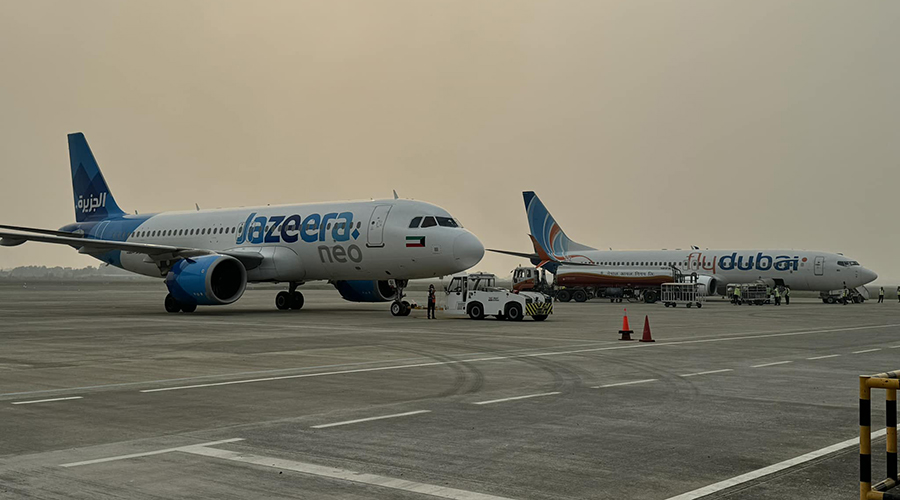
International airlines have consistently cited weak passenger demand and poor route economics as major reasons for suspending or avoiding services. Airlines including Flydubai, Himalaya Airlines, Thai AirAsia, Jazeera Airways and others have operated flights to Pokhara or Bhairahawa at various times but later reduced or suspended services because of low passenger numbers and high operating costs.
Kathmandu also continues to dominate Nepal’s aviation market. As the country’s political, commercial and tourism hub, it offers airlines a much larger passenger base, stronger connecting traffic and better commercial prospects than either Pokhara or Bhairahawa.
The government has introduced a range of incentives to attract airlines, including discounts on fuel, landing, parking, navigation and ground-handling charges, along with expanded immigration, customs, visa and labour-related services at both airports. Despite these measures, airlines have maintained that demand remains insufficient to support sustainable international operations.
The two airports were built primarily to promote tourism and regional development. Pokhara serves as the gateway to the Annapurna region and other major tourism destinations, while Gautam Buddha International Airport was envisioned as an international gateway to Lumbini, the birthplace of Buddha and one of the world’s most important Buddhist pilgrimage sites. Yet most foreign visitors continue to arrive through Kathmandu before travelling domestically to these destinations.
In essence, the limited use of Nepal’s two newest international airports reflects a combination of restricted air access, weak commercial viability, insufficient passenger demand and Kathmandu’s continued dominance as the country’s principal aviation hub. While Nepal argues that additional air entry routes through Indian airspace are essential for improving the airports’ competitiveness, aviation experts generally agree that long-term success will also depend on building stronger passenger demand and convincing airlines that the routes can be operated profitably.
People’s News Monitoring Service.

Login to add a comment