







By Our Reporter
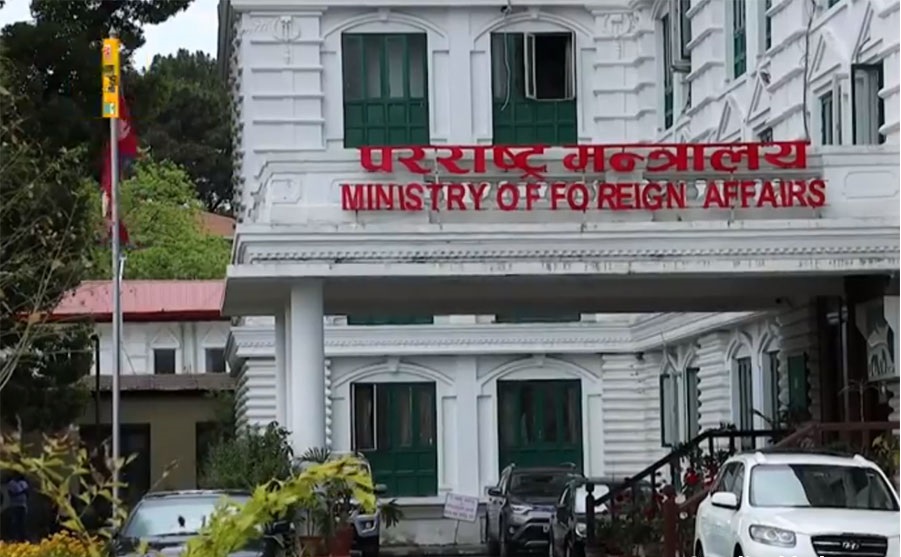
Nepal is considering a move it has never really tried before. The government announced to open up some ambassadorial posts through public vacancy notices, bringing a competitive element into a process that has long been shaped by political choices and internal selections. Officials at the Ministry of Foreign Affairs say this could mark the first real attempt to pick ambassadors through a structured, open process.
The timing is not random. Around 17 ambassadorial posts are either vacant or about to be, including key missions in India, China, the United States and the United Kingdom. Nepal currently runs 44 missions worldwide, and the government is also weighing whether that network needs trimming as part of broader cost-cutting and institutional reform.
Right now, ambassadorial appointments follow a familiar mix. Some come from within the foreign service, others are political picks. In theory, that balance works. In practice, politics has often carried more weight. Even earlier efforts to set clear criteria, like those introduced a few years ago, never quite stuck.
The new proposal, backed by Foreign Minister Shisir Khanal, tries to change that. At least some ambassadorial positions would be filled through open competition. Candidates would be judged on experience, education, publications and professional background. The idea is simple enough: bring more transparency into the process and cut down on backroom deals.
On paper, it sounds like the kind of reform people have been asking for. Nepal’s diplomacy has long been criticized for being too politicised. Moving toward a merit-based system could help restore some confidence and make the foreign service look more professional.
The current situation also gives the government an opening. Several ambassadors appointed by the previous administration have been recalled, leaving a large number of posts empty. With so many vacancies at once, it is easier to experiment with a new approach.
Still, the plan raises some obvious questions. Diplomacy is not the kind of job you can neatly package into an exam or a scoring sheet. Senior diplomats who have spent decades in the field are unlikely to compete in an open call alongside younger applicants or outsiders. That alone could discourage experienced professionals and dent morale within the ministry.
Then there is the nature of the work itself. A good ambassador needs judgment, negotiation skills, political awareness and the ability to manage crises. Those are not things you can fully measure through qualifications or written evaluations. A strong CV does not always translate into effective diplomacy.
Politics, whether anyone likes it or not, also plays a role. Many countries, Nepal included, appoint political ambassadors for strategic reasons. Some bring access, influence or networks that career diplomats may not have. Removing that option completely could narrow the government’s choices, especially in sensitive postings.
Critics suggest a more practical route. Instead of a fully open competition, the ministry could focus on identifying and grooming talent, both within the service and outside it. That way, appointments stay merit-based without ignoring experience or institutional knowledge.
The push for change, however, reflects a broader political agenda. The Rastriya Swatantra Party, part of the ruling coalition, has been vocal about making public appointments more transparent. It has already pushed for clearer eligibility standards, including clean legal records and a solid understanding of economic and security issues. This proposal fits neatly into that approach.
At the same time, there is pressure from within the system. The foreign ministry has been discussing ways to streamline embassies and cut costs, with the finance ministry urging tighter spending. Competitive selection is being framed as part of that wider push for efficiency.
But diplomacy does not run on efficiency alone. It depends on continuity, trust and long-term relationships. Sudden changes in how ambassadors are chosen can create uncertainty, especially in countries where ties take years to build. If the system starts to look unstable or experimental, it could affect how Nepal is seen abroad.
A middle path probably makes more sense. A fully political system invites patronage. A fully open competition risks overlooking experience and the realities of diplomatic work. A balanced approach, if applied properly, can draw from both.
In the end, the question is not whether reform is needed. It clearly is. The real challenge lies in how the government rolls it out. If the process is designed with care and grounded in the realities of diplomacy, it could strengthen Nepal’s foreign service. If it turns rigid or rushed, it may end up creating new problems while trying to fix old ones.

Login to add a comment