







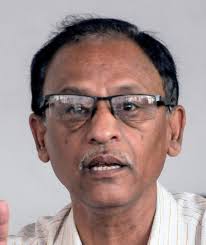
By P Kharel
China and Pakistan have emerged as peace plan facilitators in the efforts at arriving at a truce between Iran and the US-Israel combine. Western analysts are convinced that the post-Iran world will not be the same again. One thing is even more certain: at least, South Asia will not return to the old order any more.
In the process, the central Asian superpower China and Pakistan, straddling South Asia and West Asia, have emerged as the biggest peace plan facilitators for a much-sought after breakthrough in the war that US and Israel triggered in that Shiia Muslim majority country with more than 5,000-year history. Unfortunately for the largest multiparty democracy, India remains not only ignored and but its embarrassment gets exposed raw against the background of South Asia’s largest economy claiming its enhanced international profile.
Behind the wider screen coordinating with China is Russia in steering the big battle with the US-led Western world. Western analysts are saying that the Iran war has ensured the world not to be the same again. One thing is even more certain: South Asia will not return to the old order any more. Signs already existed in the 2020s; now they are clearer and sharper.
ENOUGH’S ENOUGH: Much of the world is overwhelmingly fed up with the agendas enforced by traditional hegemons for centuries as slave traders, merciless colonialists and evangelists. The alien “masters” did everything to erase thousands of indigenous languages, mercilessly exploited the natural resources of the territories they occupied, and decimated the hapless local populations. They did so in the name of civilising and Christianising the “barbarians”.
The embers of rebellion for revolution in India have never died down, which is no good omen for the peace of the whole of South Asia on account of the risks and complications it entails. Beijing, Moscow, Washington and other middle power capitals have made strategic calculations on the most-populous nation’s inherent vulnerabilities.
So far, Moscow and Beijing have developed and, of late, deepened their intelligence operations in the largest multiparty democracy. New Delhi can do nothing about it, except to take consolation from the fact that the two superpower capitals are not fomenting sponsoring rebel groups so far. This cannot be said of the US, the No. 1 economic and military power, whose strength on both fronts is at least one-third more than China’s. However, China’s economy is larger than the next ten countries combined. And that underscores India’s existing position.
ETHNIC POLITICS: Promoting ethnic politics and ethnic conflicts, in addition to financing the media and intellectual forums are among the most obvious approach employed by foreign forces in target countries, including Nepal. Stressing this point would be no original statement, given its open secrecy.
India should not ignore the shimmering dissidence and defiance that refuses to disappear, creating potentially a huge problem for a country aspiring for UN Security Council’s permanent seat but most of whose neighbours resent its brash attitude that the British exhibited during the two centuries they colonised the proud nation with a very rich history.
Friends, acquaintances and Nepalese studying or working in South and other parts of India share experiences with this scribe and several others express fears that India risks elements of disintegration. The danger is that the domino effects on the rest of the region can create havoc in the existing political map and geopolitical consequences.
Given the early but unmistakable signs of a new global order, forces outside the region would be keen to play active roles in creating conditions responsive to their “country first” and “our vital security interests”, whatever the fate and implications for the local populations.
Amidst a perception of India’s weakening, vacillating positions both to people at home and outside, things can conflagrate into full-fledged civil war in different pockets, which would have repercussions on its immediate neighbours, too. The Indian Gurkha would be deployed to quell any open dissidence that the government decides as being of dangerous proportion.
Decolonised India’s 80-year track record with other South Asian countries have been ridden with faults like intimidation, interference, intervention and invasion. The wheel of time revolves; situations are not static, contexts change and so do conditions, as new ideas are put into action. Initiatives change geopolitical dynamics.
MISCHIEF HIVE: Playing mischief with others and cribbing about the rights of sovereign neighbours speak of not great minds and durable strength but of short-sighted outlook and small-mindedness, whose long-term price can be too heavy for belated regret. It will push back a nation’s aspirations for accelerated progress. A nation like India should work to earn respect and willing cooperation from neighbours without coercion and threats.
The world seems to be back in the business of pursuing the policy of raw power rather than widely accepted principles for achieving “national interests”. This means right to coerce or seize possession of natural resources and drive militarily weaker sovereign nations to serve the designs and diktats of bigger powers.
South India’s intellectuals and merchants complain that they contribute to Indian economy 40 per cent but get back from union government only 15 per cent. More than that, Naxalites cover two-thirds of the country, though they are lying low for about a decade but could be activated anytime. The country’s seven northeastern states are a beehive of underground militants. After a lull, indications are that they are girdling their loins for their “rightful place and legitimate demands”, including “no less than full-fledged autonomy”, if not immediate independence.
Hence India should work for better strategies. For instance, if it cannot befriend and respect Nepal in real earnest as a sovereign landlocked nation with modest economic records and in many ways behind the superpower aspirant and most-populous nation, its credibility sinks rock bottom. Nepal might be compelled to prepare for alternatives.

Login to add a comment