







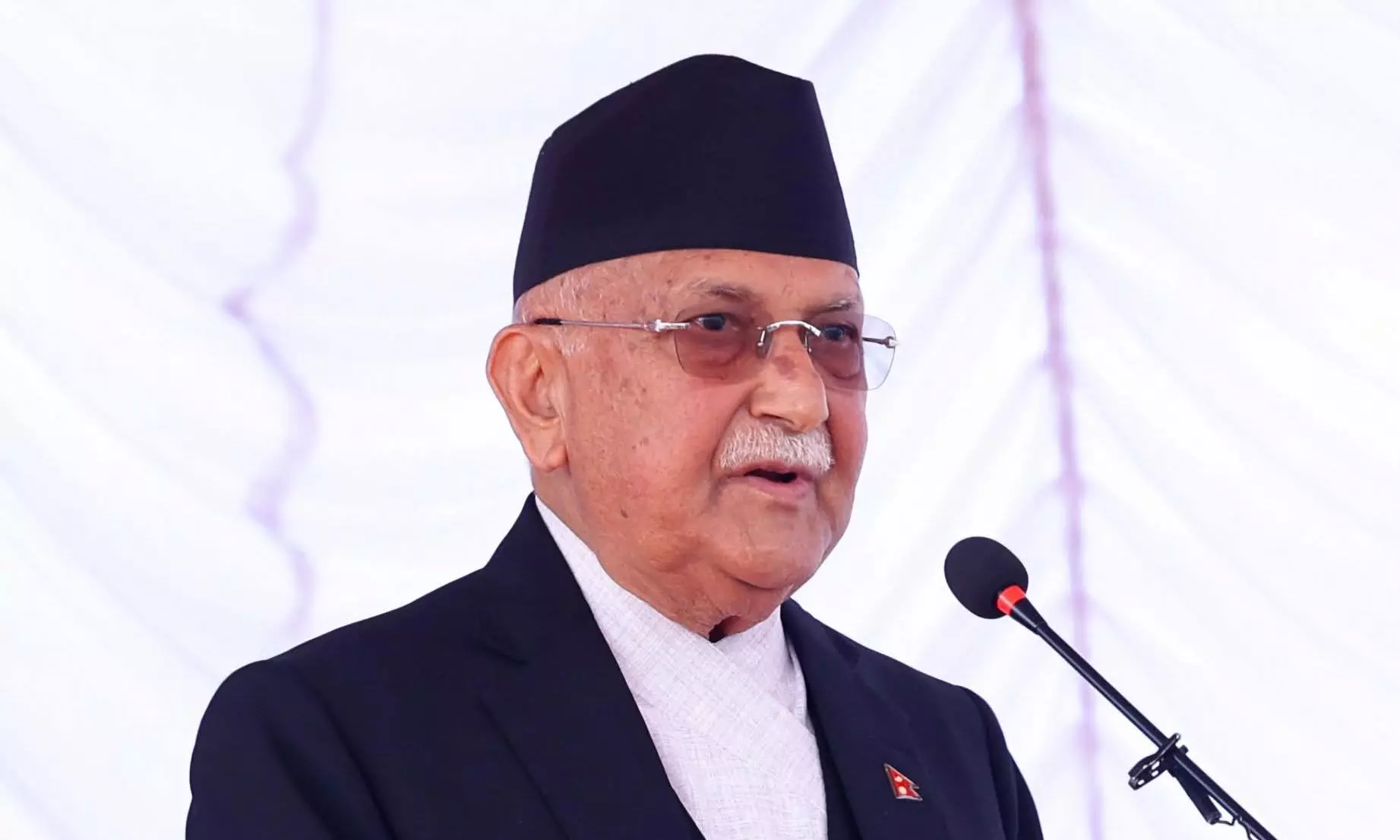
Kathmandu, March 27: Former Prime Minister K. P. Sharma Oli has been arrested. Police entered his residence in Gundu and took him into custody.
A team led by SSP Santosh Khadka from the Crime Investigation Office, Teku, carried out the arrest. An official from the Kathmandu Valley Crime Investigation Office confirmed the development, stating, “We have taken former Prime Minister K. P. Sharma Oli into custody.”
Police had reached Oli’s residence during the night in preparation for the arrest.
Former Home Minister Ramesh Lekhak was also arrested earlier this morning from his residence in Katunje, Bhaktapur.
Both arrests are linked to an investigation into the deaths of 19 people during the Gen Z protests on September 9. Police say they are probing allegations of involvement in the incident.
This marks the first time in Nepal’s history that a former executive head of government has been arrested in connection with a homicide-related case. While former prime ministers have previously been detained during political unrest, none had been arrested as part of a criminal investigation.
The arrests follow the findings of an investigative commission led by Gauri Bahadur Karki, parts of whose report were leaked to the media three days ago. The report recommended action against Oli, Lekhak, and former police chief Chandra Kuber Khapung under Section 182 of the National Penal Code 2017.
Section 182 deals with causing death through negligence. It carries a penalty of up to three years in prison and a fine of up to Rs. 30,000.
The newly appointed Prime Minister Balen Shah had, within hours of taking office, convened a Cabinet meeting that decided to implement the commission’s recommendations, except those concerning security personnel.
Even before the Cabinet decision was formally authenticated, Home Minister Sudan Gurung directed police to begin an investigation into the September 9 incident. Legal Secretary Parashwar Dhungana reportedly worked overnight to prepare the necessary documentation following the decision.
Officials say arrests in criminal cases cannot be made based solely on a commission report. According to sources at the Office of the Attorney General, complaints filed by families of victims and the injured provided the legal basis for the arrests.
Police did not obtain prior arrest warrants from the district court before detaining Oli. Instead, they acted under an emergency authorization. After arrest, suspects must be provided with a warrant, undergo a medical examination, and be presented before the Kathmandu District Court within 24 hours.

Login to add a comment