






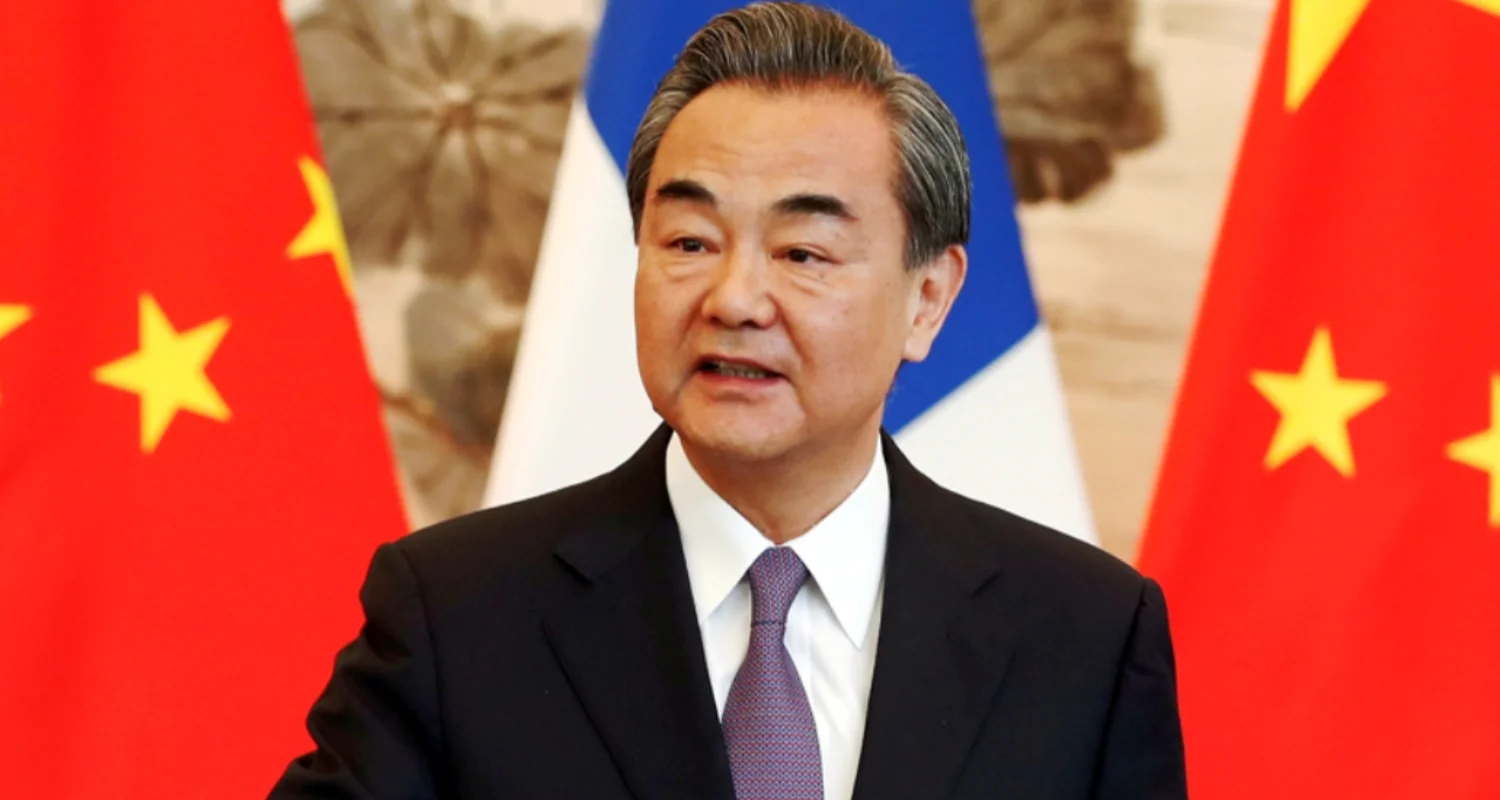
Beijing, March 9: Chinese Foreign Minister Wang Yi has expressed strong concern over the expanding conflict in the Middle East and urged the international community to address disputes through dialogue and cooperation instead of military force.
Speaking at a press conference in Beijing, Wang said the conflict, triggered by attacks on Iran by the United States and Israel, poses a serious threat to global peace. He said the war should never have started and made it clear that the use of force cannot solve international disputes.
“Military power cannot justify what is right,” he said, warning that the international system cannot return to a lawless order driven by force.
Wang made the remarks during a press conference held alongside China’s annual political meetings known as the “Two Sessions.” These parallel gatherings of China’s parliament and political advisory body are seen as a major event that signals Beijing’s policy direction amid shifting geopolitical tensions.
During the briefing, Wang addressed a range of issues including China US relations, trade tensions, disputes in the South China Sea, the Middle East conflict, and the war in Ukraine.
He said 2026 has become an important year for relations between China and the United States. Even as competition grows, both countries must manage their ties responsibly.
Relations between Washington and Beijing have grown more strained since Donald Trump returned to the US presidency last year. Both countries have imposed retaliatory tariffs on each other’s goods, intensifying their trade dispute.
Wang criticized efforts by some countries to raise trade barriers, reduce economic dependence on China, and disrupt supply chains. He warned such actions would worsen tensions rather than solve problems.
“Using such measures is like trying to put out a fire with fuel,” he said. “In the end it will backfire.”
He also stressed that China and the United States cannot change each other, but they can improve the way they manage their relationship. He urged both sides to create space for dialogue, manage disagreements carefully, and avoid unnecessary interference.
China has also strongly criticized the military strikes by the United States and Israel against Iran. Beijing maintains close diplomatic and trade ties with Tehran and condemned the killing of Iran’s Supreme Leader Ayatollah Ali Khamenei.
Wang said China’s relations with Russia remain stable despite Western criticism over the Ukraine war.
Analysts say China is seeking diplomatic opportunities as uncertainty grows in US foreign policy. Some traditional US partners have started exploring alternative partnerships amid unpredictable policies from the Trump administration.
Leaders from several countries, including France, Canada, Finland, and the United Kingdom, have gathered in Beijing. Tensions among Western countries have risen after Trump proposed taking control of Greenland and threatened tariffs on NATO allies.
Wang welcomed visits by European leaders and said many European policymakers now view China as a global partner rather than only a competitor. He encouraged European countries to move away from protectionist thinking and compete in the Chinese market.
China has also introduced visa-free travel for citizens of nearly 50 countries, including France, Germany, and the United Kingdom, to boost economic ties. Beijing has also agreed to reduce tariffs on certain exports from Canada and the UK.
Wang also addressed relations with Japan. Tensions increased after Japanese Prime Minister Sanae Takaichi suggested Japan might play a role if tensions escalate over Taiwan.
Beijing considers Taiwan an inseparable part of China and has not ruled out the use of force for reunification. Wang described the Taiwan issue as a core national interest and warned that attempts to separate the island from China would fail.
Referring to Japan’s wartime expansion during World War II, he warned Tokyo not to repeat what he called past destructive mistakes. He said the Taiwan question represents a clear red line that cannot be crossed.
People’s News Monitoring Service

Login to add a comment