







By Our Reporter
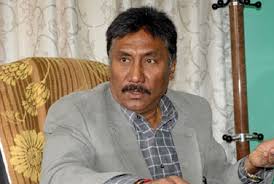
Sharat Singh Bhandari is back on the ballot in Mahottari 2. At 71, with 44 years of electoral politics behind him and 19 stints as minister, he is once again asking voters for trust. He says this was not his choice, that the party pushed him to contest. Some voters have heard that line before.
His career began in the Panchayat era. He won National Panchayat elections in 1981 and 1986, entered government as assistant minister, and then adapted smoothly to multiparty democracy after 1990. He has switched parties over time and now represents Janata Samajbadi Party Nepal. He lost in 2013 but returned in 2017 and 2022. The pattern is clear. Setback, recalibration, comeback.
The bigger question is not how long he has survived. It is why.
On paper, 19 ministerial positions should leave a visible mark. Yet local complaints are blunt. Roads remain incomplete. Projects such as Bharpurra Loharpatti road and Piprari road were inaugurated years ago but still drag on. Health services are weak. None of the six local units in the constituency has a hospital. People travel to Jaleshwar or Janakpur for basic treatment.
One voter put it sharply. If even one major project had been completed during each ministerial term, there would be 19 clear achievements by now. That frustration reflects a wider national mood. Experience without delivery feels hollow.
And still, Bhandari keeps winning.
Part of the answer lies in the structure of Nepali politics. Elections are not fought only on development indicators. They are fought on networks, identity, and access. Leaders like Bhandari build dense local connections over decades. They know ward leaders, contractors, local influencers. They attend weddings, funerals, party meetings. Politics becomes personal.
He has also positioned himself as a voice for Madhes issues. Party leaders defend him on that ground. They argue that he has consistently raised regional concerns at the center. For many voters, symbolic representation matters. Being heard in Kathmandu sometimes counts as much as a completed road.
There is also the art of survival. Bhandari has shown political agility. He has shifted loyalties and party affiliations when necessary. Some call that opportunism. Others call it adaptability. In a fluid coalition era, leaders who can read the wind tend to last longer. Controversial remarks have not ended his career. In fact, controversy often keeps a leader visible.
This is not unique to Mahottari. Across Nepal, several veteran politicians have stayed in office despite limited visible progress. They rely on brand recognition, party machinery, and fragmented opposition. When challengers are divided among many candidates, a seasoned operator can win with a relatively small but loyal base.
This time, the contest looks tighter. There are 37 candidates. Observers expect a close fight between Bhandari and Nepali Congress candidate Kiran Yadav. There is also a louder call for generational change. Younger voters question why the same faces dominate decade after decade.
Bhandari’s fresh test is not just electoral. It is symbolic. Can a leader with four decades of experience convince voters that continuity still serves them? Or will frustration over unfinished projects and weak services finally outweigh familiarity?
In the end, repeated victories say as much about voters as about the candidate. When systems reward loyalty over performance, seasoned politicians thrive. If Mahottari chooses differently this time, it may signal that patience has limits.

Login to add a comment