








By Sharachchandra Bhandary
Kathmandu, 15 April: Leaving aside the unfinished work of the Comprehensive Peace Agreement(PCA), the Constitution of the Federal Democratic Republic was promulgated in the country. Although the country got a new constitution in 2015, it could not usher in stability in the country. The main reason for this is the loose provisions allowed by the constitution to play within the political system.
The political parties are spending their time in power-centered politics playing on those loopholes of the constitution. As a result, even though the country has a constitution, it has not been able to ensure stability. The constitution made an inclusive policy but it has not been implemented yet.
In the name of marginalized classes, women, Dalits and tribal, it has become only a dynamic vehicle to be taken advantage of by those with elite classes who have easy political access. Therefore, it is seen that the policy of inclusion should also be modified from a class point of view.
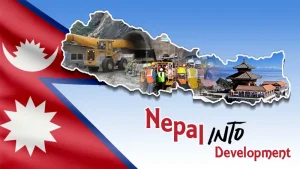
In addition, the country, in lack of stability, despite having a federal structure, failed to witness an overall development and people-centric activities. Although some development infrastructure work has been carried out, it has not been to the expectation of the people. In the name of development, only excavation works have been done. Building roads and some infrastructure is not just development. A product of the unstable political system, the economic sector has been severely damaged. The economic sector, meanwhile, has done the exact opposite of what should have been a positive leap.
Banks are not in a position to invest. Businessmen and borrowers are not in a position to pay the bank’s interest and loans. This is the most challenging issue for the country’s economy. The time has come for the political parties of the country to stand together to lift the country out of this extreme economic instability.
The country has heard and seen many slogans and policies of change in the past decade. However, the people are suffocating in the hope of change and prosperity. If we do not proceed in a new way by reviewing the latest political changes and their achievements, we may have to be satisfied only by looking at the changes in the developed countries of the world.
Nepal needs a stormy campaign to control corruption. The country’s biggest challenge is none other than corruption. Corruption has gripped the power centers of the country, be it the Singha Durbar, Provincial or Local Levels. Corruption has weakened all the three tiers of governments, our society and institutions. It has built a huge empire. There is no splinter that will crack or break from the smallest of bumps and bruises.
The main cause of corruption is the bad governance prevalent in the country. The root of bad governance is unstable politics, honesty, integrity and unprincipled politicians and rulers. That is why Nepal ranks 117th in the list of corruption. Data from Transparency International says so. The organization also said that there is no corruption control in Nepal. It is clear from this that even though there is control of corruption in the mouth of Nepal’s political leadership, there is absolutely no willpower in practice.
It is well known fact that in government offices the service seekers are turned away unless they pay bribes. There is leakage or outright corruption in development works. A ‘culture’ of commission and bribery has become so entrenched that it is difficult to tell who is untouchable. There is public evidence that corruption control agencies and officials are also deeply involved in corruption.
Despite this, the political leadership never seems serious. Instead the corrupt are protected from them. The political leadership itself has indulged in political or moral corruption by taking responsibility for conflicting interests. Some are directly involved themselves.
Though there is an anti-corruption law in the country but there is impunity as well. There are constitutional bodies to control but they are also influenced and unable to perform their duty well. However, this disease remains chronic. The situation is like trying to quench thirst from the sun to find a body without corruption. Security, defense and justice sectors are also affected by corruption.
Even the community, which should play a fair and neutral role, has become directly or indirectly corrupted by being caught in the tangle of interests. Nepali society as a whole is riddled with corruption. The root of so much trouble is once again the dark politics. It is also a product of moral decline in society.
Therefore, the country needs a huge storm of campaign to control corruption. If corruption control is still not a priority, impunity and lawlessness will not take long to turn Nepal into a ‘failed country’. So let’s think early, let’s avoid corruption. Let’s stop it. Let’s build a prosperous and well-governed country. We can do it.

Login to add a comment