








By Pu Jin
With a reminder that people with disabilities have equal rights to participate in adaptive sports and recreational activities at all levels, whether competitively or not, the 2022 Winter Paralympics, officially known as the XIII Paralympic Winter Games was held in Beijing, China from 4 to 13 March 2022. Three weeks after the successful hosting of the Winter Olympics, the 10 days of a complete action, intense competition, thrills and emotions where several compelling stories were told and historic moments sculpted, the 2022 Winter Paralympics came to an end with a display of brilliant closing ceremony on Sunday that centered around a message of peace and unity. Beijing became the only city to have hosted both the Summer and Winter Olympics as well as the Summer and Winter Paralympics.
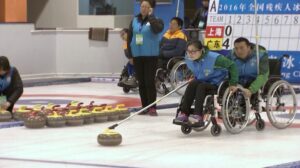
Photo: CGTN
As much of the world’s attention was focused on Russia’s war in Ukraine, the 2022 Winter Paralympics featured 564 athletes representing 46 National Paralympic Committees (NPCs), competing in 78 medal events across six sports. The Games was nothing short of a blockbuster alongside values of courage, determination, inspiration, and above all equality. Athletes from around the globe contested across six sports in two disciplines, from ice sports like para ice hockey and wheelchair curling to snow sports including alpine skiing, cross-country skiing, biathlon and snowboarding. Like the Winter Olympics, the Winter Paralympics followed a “closed-loop” system to prevent all possible contact between the outside world and the athletes, organisers, officials and media.
Among the competing countries, the host country China, after only winning its first-ever Winter Paralympics medal four years ago, took home the most medals with 18 gold, 20 silver and 23 bronze medals for a total of 61. Among China’s accomplishments was the first Paralympic appearance of its ice hockey team just five years after it was formed. The team took home bronze and Jing Yu made more history as only the second woman ever to win a Paralympic medal in ice hockey. Ukraine showed resilience despite the war at home and followed in second place with 29 medals: 11 gold, 10 silver and eight bronze, the country’s most medals ever at the Winter Paralympics. The performance and appearance by Ukrainian athletes were not just one of athleticism, but also of perseverance and strength as their home country was invaded the week before the games began.
However, participation in the Winter Paralympics was impacted by the ongoing Russian invasion of Ukraine as the International Olympic Committee condemned Russia for violating the Olympic Truce, and called for both Russia and its supporter Belarus to be excluded from international sporting events. While at the beginning the IPC announced that the countries’ athletes would be allowed to compete independently under the Paralympic flag, however, it backtracked on the eve of the opening ceremonies following threats of a boycott by multiple NPCs and announced that Belarusian and Russian athletes would be prohibited from competing.
As China emerged as the new Winter Paralympics powerhouse, the scale of China’s success in Beijing took many by surprise and some pinpointed that the absence of the powerful Russian athletes might have cleared a path for Chinese success, regardless, the sleeping giants have now woken up and have made their presence known. China, now a winter sports powerhouse, has set a benchmark for all future winter games and China’s strong display is the result of successfully aligning its vision and mission. Despite the magnificent venues, behind the historic performance that earned glory for the Chinese people lies the intense focus on grassroots participation, strong campaign planning, motivation for athletes to engage and development of winter sports with a better environment for people with disabilities.
Much like the Olympics, the Paralympics is an amazing spectacle that also occurs every four years. In fact, it’s the second-largest sporting event in the whole world and athletes have to truly excel at their sport of choice in order to qualify, just as athletes do for the Olympic Games. However, there’s something that sets the Paralympic Games apart, these games was specifically created just for athletes with physical disabilities, such as people with a spinal cord injury or an amputation. While the very first Paralympic Games, held in 1960 in Rome, were primarily for athletes in wheelchairs, today, people with a wide range of physical disabilities can participate.

Login to add a comment