








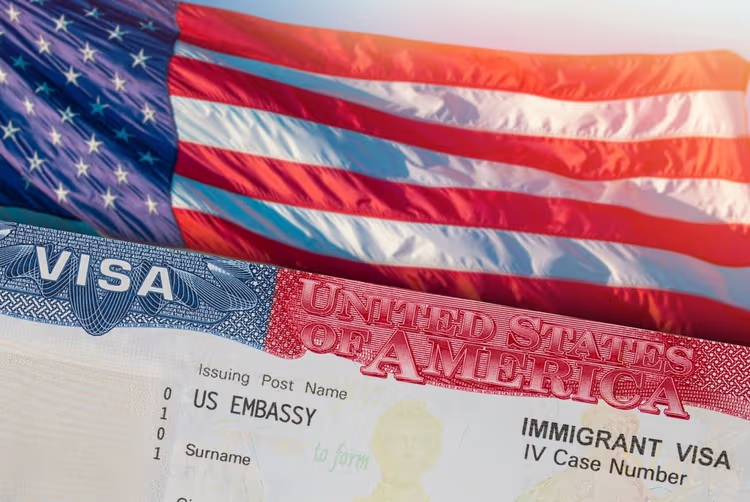
Washington, Aug. 2: Nepalis applying for US tourist or business visas could now be required to deposit more than Rs. 3 million as a security bond after the United States made its visa bond programme a permanent immigration policy.
The measure, introduced by the US Department of State, covers citizens of Nepal and 49 other countries identified as having relatively high rates of visa overstays. Most of the countries on the list are in Africa, Asia and the Pacific.
Under the new system, applicants for B1 business and B2 tourist visas may be asked by a US consular officer to deposit up to US$20,000 before their visa is issued. The bond is refundable if the applicant either does not receive the visa or, after travelling to the United States, complies with all visa conditions and leaves before the authorised stay expires.
The permanent policy replaces an earlier pilot programme that imposed refundable bonds of US$5,000, US$10,000 or US$15,000 depending on the applicant’s risk assessment. The revised rule removes the lowest tier and raises the maximum bond to US$20,000.
Washington says the programme is designed to discourage visitors from overstaying their visas. The administration of President Donald Trump argues that removing people who remain in the country illegally is costly, estimating that the arrest and deportation of a single immigration violator costs the government around US$18,000. Officials say more than 45,000 travellers from countries covered by the programme overstayed their visas in 2024.
According to US authorities, the programme has already had a significant impact. During its first year as a pilot, applications for tourist and business visas from affected countries reportedly fell by as much as 83 percent. Officials say the bond requirement has encouraged greater compliance with US immigration rules.
The list of countries subject to the policy includes Nepal, Bhutan, Bangladesh, Cambodia, Mongolia, Nigeria, Tanzania, Uganda, Zambia, Zimbabwe, Venezuela, Papua New Guinea, Nicaragua, Algeria, Angola, Mauritius, Mozambique, Namibia, Senegal, Seychelles, Tajikistan, Turkmenistan, Tonga and several others. The State Department has indicated that additional countries could be added in the future.
The policy has drawn criticism from immigration lawyers and civil rights advocates, who argue that it disproportionately affects citizens of developing countries by placing a substantial financial barrier on legitimate travel. They say the requirement could prevent many people from visiting family members, attending business meetings or travelling as tourists. The Trump administration, however, has defended the measure, saying it is a necessary step to strengthen border security, reduce visa overstays and deter illegal immigration.
People’s News Monitoring Service

Login to add a comment