







By Our Reporter
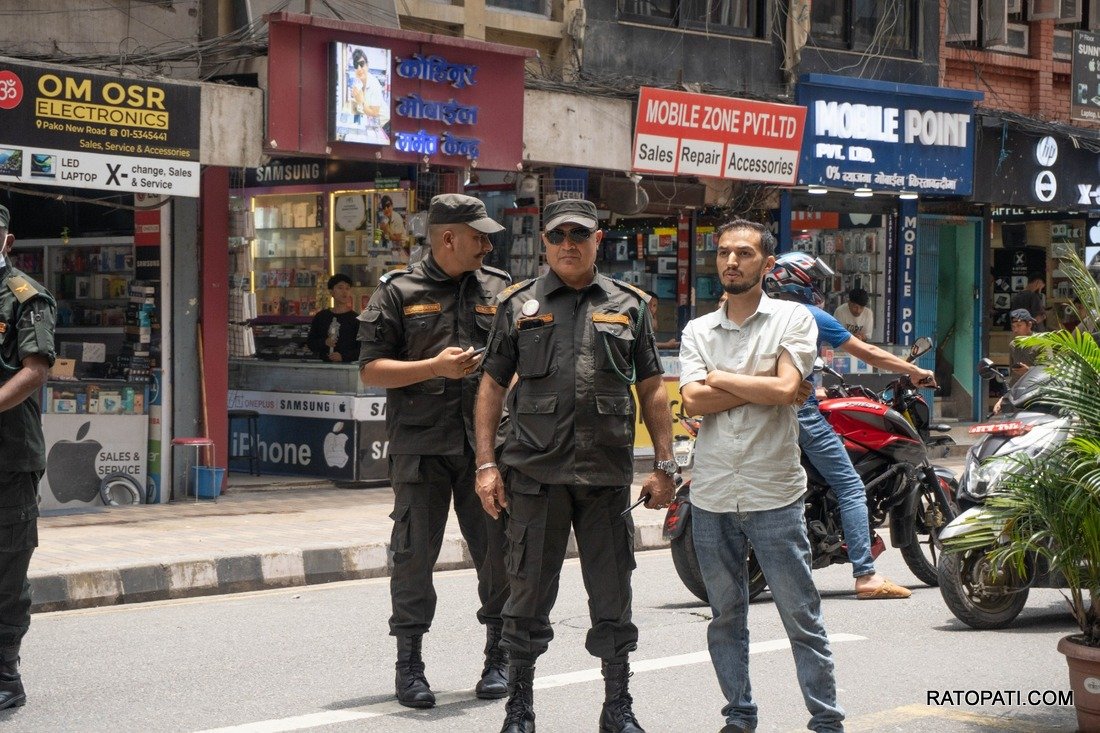
The Balendra Shah-led government has found itself at the center of yet another controversy. This time, the issue is not a policy decision or an administrative lapse. It is the suspicious parking of vehicles outside media houses and the residence of Nepali Congress President Gagan Kumar Thapa. On the surface, parking a few vehicles may appear insignificant. In the larger democratic context, it carries a troubling message. When access to media organizations and opposition leaders is obstructed by people linked to those in power, the incident naturally raises questions about intimidation, abuse of influence and shrinking democratic space.
The timing makes the controversy even more serious. The government is already under pressure over the death of Ganesh Nepali following his self-immolation attempt and the treatment of squatters housed in flood prone holding centers. Instead of addressing these concerns with openness and accountability, it now faces allegations of trying to distract public attention and create fear among critics. Whether that was the intention or not, the government has failed to understand how such actions are perceived in a democracy.
Democracy is built on disagreement. Governments are elected to govern, not to silence those who question them. Political opponents, journalists, civil society and ordinary citizens all have the right to criticize those in power. Attempts to create even a perception that criticism will invite harassment can weaken public confidence in democratic institutions.
The response from the Federation of Nepali Journalists was swift. It described the incident as an attempt to obstruct journalists and demanded an impartial investigation. Opposition parties echoed the same concern. Even more significant was the statement issued by the ruling Rastriya Swatantra Party itself, which condemned any effort to intimidate the media and called for action against those responsible. That statement suggests that concerns over press freedom are not limited to the opposition alone.
The government should not dismiss this episode as a minor political controversy. Democracies often decline through small actions that gradually become normalized. No newspaper was shut down. No journalist was arrested. Yet creating an atmosphere where journalists feel watched or threatened can be just as damaging. Fear does not always require force. Sometimes, suggestion alone is enough to discourage independent reporting.
The same applies to opposition leaders. Blocking access to a political leader’s residence sends an unhealthy message. In a functioning democracy, political competition must remain peaceful and respectful. State power, or individuals acting with the confidence that they enjoy political protection, should never be used to inconvenience or intimidate opponents.
The government also needs to recognize that public trust is already under strain. Questions surrounding governance, public service delivery and crisis management have been growing. Every fresh controversy adds to the perception that the administration is becoming increasingly defensive rather than responsive. Instead of engaging critics through facts and dialogue, it appears trapped in unnecessary confrontations that only deepen suspicion.
If those behind the parking incidents acted independently, the government should have every reason to identify them quickly and hold them accountable. If they acted with political encouragement, the matter becomes even more serious. Either way, a transparent investigation is essential. Silence or vague explanations will only strengthen doubts.
Prime Minister Balendra Shah entered office promising a break from old political practices. Many people expected a government that would value transparency, accountability and open debate. Those expectations cannot survive if critics begin to believe that questioning the government comes with consequences. Democratic legitimacy depends not only on electoral victory but also on the willingness to tolerate criticism.
Nepal’s democratic journey has not been easy. The country has paid a heavy price to secure constitutional freedoms, including freedom of expression and press freedom. Those rights cannot be treated as obstacles to governance. They are safeguards that prevent governments from drifting toward authoritarian behavior.
The lesson from this episode is straightforward. The government must stop viewing criticism as an attack and start treating it as an essential part of democratic accountability. It should order a credible investigation into the parking incidents, make the findings public and ensure that those responsible face legal action, regardless of their political connections.
Power is strongest when it accepts scrutiny, not when it tries to avoid it. A confident government welcomes questions because it has answers. A government that appears uncomfortable with dissent risks losing the very public trust that brought it to office. In a democracy, silencing dissent, directly or indirectly, is never an acceptable path.

Login to add a comment