







By Our Reporter
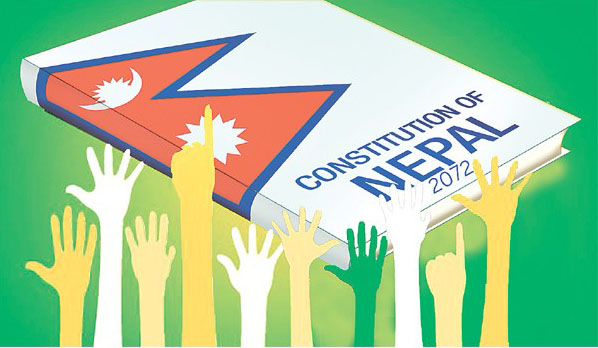
Constitutional amendment is too important to become another political contest. It shapes the rules by which governments function, protects citizens’ rights, and defines the balance of power within the state. That is why the recent withdrawal of several political parties from the government’s constitutional amendment panel should concern everyone. More than the disagreement itself, the episode exposes a deeper problem. Nepal still lacks a shared understanding of what exactly needs to be amended, why those changes are necessary, and how the process should move forward.
It is clear that the constitution was forcefully imposed in foreigners’ interests following the 12-point Delhi agreement. A greater section in the society is not satisfied from the present constitution, which advocates federalism, secularism and republicanism. We should not forget that at a time, when the constitution was promulgated in 2015, instantly, a section of people revolted and tore the copies of the constitution. Several youths were killed in demonstration against the constitution.
The government’s decision to form a panel under Prime Minister Balendra Shah’s political adviser Asim Shah was intended to kick start discussions on constitutional reform. At first, representatives from most parliamentary parties joined the process. But the initial consensus quickly unraveled. The Nepali Congress and the CPN UML withdrew and formed their own committees. Later, the Nepali Communist Party, the Loktantrik Samajbadi Party, the Janata Samajbadi Party, and the Rastriya Janamorcha also walked away, accusing the panel of attempting to rewrite the Constitution rather than merely amend it.
Their concerns cannot be dismissed lightly. The Constitution of Nepal is not an ordinary law. It emerged after years of political conflict, two Constituent Assemblies, and countless rounds of negotiations among competing political forces.
At the same time, constitutional amendment should not become a forbidden subject. No constitution is perfect. Every democratic country periodically reviews its constitutional arrangements to address practical difficulties, remove ambiguities, and improve governance. Nepal’s Constitution has also revealed implementation challenges over the past decade. Disputes over federal powers, overlapping responsibilities among governments, constitutional appointments, judicial processes, and electoral provisions have all generated debate. Addressing these issues through amendment is legitimate, provided the process is transparent and inclusive.
The government’s biggest mistake has been its failure to clearly define the scope of the exercise. Instead of beginning with a list of specific provisions requiring amendment and explaining why change is necessary, the process created uncertainty over whether the goal was targeted reform or a broader restructuring of the Constitution. That ambiguity allowed suspicion to grow. In constitutional politics, uncertainty often creates more conflict than disagreement itself.
The parties that withdrew also deserve scrutiny. Having participated in the panel for nearly three months, walking away only when the report was being prepared raises questions about political consistency. If they believed the committee had exceeded its mandate, those concerns could have been raised earlier and more forcefully from within the process. Leaving the table may generate political headlines, but it does little to shape the final outcome.
Dialogue remains more productive than disengagement. Constitutional reform cannot succeed if major political forces refuse to participate. Their continued presence would have allowed them to defend the principles they believe are under threat while contributing their own proposals for improvement. Boycotting the process risks reducing their influence over decisions that may ultimately affect the country’s future.
The government should now take the initiative to rebuild confidence. Instead of relying solely on an executive appointed panel, it should bring all parliamentary parties together and establish a formal, transparent mechanism under Parliament to discuss constitutional reform. Every proposed amendment should be accompanied by a clear explanation of the problem it seeks to solve, its expected impact, and the reasons existing provisions are inadequate.
Any meaningful amendment must follow the same path. Broad consensus may take longer to achieve, but it produces stronger and more durable constitutional reforms. The current controversy should therefore become an opportunity to reset the process, clarify its objectives, and bring every major political force back to the table. Constitutional amendment should strengthen public confidence in the democratic system, not deepen political distrust. That can only happen when transparency replaces ambiguity and dialogue replaces division.
Nepal needs a system suitable for the nation. It is clear that the present system didn’t suit for the nation. Therefore, the realization among the political parties for amendment of the constitution is a positive gesture, however, we believe, minor amendment in the constitution may invite further dilemma. If we want to safeguard the nation’s sovereignty and independence, it is necessary to overhaul the constitution, if needed, abandoned it through a wider national consensus among all the political actors.

Login to add a comment