







By Our Reporter
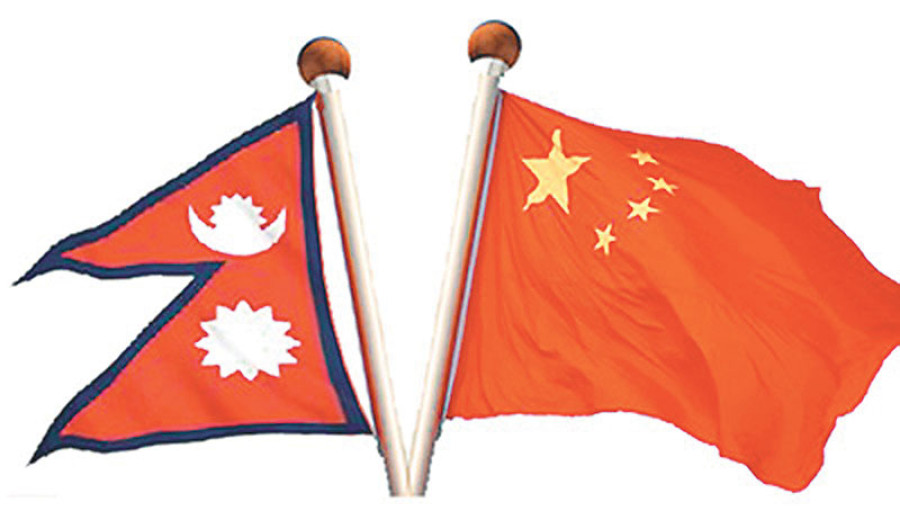
The controversy surrounding the celebration of the 91st birthday of the 14th Dalai Lama has once again highlighted the difficult foreign policy choices Nepal faces between its two giant neighbors and the wider international community. What could have remained a religious and cultural gathering has now developed into a political debate, raising questions about whether Nepal’s long-standing commitment to the One China principle has been implemented with sufficient clarity.
Nepal has consistently recognized Tibet as an integral part of China since establishing diplomatic relations with Beijing in 1956. Successive governments, despite changes in political leadership, have repeatedly pledged that Nepali territory will not be used for activities directed against neighboring countries. That position has remained one of the few stable pillars of Nepal’s foreign policy.
Against this backdrop, the Dalai Lama birthday celebration has drawn unusual attention. The attendance of several Western diplomats and criticism from opposition leaders, former diplomats, and senior political figures have transformed the event into a diplomatic issue. Some argue that the gathering could create unnecessary misunderstanding with China, while others maintain that religious and cultural events should not automatically be viewed through a geopolitical lens.
This debate deserves a measured response rather than political rhetoric. China considers the Dalai Lama not only a religious figure but also a political leader associated with Tibetan separatism. For Beijing, activities involving the Dalai Lama often carry political significance. Nepal has long been aware of this sensitivity and has generally acted cautiously to prevent its territory from becoming a source of bilateral friction.
At the same time, Nepal is an open and democratic society where religious and cultural practices are protected by law. The challenge for policymakers is distinguishing between lawful religious expression and activities that may be interpreted as political campaigns affecting Nepal’s international commitments. That distinction has not always been communicated clearly. Ambiguity creates space for competing interpretations and diplomatic discomfort. Whenever confusion emerges, it is Nepal that bears the consequences, not larger powers with far greater strategic influence.
This episode also illustrates a broader weakness in Nepal’s foreign policy management. Too often, governments respond to sensitive international issues only after controversy has erupted. Instead, authorities should establish clear protocols for events involving politically sensitive international figures, ensuring that legal rights are respected while foreign policy commitments remain consistent.
Nepal’s greatest diplomatic strength has always been strategic balance. It has maintained friendly relations with both China and India while engaging constructively with Western countries and international organizations. That balanced approach has allowed Nepal to protect its sovereignty despite its challenging geography.
Maintaining that balance requires consistency. Public statements, administrative decisions, and diplomatic actions should reinforce one another. Mixed signals only invite unnecessary speculation and place Nepal at the center of geopolitical competition that serves little national interest.
The government should therefore clarify its position through established diplomatic channels, reaffirm Nepal’s commitment to the One China policy, and explain that its decisions are guided by the Constitution, domestic law, and longstanding foreign policy principles. Such clarification would help avoid misunderstandings while preserving Nepal’s credibility with all its international partners.
Equally important, political parties should avoid turning sensitive foreign policy matters into partisan disputes. Nepal’s external relations should reflect broad national consensus rather than shifting political calculations. Stability in foreign policy strengthens trust abroad and reduces uncertainty at home.
Nepal cannot change its geography, but it can manage its diplomacy wisely. As a country situated between major powers, it has little room for inconsistency. Every decision involving issues that carry regional or global significance demands careful judgment, clear communication, and a firm understanding of Nepal’s national interests.
The Dalai Lama birthday controversy should serve as a reminder that diplomacy often depends as much on perception as on policy. Nepal’s challenge is to ensure that neither its actions nor its silence creates avoidable misunderstandings. By remaining consistent, transparent, and guided by its long-established foreign policy principles, Nepal can preserve its relations with China while continuing to engage constructively with the wider international community.

Login to add a comment