







Kathmandu, June 28: Nepal is set to overhaul its six-decade old intellectual property regime with a new Industrial Property Bill aimed at protecting innovation, attracting foreign investment and safeguarding traditional knowledge.
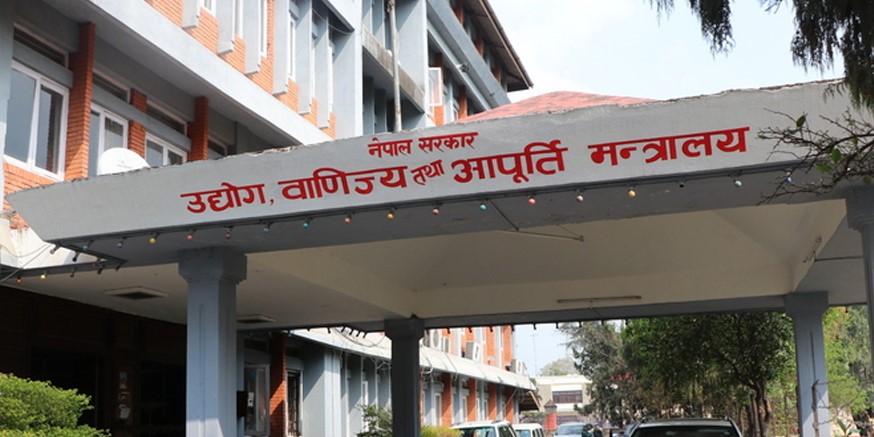
The existing Patent, Design and Trademark Act, enacted in 1965, has struggled to keep pace with artificial intelligence, startups, digital technologies and globalization. To address these gaps, the Ministry of Industry, Commerce and Supplies has published the draft Industrial Property Act, 2082, for public consultation.
The bill seeks to modernize Nepal’s intellectual property system by introducing legal protection for startups, geographical indications, trade secrets, integrated circuit designs and traditional knowledge, while aligning domestic laws with international standards.
One of its major features is the legal recognition of geographical indications (GI). Products such as Ilam tea, Jumla apples, Marpha apples, Gulmi coffee and Bhaktapur Juju Dhau could be officially registered, preventing producers outside those regions from using the names. The measure is expected to curb counterfeit products, strengthen local brands and ensure better returns for genuine producers.
The bill also protects indigenous and traditional knowledge. Foreign companies and domestic firms will no longer be allowed to patent traditional medicinal practices, herbal knowledge or indigenous innovations without prior approval from the concerned community. Companies using such knowledge must also share commercial benefits with the knowledge holders.
For the first time, the bill recognizes trade secrets, offering startups and businesses legal protection against theft of confidential business information. Employees, former staff or business partners who leak confidential formulas, customer databases or business plans could face legal action.
The proposed law introduces tougher penalties for intellectual property violations. Trademark infringement, misuse of geographical indications and unfair competition could attract fines ranging from Rs 1 million to Rs 1.5 million, up sharply from the current maximum of Rs 100,000. Patent infringement, trade secret theft, unauthorized use of traditional knowledge and copying of trade dress could result in fines of Rs 500,000 to Rs 1 million, while infringement of registered industrial designs and integrated circuit layouts could carry penalties of Rs 300,000 to Rs 500,000. Repeat offenders would face double the prescribed fines, compensate victims for actual financial losses and see counterfeit products confiscated and destroyed.
To encourage innovation, micro, small and startup enterprises will receive a 50 percent discount on application fees.
The bill also introduces compulsory licensing to safeguard public health. During national emergencies, public health crises or cases of excessive pricing or artificial shortages of essential products, the government may authorize domestic production of patented medicines or technologies without the patent holder’s consent. Patent owners, however, would still receive reasonable royalties or compensation.
To improve administration, the government plans to establish an autonomous Industrial Property Office led by a joint secretary, replacing the current system in which a small unit under the Department of Industry handles all registrations. The bill also proposes an Industrial Property Promotion Council, chaired by the industry minister, to coordinate policy and reforms.
Strict timelines have been introduced to improve efficiency. Initial examination of applications must be completed within 35 days, while applicants will receive up to 90 days to submit missing documents. Registration, renewal and opposition notices must be published electronically to improve transparency and reduce bureaucratic delays.
The draft also aligns Nepal’s intellectual property framework with the World Trade Organization’s TRIPS Agreement and the Paris Convention, strengthening legal certainty for foreign investors. It further protects integrated circuit layout designs and internationally recognized trademarks, even if they are not registered in Nepal, making it harder to copy global brands and easier to attract technology based investmen

Login to add a comment