







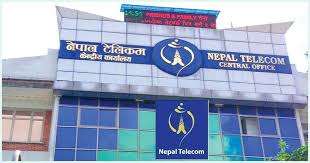
Kathmandu, May 31: The government has announced that it will reduce its shareholding in Nepal Telecommunications Company Limited (Nepal Telecom) to 66 percent. Through the budget statement for the fiscal year 2083/84 (2026/27), the federal government proposed retaining a 66 percent stake while selling the remaining shares to the public by mid-January (the end of the Nepali month of Poush). Finance Minister Dr. Swarnim Wagle stated that the proceeds from the share sale would be utilized to transform Nepal into a “tech hub.”
There had previously been discussions about altering the government’s ownership structure in Nepal Telecom and increasing public participation from 25 percent to as much as 34 percent. The possibility of bringing in a foreign strategic partner had also been debated from time to time. This time, however, the government has clearly chosen the path of expanding public ownership. At present, the government holds 91.49 percent of Nepal Telecom’s shares, the Citizen Investment Trust owns 0.03 percent, and the public and employees together hold 8.48 percent.
Telecommunications expert Anand Raj Khanal says that selling an additional 26 percent stake to the public could mobilize a substantial amount of capital. “Nepal Telecom’s current financial condition is not very strong,” Khanal said. “The company has recently been operating at a loss. Under such circumstances, it remains uncertain how enthusiastic the public will be about purchasing its shares.”
Khanal also pointed out that Nepal Telecom faces a major obligation to pay NPR 20 billion in license renewal fees within the next five years. He stressed the need to resolve policy issues related to the renewal charges.
“An additional NPR 40–45 billion is needed for advanced technologies such as 5G. With revenues declining and expenses increasing, where will the company find the funds for license renewal and infrastructure expansion?” he asked.
Khanal described it as a “strange situation” that, despite operating at a loss, Nepal Telecom continues to distribute a 30 percent cash dividend to shareholders by relying on interest earned from its bank deposits. “If the NPR 20 billion problem is not addressed and dividends continue to be paid from interest income, there is a risk that the company could eventually shut down,” he warned.
Efforts have long been underway to amend the Telecommunications Act in order to clarify provisions concerning license renewals, share ownership structures, and foreign investment in the telecommunications sector. Finance Minister Wagle has again announced that the amendment bill will be presented to Parliament.
According to the company’s financial statements, Nepal Telecom recorded total operating revenue of NPR 25.92 billion and a net profit of NPR 6.27 billion up to the third quarter of the current fiscal year. The statements also show that the company’s annual earnings per share stood at NPR 46.47, representing a 9.9 percent increase compared to the previous year.
However, the budget does not clearly specify how industrial consumers will be required to pay Value Added Tax (VAT) under the new arrangement. Entrepreneurs generally believe that industrial customers will not face difficulties because VAT is usually subject to credit adjustment.
According to Rajesh Kumar Agrawal, former president of the Confederation of Nepalese Industries, further clarification of the provision is necessary.
“Since VAT is credit-adjustable, this arrangement will not affect industrial consumers. However, as it is a new provision, additional clarification is needed,” he said.
Not only Kulman Ghising, but also several individuals who have worked in the energy sector for many years have expressed opposition to the measure and have strongly urged the government to reconsider it.
People’s News Monitoring Service.

Login to add a comment