







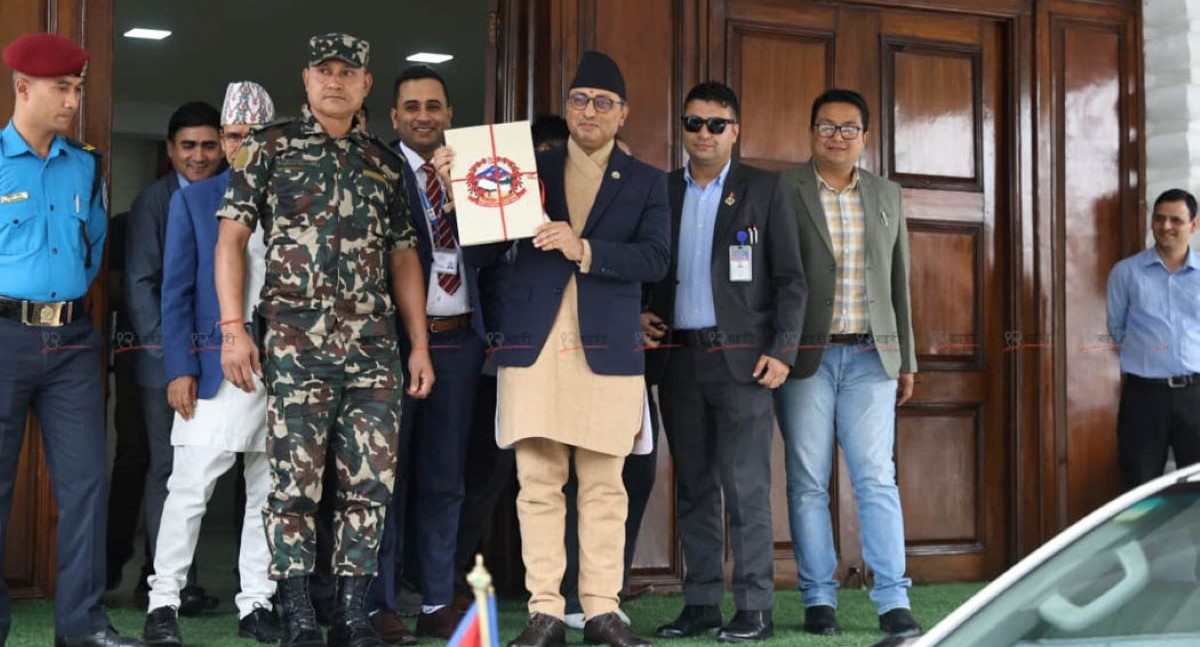
Kathmandu, May 30: Finance Minister Dr. Swarnim Wagle presented the budget for fiscal year 2026/27 on Friday, drawing mixed reactions from former finance ministers, who praised some aspects while raising concerns about implementation and structural reform.
Former Prime Minister and Finance Minister Dr Baburam Bhattarai said the budget was well presented and included positive measures such as tax incentives, support for the private sector, efforts to attract non-resident Nepalis, and encouragement for IT-skilled youth. However, he questioned whether the budget could deliver meaningful structural change.
According to Bhattarai, the overall framework remains largely unchanged, with recurrent expenditure still dominating government spending and little improvement in development spending. He also noted that allocations for education and health have not significantly increased and argued that the balance between federal and subnational spending remains largely the same. “The question is how qualitative and structural transformation can come from essentially the same framework,” he said, while adding that the government should still be given a chance to prove itself.
Former Finance Minister Janardan Sharma viewed the budget more positively, describing it as ambitious and energetic. He said its emphasis on policy reforms could improve implementation and reduce legal and administrative obstacles. Sharma noted that the budget prioritizes production, industrial development, agriculture, energy, tourism, and innovation, while targeting economic growth of seven percent.
He also highlighted provisions aimed at mobilizing capital, promoting the digital economy, strengthening governance, and enforcing a zero-tolerance approach to corruption. Sharma argued that if the government aggressively pursues policy and legal reforms and ensures effective implementation, the budget could produce meaningful results. Overall, he described it as a good budget with clear development goals.
Former Finance Minister Barshaman Pun, however, criticized the budget as being unrealistically large. He argued that the budget size had expanded significantly beyond the initial ceiling, making it difficult to finance and implement. According to Pun, the government is unlikely to mobilize enough domestic resources and will have to rely heavily on borrowing.
While acknowledging the continuation of several existing programs, including region-specific initiatives for Karnali and Madhesh provinces, Pun said the budget appears overly focused on the middle class. He welcomed tax relief and support measures for that group but argued that vulnerable populations such as landless people, laborers, squatters, and the unemployed received little attention.
Pun also pointed out that the current government had previously criticized large budgets and excessive borrowing but had now proposed an even larger spending plan financed by higher debt. Despite his criticism, he welcomed the continuation of some investment-friendly and development-oriented programs introduced by previous governments.
People’s News Monitoring Service

Login to add a comment