







Kathmandu, May 28: The report of the National Human Rights Commission has revealed that the organizers of the Gen Z movement of September 8 2025 (Bhadra 23, 2082) had allegedly planned in advance to turn the protest violent by calling students in school uniforms and using them as human shields.
In the recommendation section of the report made public on Wednesday, the Commission stated that while one faction among the organizers supported a peaceful movement, another faction had prepared in advance to make the protest violent, including arrangements involving petrol bombs.
After the then government decided on Bhadra 12 to impose restrictions on social media, young people and students across the country came out to protest at Maitighar Mandala on Bhadra 23. The demonstration later escalated into one of the most violent clashes in the country’s history.
Earlier, criticism had mainly focused on the excessive use of force by the police. While the Commission’s report also states that security personnel used excessive force, including war-grade weapons such as SLR and INSAS rifles, it additionally reveals that one group among the organizers had already prepared to turn the protest violent.
The report specifically mentions that there was a strategy to use students as “human shields” in order to provoke violent incidents. According to the report, a group created a fake Facebook account in the name of the Nepal Police and spread misinformation claiming that police would not use force against demonstrators wearing school uniforms. The students were later allegedly used as human shields.
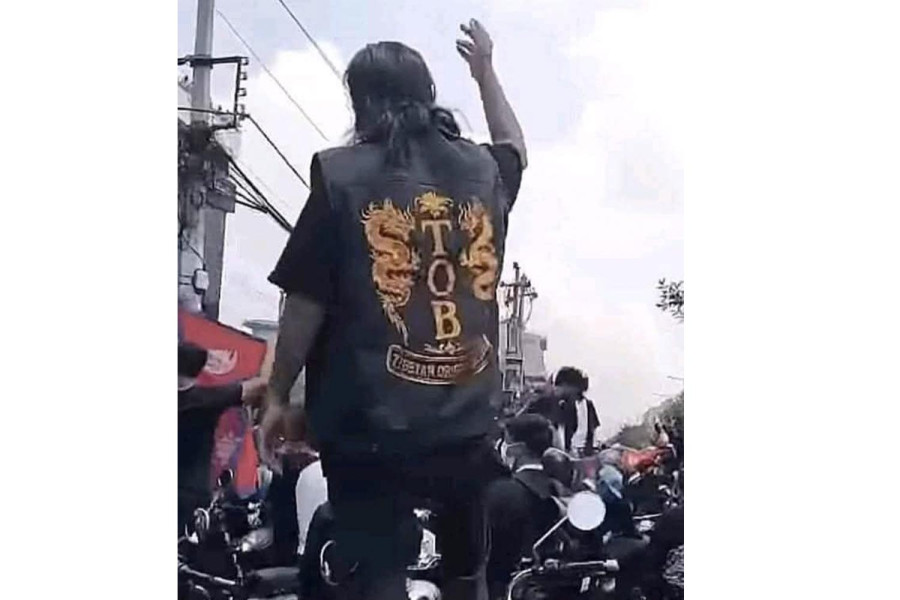
The report does not explicitly identify who used the students as shields. However, it raises serious questions regarding the activities of one of the organizers, Sudhan Gurung, and another group known as the TOB (Tibetan Original Blood) bikers group.
The report clearly states that the suspicious leadership of Sudhan Gurung from the “Hami Nepal” organization, along with the use of innocent students as human shields and political tools by vested-interest groups, was evident. It notes that these points were absent in the earlier investigative report led by Gauri Bahadur Karki.
The Human Rights Commission’s report has even recommended an investigation into Karki himself, the chairperson of the government-formed probe committee on the Gen Z movement, accusing him of being involved in provoking unrest during the movement. The recommendation also mentions interim government Prime Minister Sushila Karki and Home Minister Om Prakash Aryal.
Permission for peaceful protest but “preparations” for violence
According to the report, Sudhan Gurung was among the leading organizers who submitted an application to the Kathmandu District Administration Office seeking permission for the Bhadra 23 protest. Along with Ankit Malla, Khemraj Saud, and others, he assured the administration that the demonstration would remain completely peaceful and that only around 500 to 800 youth and students would participate.
However, even before the protest began, Gurung had already arranged medical tents, health volunteers, and three ambulances at Maitighar Mandala. The Commission viewed this preparation with suspicion, arguing that deploying ambulances and medical tents in advance for a supposedly peaceful gathering of only 500 participants indicated prior knowledge that violence and unrest might occur.
The report also mentions another significant detail. Around 9 a.m. on the 23rd, when the actual Gen Z leaders, including Rakshya Bam and Jasmin Ojha’s group, arrived at Maitighar, Sudhan had already unilaterally managed all arrangements.
After seeing these unusual preparations, Rakshya and Jasmin’s group reportedly had a major dispute with Gurung. Suspicious of his role, the original Gen Z leaders allegedly urged him to immediately withdraw from the protest. However, Gurung refused to leave.
Use of students as “human shields” and alleged infiltration
The report also exposes what it describes as the extreme misuse of innocent school and college students who had come out onto the streets for civil rights.
The rally, which began at around 10:30 a.m. with roughly 3,000 participants, reportedly transformed into a crowd of 20,000 to 25,000 by the time it reached Babarmahal. At that same moment, according to the report, 15 to 20 mysterious bikers wearing black T-shirts marked “TOB” and bearing matching tattoos entered the crowd and began provoking demonstrators. This aspect had also been mentioned in the earlier Karki Commission report.
According to the report, these individuals pushed students to the front, effectively using them as “human shields.” As police began using force, the students at the front lines became the first targets, which further enraged the crowd and intensified the chaos. While provocateurs allegedly remained behind throwing stones, the police action mainly affected the students standing in front.
Leadership in breaking the barricade
At around noon, after the crowd reached the Everest Hotel area in New Baneshwor, the report states that Sudhan Gurung took command of the massive crowd of around 25,000 people. According to the report, demonstrators became increasingly aggressive immediately after Gurung assumed leadership.
The report claims that the TOB group first incited the crowd, and once the protesters became agitated, Gurung took over command.
The report further states that clashes began after the crowd, under Gurung’s leadership, attempted to break through security barricades, prompting security forces to use force. Once students were pushed toward the barricades, the situation spiraled out of control, ultimately resulting in the deaths of 19 protesters, most of whom were students and young people.
As the crowd became uncontrollable, stones were thrown at the Parliament building, and ambulances as well as vehicles belonging to the Human Rights Commission were set on fire. At that point, those leading the movement allegedly distanced themselves from responsibility.
The report clearly states that “undesirable elements” and the TOB group had infiltrated the movement and incited violence by placing students at the forefront. However, despite being responsible for obtaining protest permission and later taking command of the crowd after noon, Sudhan Gurung is said to have made no visible effort to stop the infiltration, protect students, or calm the crowd.
Investigation focused on Sudhan and those who used students
Based on these findings, the Commission concluded that the primary responsibility and accountability for the violence and resulting loss of life and property lay with the organizers.
The report states that Sudhan Gurung displayed suspicious behavior from the very beginning — from making questionable preparations during the permit process, refusing to withdraw despite objections from the original Gen Z leaders, and eventually leading the aggressive crowd in breaking the barricades at Baneshwor.
Following the Gen Z movement, Sudhan Gurung, who later appeared as a leading Gen Z figure after participating in talks with the Army Chief, reportedly became known as a close associate or “son-like figure” to interim Prime Minister Sushila.
Later, links reportedly emerged between his organization and the Free Tibet campaign. Due to suspicions surrounding his role, some Gen Z leaders reportedly described him as a “hijacker” of the movement.
The Human Rights Commission’s report presents his role as highly suspicious. It asks who instructed that innocent students be used as human shields, and what relationship existed between Sudhan Gurung, “Hami Nepal,” and the TOB bikers group. To answer these questions, the Commission has recommended a legal investigation into Sudhan, TOB, and the organizers of the protest.
Sudhan’s changing character
While mobilizing people for the Gen Z movement, Sudhan had claimed that none of them intended to enter politics or become lawmakers or ministers. However, while actual Gen Z leaders such as Rakshya Bam stayed outside the government system to continue pressuring authorities, Sudhan quickly entered politics through the RSP, became a lawmaker, and later a minister.
After the police barricade in New Baneshwor was broken, Sudhan reportedly addressed a small group, admitting that breaking the barricade had been a mistake and that the resulting violence led to police firing and deaths among protesters. However, the Human Rights Commission report itself identifies him as the main leader behind the attempt to break the barricade.
After becoming a minister, public scrutiny reportedly grew regarding his property disclosures and alleged connections with suspicious groups, including individuals such as Deepak Bhatt. The government has now formed a committee to investigate his assets.
People’s News Monitoring Service.

Login to add a comment