







By Our Reporter
The country’s working and middle class carry one of the heaviest tax burdens in South Asia, yet they receive little in return from the state. Public hospitals remain overcrowded, government schools continue losing trust, roads fall apart after every monsoon, and basic administrative services still move at the pace of paperwork from another century. Citizens pay high taxes twice, first to the government and then again to private hospitals, private schools and private transport. A country cannot build public trust this way. Humans invented taxation to build states, not to fund collective disappointment.
Nepal’s top personal income tax rate stands at 39 percent, among the highest in the region. India’s maximum rate is 30 percent, Bangladesh’s 25 percent and the Maldives’ just 15 percent. Even salaried workers earning below the taxable threshold still pay a one percent social security tax. Meanwhile, the tax-free income threshold itself remains low compared to neighboring countries. In practice, many middle-income earners feel punished simply for working formally and honestly.
The problem is not only the rate. The larger issue is the absence of visible public return. High-tax countries in Europe maintain quality healthcare, reliable transport, strong social protection and effective public administration. Nepal offers none of these at a comparable level. Families pay income tax while also saving separately for medical emergencies, children’s education and old age security because they do not trust public systems to support them.
That disconnect is dangerous. Once taxpayers begin feeling exploited rather than protected, compliance weakens. Informal transactions rise. Tax evasion becomes socially tolerated. The burden then falls even more heavily on salaried workers whose income is already recorded and deducted at source.
Tax experts are increasingly warning about this imbalance. Former government secretary Laxman Aryal argues that very high tax rates encourage people to conceal income or remain outside the formal economy altogether. Chartered accountant Sudarshanraj Pandey points out that the highest slabs generate relatively little revenue compared to the economic frustration they create. Only around Rs 4 to 5 billion reportedly comes from the very high tax brackets. That is not a transformative amount for the national economy.
Nepal’s tax system has slowly become narrow, rigid and overdependent on formal earners. Instead of widening the tax base, governments have repeatedly leaned on the same group of salaried taxpayers. Professionals, office workers and small entrepreneurs often face strict taxation while large-scale informality continues unchecked. Small consumers carrying groceries across the border face scrutiny while larger leakages inside the system remain poorly controlled. It creates the impression that the state targets those easiest to catch rather than those most capable of paying fairly.
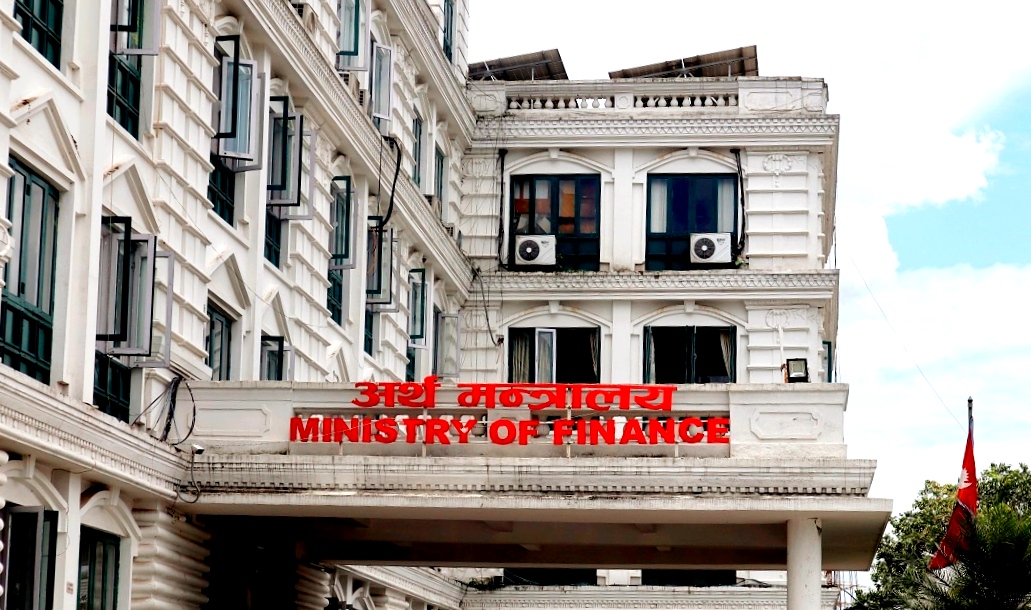
Finance Minister Swarnim Wagle has publicly acknowledged the growing pressure on the middle class. That recognition matters. But recognition alone will not restore trust unless it is followed by structural reform.
Nepal needs a smarter and fairer taxation system, not simply lower or higher taxes. The first step should be raising the income threshold for taxation. Inflation and rising living costs have already reduced the purchasing power of ordinary earners. Tax slabs designed years ago no longer reflect present economic realities.
Second, the government should simplify the tax structure. Too many slabs create confusion and frustration. Nepal once operated with a simpler model during the reforms of the 1990s. Revisiting that approach could improve compliance and transparency.
Third, authorities should gradually shift some burden away from salaried income toward wealth-based and capital-based taxation. Experts have suggested increasing capital gains taxes in a balanced way, especially for high-value transactions. That would spread responsibility more evenly across the economy instead of concentrating it on monthly earners.
Fourth, Nepal must dramatically expand the formal economy. Millions remain outside the tax net altogether. Lower tax rates combined with wider participation often generate better long-term revenue than extremely high rates imposed on a narrow group. India’s experience after GST reforms showed that lower rates do not always reduce total collection if the base expands.
Most importantly, the government must visibly improve public services. Tax reform without service reform will fail. Citizens tolerate taxation when they see functioning schools, dependable hospitals, efficient transport and responsive institutions. Without that connection, taxation begins to look less like nation-building and more like organized extraction with official receipts attached.
The coming budget offers the RSP government a major opportunity. A majority government has political space to pursue meaningful reform instead of temporary populism. Reducing unnecessary burdens on the working class while improving accountability in public spending could rebuild trust between citizens and the state.

Login to add a comment