







By Our Reporter
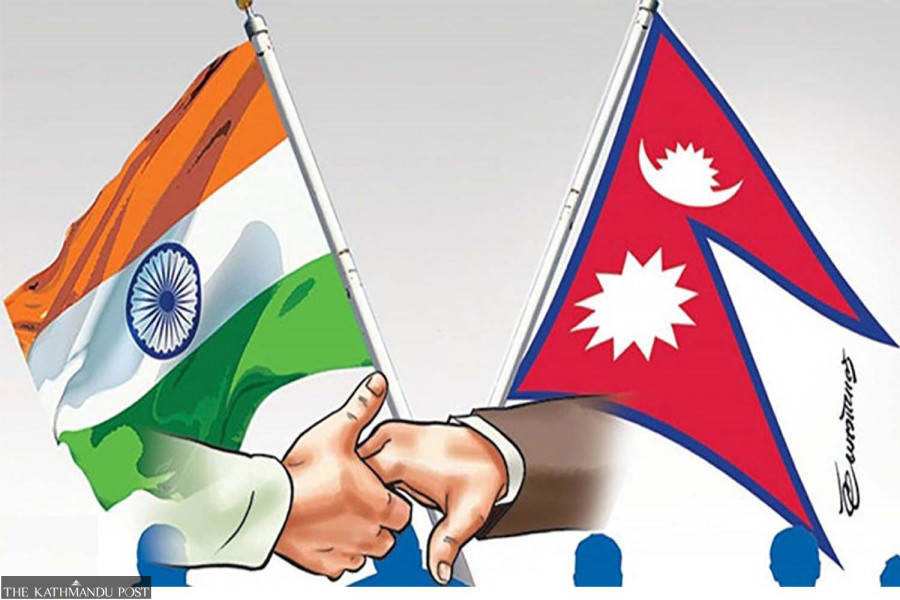
Relations between Nepal and India have entered one of their most uncertain phases in recent years. The tension is not coming from one major crisis or a dramatic diplomatic breakdown. Instead, it is building through a series of small but politically loaded decisions taken by the new government led by Balendra Shah and the Rastriya Swatantra Party. Together, those actions are sending a message that Kathmandu wants to redefine how it deals with powerful neighbours, especially India.
The question now is whether Nepal is witnessing the birth of a more confident foreign policy or the rise of unnecessary diplomatic friction driven by political symbolism.
Within just six weeks of taking office, Prime Minister Shah declined to meet India’s ambassador, avoided direct engagement with visiting foreign officials and enforced customs duties along the Nepal-India border that disrupted everyday trade for ordinary people. The government also issued a diplomatic protest to both India and China over the Lipulekh route used for the Kailash Mansarovar pilgrimage. That protest came just before Indian Foreign Secretary Vikram Misri was expected to visit Kathmandu. The visit was later postponed.
Taken individually, these actions may appear manageable. Combined together, they created unease in New Delhi and confusion among diplomats observing the relationship.
For decades, Nepal’s foreign policy toward India was often criticised at home as overly submissive. Successive governments led by the Nepali Congress, CPN-UML and Maoists were accused of giving excessive diplomatic space to India. Nepali prime ministers often met foreign envoys immediately after taking office, sometimes without proper institutional preparation. Many nationalist voices believed Nepal’s sovereignty and diplomatic dignity were being weakened.
The new government appears determined to break from that pattern. Shah’s refusal to meet ambassadors below ministerial level was reportedly a deliberate policy decision. Supporters argue this reflects self-respect and institutional discipline rather than hostility toward any country.
But diplomacy is not run by emotion alone. Even correct principles can become harmful if applied rigidly. Foreign policy requires balance, timing and flexibility. Nepal has every right to maintain protocol and defend sovereignty, especially regarding disputed territories like Lipulekh, Kalapani and Limpiyadhura. At the same time, diplomacy works best when communication channels remain open.
That balance currently appears fragile. India’s response so far has remained cautious and restrained. Indian officials have largely avoided public escalation. That restraint reflects the deep structural reality connecting the two countries. Nepal and India are not ordinary neighbours. Their economies, societies, labour markets, culture and security systems are deeply interconnected.
India accounts for more than 60 percent of Nepal’s trade. Almost all third country trade passes through Indian territory. Nepal depends heavily on India for petroleum products, fertiliser, medicines and energy cooperation. Millions of people living along the open border depend on daily cross-border movement for survival. Even small disruptions immediately affect ordinary citizens.
That reality also means Nepal stands to lose more if relations seriously deteriorate.
The recent customs enforcement offers a good example. The government argued that stricter implementation was necessary to curb smuggling and increase revenue. But in practice, it mainly affected ordinary border residents buying small household goods while larger organised smuggling networks often remained untouched. Madhesh-based parties quickly opposed the move because it directly hurt communities with long-standing social and economic ties across the border.
The Lipulekh dispute presents another challenge. Nepal is justified in defending its territorial claims based on the Sugauli Treaty of 1816. Ignoring the issue entirely would create domestic backlash against the government. Yet border disputes between unequal neighbours require careful handling. Public confrontation may generate nationalist applause at home, but it rarely produces quick diplomatic outcomes.
At the same time, India must also understand that Nepal’s political landscape has changed. A younger generation no longer accepts the older model of quiet diplomatic dependence. Attempts to pressure Kathmandu too openly could deepen anti-India sentiment inside Nepal and strengthen hard nationalist positions.
Both countries therefore face risks. Nepal risks economic discomfort, trade complications and diplomatic isolation if tensions deepen unnecessarily. India risks weakening long-term trust among ordinary Nepalis if it appears dismissive of Nepal’s sovereignty concerns. In the long run, mistrust benefits neither side.
The deeper issue is that Nepal still lacks a clear long-term foreign policy vision. So far, many of the new government’s actions appear symbolic rather than strategic. Refusing meetings, enforcing dormant customs rules or issuing sharp diplomatic notes may create the image of assertiveness, but symbolism alone cannot replace coherent diplomacy.
Nepal’s real national interests lie elsewhere: improving trade terms, expanding electricity exports, resolving the Gurkha recruitment issue under India’s Agnipath scheme, completing stalled infrastructure projects and reviving the long-delayed Pancheswar project. Those require negotiation, patience and sustained engagement, not diplomatic distance.
Prime Minister Shah still holds a rare advantage. His popularity, youth appeal and Madhesi identity have given him goodwill both inside Nepal and in parts of India. He can use that position to reshape relations on the basis of equality and mutual respect rather than dependency or confrontation.
The best path forward is neither surrender diplomacy nor performative nationalism. Nepal needs mature statecraft that protects sovereignty while recognising economic realities. India, too, must adapt to a changing Nepal that seeks dignity in engagement.
History, geography and economics ensure that neither country can walk away from the other. The real challenge is whether both sides can replace suspicion with pragmatic cooperation before temporary friction hardens into long-term distrust. Human governments, unfortunately, often discover the value of dialogue only after spending months manufacturing avoidable tension like it is a national development project.

Login to add a comment