







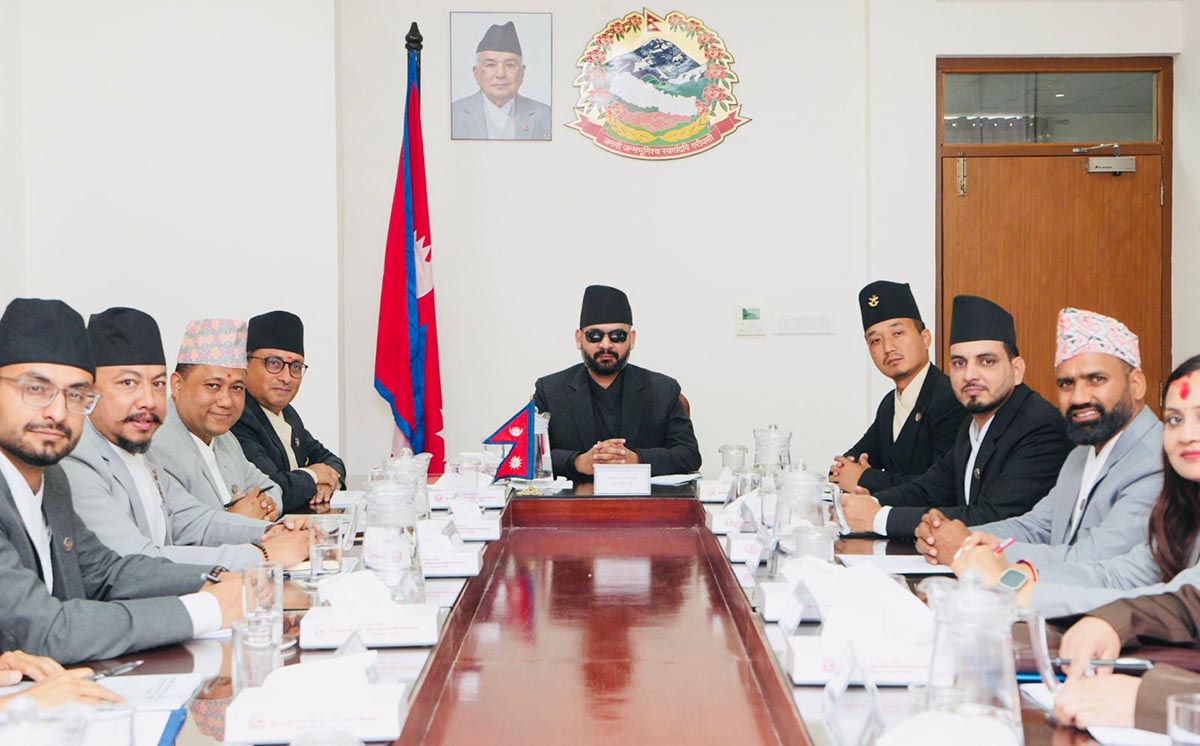
Kathmandu, May 4: The government is preparing to present a proposal to the Cabinet today to restructure and reduce the number of ministries to 17. The plan, designed to streamline governance while quietly concentrating more authority around the prime minister, is expected to move forward once approved.
A Cabinet meeting scheduled for today (May 4) will likely endorse the blueprint, according to a minister. Once passed, implementation will begin, along with amendments to the Government of Nepal’s Rules of Business Allocation and Rules of Procedure.
Officials say the restructuring plan, along with revised administrative rules, will be formally adopted, after which a timeline will be set to merge ministries accordingly.
Proposed 17-Ministry Structure After Merger
- Office of the Prime Minister and Council of Ministers
Will absorb general administration, civil service reform, IT governance including data security and AI, federal affairs, local governance, and the Department of Money Laundering Investigation. - Ministry of Finance
Will retain core responsibilities and add clearer authority over development partnerships and foreign aid coordination. - Ministry of Home Affairs
Will integrate all disaster management-related functions and agencies. - Ministry of Foreign Affairs
Will handle all external relations. - Ministry of Law, Justice and Parliamentary Affairs
Will incorporate the functions of the Law Commission and all legal bodies. - Ministry of Health and Food Security
Will merge health services with sanitation and food regulation, including food technology and quality control. - Ministry of Education and Sports
Will combine education (excluding science and technology) with sports. - Ministry of Agriculture, Cooperatives and Rural Development
Will integrate agriculture, land administration, land reform, and introduce new rural development and cooperative components. - Ministry of Social Security and Women, Children, and Gender & Sexual Minorities
Will bring together social protection, labor-linked welfare, and inclusion-focused portfolios. - Ministry of Industry, Commerce and Innovation
Will merge industry and commerce with science, technology, and innovation sectors. - Ministry of Youth, Labor and Employment
Will handle employment, foreign labor, youth affairs, and corporate social responsibility. - Ministry of Energy, Irrigation and Water Resources
Will oversee energy, water sources, distribution, and maintenance. - Ministry of Integrated Infrastructure
Will combine physical infrastructure, transport, urban development, water supply infrastructure, and sanitation systems. - Ministry of Forests, Environment and Climate Change
Will unify forestry, environmental protection, and climate functions. - Ministry of Culture and Tourism
Will cover culture, tourism, civil aviation, language preservation, and pilgrimage management. - Ministry of Communications
Will manage media, postal services, public grievance systems, digital content, fact-checking, and national archives. - Ministry of Defense
Details remain unspecified.
People’s News Monitoring Service

Login to add a comment