








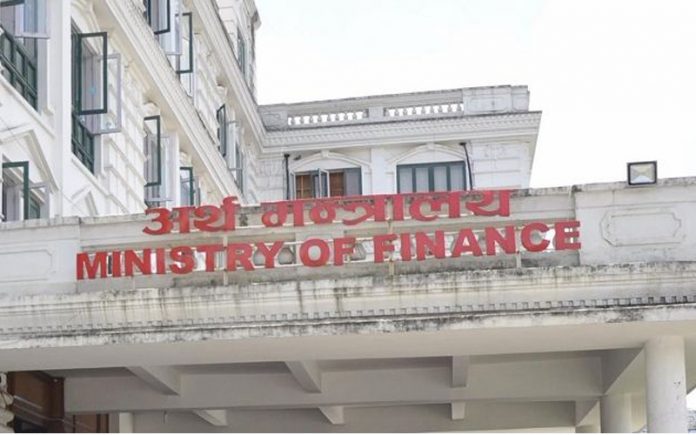
Kathmandu, April 27: The government on Monday made public the “Nepal’s Current Economic Situation Report–2083”, which includes an assessment of the country’s overall economic, social, and governance conditions.
After the formation of the new government, Finance Minister Swarnim Wagle decided to prepare the document immediately upon assuming responsibility at the Ministry of Finance. According to the ministry, the report aims to present an objective picture of the current state of the economy and to guide future policymaking, planning, and budget formulation.
The report released by the government is being viewed as a foundational document for determining the country’s future economic direction. It has been published amid challenges such as sluggish economic growth in recent years, declining private investment, unemployment, rising import dependency, weak implementation capacity, and limited financial resources. While the report acknowledges that Nepal’s economy is currently surrounded by numerous challenges, it concludes that there are ample multidimensional opportunities for transformation.
The document states that if a stable government, good governance, and an investment-friendly policy environment can be established, confidence in the private sector will be restored, leading to increased domestic and foreign investment. This is expected to expand productive sectors, create employment, and accelerate economic activities. The hydropower sector has been presented as another major potential area.
Given Nepal’s vast water resources, the report notes that affordable and reliable energy production can support industrialization, expansion of the service sector, and stable foreign earnings through electricity exports. It further states that expanding regional electricity trade could strengthen Nepal’s role in the green energy market. The government has also identified Nepal’s natural, religious, cultural, and Himalayan heritage as another strong economic foundation.
The report emphasizes that integrated development of tourism based on mountains, culture, and local communities can generate income and employment in rural areas. It concludes that improving tourism infrastructure, service quality, accessibility, and destination management would enhance international competitiveness.
Similarly, the document identifies artificial intelligence, robotics, information technology services, business process outsourcing, and digital entrepreneurship as major opportunities for the coming decade. These sectors, which create high value with relatively low capital, are seen as capable of connecting Nepal’s youth workforce to the global market. The report also clarifies that modernization of the agricultural sector can increase production, income, and exports. It highlights that import substitution is possible through increased investment in high-value crops, livestock farming, horticulture, and agro-processing industries.
Likewise, industrial development, supply chain strengthening, special economic zones (SEZs), industrial clusters, and trade facilitation have been described as key tools for building an export-oriented economy. The report also points out the possibility of transforming Nepal into a regional transit trade hub by leveraging its geographic position. It concludes that the government must significantly increase investment in transport, energy, irrigation, and digital infrastructure. The document also notes the potential of advancing large-scale projects through public-private partnership (PPP) models.
Furthermore, it emphasizes that remittances, which bring in large amounts annually, should not be limited to consumption but directed toward entrepreneurship, skill development, and productive sectors. It also highlights the need for policies to utilize the experience and skills of workers returning from foreign employment in domestic production. In the financial sector, it recommends expanding financial inclusion, digital banking, and long-term investment instruments to channel savings into productive areas.
The report states that sustainable use of the country’s available resources—minerals, water, land, forests, and medicinal herbs—can increase income, production, and employment. It stresses the need to adopt policies that ensure resource utilization while maintaining ecological and environmental balance.
The Ministry of Finance has projected in the report that an average economic growth rate of seven percent can be achieved from the next fiscal year. Within five to seven years, per capita income is expected to exceed 3,000 US dollars, and the size of the economy is projected to approach 100 billion US dollars. To achieve this, the report outlines key targets such as increasing electricity generation capacity to 15,000 megawatts within five years, completing national pride projects within two years, strengthening linkages between agriculture, industry, and tourism, developing quality tourism infrastructure, and expanding the digital economy.
The report also notes that some economic policies have failed to deliver expected results due to weak implementation capacity, limited financial resources, poor prioritization, and inefficient allocation of resources.
People’s News Monitoring Service.

Login to add a comment