







By Our Reporter
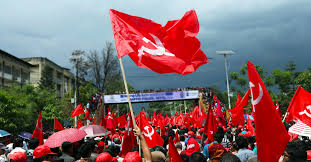
Recent reports have once again brought back discussion of a possible unity between CPN-UML and CPN (Maoist Centre). Stories of high-level meetings within the parties, informal dialogue among leaders, and mediation involving younger generations have created renewed movement in left political circles. But beneath these reports lies a basic question that still remains unanswered: can the left regain public trust with the same leadership and the same practices?
This is not a rejection of left unity itself. A convergence of various communist forces in Nepal—including UML, Maoist Centre, the Biplav faction, Ghanshyam Bhusal, Ram Karki, Kiran, MB and others—is not inherently unusual. Nepal’s political history has repeatedly moved through cycles of split and reunification driven by power struggles and shifting alliances. The issue is not whether unity should happen, but why it should happen and what purpose it should serve.
In the current political context, the debate on left unity goes beyond organisational alignment. It is closely tied to shrinking democratic space, widening social inequality, and weakening state capacity. If left forces remain fragmented or weak, their ability to push for policy reform, structural change, and governance improvement will also weaken. That could deepen inequality and underdevelopment further.
At the same time, past experience offers a different lesson. Previous attempts at left unity have often delivered access to power but failed to produce lasting transformation. Power-sharing arrangements tended to remain confined to elite leadership circles. The gap between public expectations and party priorities gradually widened. Even when electoral mandates were secured, their use was often directed more toward managing power than addressing public interest.
This raises another important question alongside the current unity discussion: is this simply a repetition of the old left model, or the beginning of a new alternative left politics?
Nepal’s communist movement has historically gained significant political strength at different moments. The UML after 1990, the Maoists after 2006, and the left alliance in 2017 are key examples. Yet these gains have not translated into sustained transformation. The core reasons lie in the disconnect between ideology, practice, and leadership culture. While socialism remained the stated principle, politics increasingly revolved around state power. Internal democracy weakened, leadership became centralised, and clarity about the party’s relationship with the state remained limited. Over time, these factors distanced left forces from the public.
As a result, key public issues such as good governance, employment, and development have gradually moved out of the left parties’ political agenda. New political forces are now increasingly taking up these issues, directly affecting the left’s public credibility.
In this context, unity alone is not a solution. The meaning of unity must include ideological restructuring, organisational reform, and a more accountable political culture. If unity only brings together old leadership structures, familiar styles, and existing power arrangements, it will result in redistribution of power rather than real transformation.
This is why the idea of a “new left alternative” becomes important. Such an alternative would need to go beyond the narrow goal of capturing state power. It would have to engage with deeper questions about the nature of the state, production relations, and social justice. Even if rooted in Marxist thought, it would require reinterpretation within Nepal’s democratic, plural, and competitive political context.
At the same time, global politics is also undergoing major shifts. The liberal international order is facing growing challenges, and a more multipolar global structure is emerging. For smaller countries like Nepal, relying only on old geopolitical balancing strategies is becoming less effective. Strategic clarity, policy independence, and decision-making capacity are becoming increasingly important.
Within Nepal, this shift is already visible. Forces such as RSP, independent leadership figures, and civic movements are challenging the traditional agenda of established parties. Issues like governance reform, employment, and public service delivery are now central to their political appeal. If left parties fail to reclaim these issues, they risk further decline in public support.
Therefore, the current debate on unity should not be reduced to electoral strategy or a mechanism to return to power. Its real test lies in whether it can answer a simple question: why should people trust these parties again?
If left forces truly intend to unify, they must first clarify what kind of society they want to build, which social groups they represent, and what model of governance they propose. Only then can questions of organisation, leadership, and power-sharing meaningfully follow.
Otherwise, unity will remain limited to structure, while instability in practice continues.
Ultimately, the future of left unity will depend not on familiar faces, but on a new direction of thinking.

Login to add a comment