







By Premchandra Jha
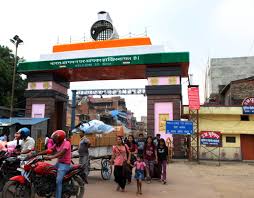
As debates over Nepal–India relations continue, issues tied to the everyday lives of Madhesi communities living in border areas have once again come to the forefront of national discourse. In particular, the government’s decision to impose taxes on daily consumer goods purchased from Indian markets has sparked widespread dissatisfaction, with many arguing that it directly affects livelihoods in border regions. However, it is insufficient to interpret this issue merely as an emotional reaction or short-term discontent; its roots lie in the complex interplay of state structure, the nature of economic policy, geopolitical realities, and historical ties.
The relationship between Nepal and India differs from a typical neighborly relationship not only because of cultural proximity but also due to structural interdependence. Open borders, labor mobility, supply chains of consumer goods, and familial ties have effectively transformed the two countries into a semi-integrated socio-economic space. In such a context, the unilateral imposition of strict economic policies is bound to have uneven impacts on border communities. Therefore, dismissing opposition to tax policies as simply an attempt to evade revenue obligations would be an oversimplification.
Border economies have their own distinct characteristics, which can be understood through the lens of center–periphery relations. Policies formulated in the capital often overlook the realities of peripheral regions. In the case of the Madhes, factors such as market access, price differentials, transportation costs, and supply systems have made dependence on Indian markets not merely a choice but a necessity. When similar goods are available in Nepal at higher prices, it is economically rational for consumers to choose nearby, cheaper markets. Penalizing such behavior through taxation places the state in direct conflict with market realities.
At this point, the gap between the intent and implementation of tax policy becomes evident. While the state may aim to increase revenue, promote formal trade, and regulate the informal economy, if enforcement disproportionately targets small consumers while failing to curb large smuggling networks, the burden falls more heavily on low-income communities reliant on daily consumption. This not only exacerbates economic inequality but also fuels public resentment toward the state.
The issue of smuggling is central here. Illegal trade in border areas is not merely an individual activity; it involves organized networks, systems of protection, and a lack of effective cross-border coordination. Attempting to address such a complex problem by cracking down on ordinary people carrying small quantities of goods appears to be a weak policy approach. It addresses symptoms rather than root causes.
Another critical dimension related to the Madhes is that of identity and representation. Historically, Madhesi communities have expressed grievances over inadequate representation within state structures. In this context, when policies directly affect their daily lives, they are interpreted not only as economic decisions but also as political signals. This increases the risk that policy disagreements quickly evolve into identity-based discontent.
The management of open borders also warrants reconsideration. Between the two extremes—keeping borders fully open or fully controlled—a practical middle path must be found. The concept of “smart border management” could be relevant here, using technology, data sharing, and risk-based monitoring to facilitate legitimate movement while controlling illegal activities. However, such a system requires a high degree of trust and coordination between the two countries.
Structural weaknesses on Nepal’s side are also a key part of this debate. If border regions lack adequate markets, storage facilities, competitive pricing, and quality goods, it is impractical to expect consumers to behave differently. Therefore, alongside tax policy, supply-side improvements are essential. Otherwise, taxation may simply push transactions further into informal channels.
At the diplomatic level, this issue is equally sensitive. Even minor policy changes in Nepal–India relations can have significant social impacts, especially in border areas. Thus, rather than unilateral implementation, seeking coordination through bilateral dialogue would be more beneficial in the long run. The defining feature of an open border is its flexibility based on mutual understanding; converting it into rigid administrative control could weaken the foundation of the relationship.
Overall, the current controversy highlights a serious challenge in Nepal’s policymaking process: to what extent do centrally designed policies align with local realities? If local voices are not incorporated into policymaking, resistance during implementation is inevitable. Therefore, the first step toward a solution must be participatory policymaking, involving representatives from border communities, local governments, and stakeholders.
Ultimately, this is not just a question of taxation; it is a question of state legitimacy, public trust, and the relationship between the state and border societies. Long-term stability can only be ensured if policies are perceived as fair, practical, and inclusive. Otherwise, even small decisions can create significant social divides.
The real strength of Nepal–India relations lies not in diplomatic documents but in people-to-people trust. Only by building on this trust—through policy reform, economic balance, and mutual cooperation—can disputes like the current one move toward resolution. Without concrete efforts to ease the livelihoods of border communities and address structural weaknesses, control-oriented measures alone cannot provide a sustainable solution.
Looking deeper into this debate, another important aspect emerges—the relationship between the state’s tax structure and social justice. Tax policy is not merely a tool for revenue collection; it also signals how the state treats its citizens. When the tax burden falls disproportionately on economically vulnerable and structurally marginalized border communities, it raises questions about the legitimacy of taxation itself. Policies that ignore taxpayers’ capacity, access, and lack of alternatives appear more administrative than practical, increasing the risk of declining compliance over time.
In this context, the role of the “informal economy” is also significant. In border regions where formal trade structures are weak, informal transactions become the primary means of exchange. A sudden tightening of controls is unlikely to shift the market fully into formal channels; instead, it may drive activity into more complex and hidden routes. This neither increases revenue nor transparency; rather, it risks expanding unregulated activities. Therefore, tax reform must be accompanied by a long-term strategy to gradually formalize the informal economy.
Understanding the psychology of border communities is equally important. For them, the border is not just a political boundary but a point of daily transition. Family ties, employment, education, and healthcare often extend across it. When the state abruptly imposes stricter controls, it may be perceived as external interference, creating not only economic dissatisfaction but also emotional distance. A decline in citizens’ sense of belonging poses a long-term challenge to any democratic system.
From a policy perspective, the “one-size-fits-all” approach appears to be a core issue. Nepal’s Himalayan, hill, and Madhes regions have distinct economic structures, market access, and social practices, yet policies are often designed uniformly. This leads to inappropriate outcomes in border areas. Recognizing geographic and social diversity and designing region-specific policies is therefore essential.
At the same time, the effectiveness of Nepal’s federal structure is also being tested. Questions arise about how much authority local governments have in border management, market regulation, and local taxation. If adequately empowered with resources and autonomy, local governments could devise practical, context-specific solutions. Flexible local arrangements may prove more effective than rigid, centrally imposed policies.
In the broader context of Nepal–India relations, such internal policy disputes can have indirect bilateral implications. Discontent in border regions may strain cross-border social ties, potentially affecting long-term trust. Therefore, external impacts must also be considered when designing domestic policies—especially between two countries with an open border.
Another key issue is the lack of information and communication. In many cases, confusion and dissatisfaction arise because people are not clearly informed about why policies are introduced, what their objectives are, and how they will be implemented. Transparent dialogue, public participation, and responsive feedback mechanisms could resolve many disputes at an early stage. Enhancing policy clarity and credibility is thus a crucial part of the solution.
From a long-term perspective, border areas should be viewed not as “problem zones” but as “opportunity zones.” These regions can be developed into special economic zones, cross-border trade hubs, or cooperation areas. By building competitive markets, improving customs facilitation, and investing in storage and transportation infrastructure on the Nepal side, consumer dependence can naturally rebalance. This would not only increase revenue but also strengthen the local economy.
Ultimately, this debate reveals the quality of the relationship between the state and its citizens. Issues such as tax policy, border management, and economic reform are not merely technical—they are deeply political and social. Solutions must therefore be multidimensional, combining economic reform, administrative efficiency, political sensitivity, and diplomatic balance.
If Nepal–India relations are to be strengthened and modernized, such disputes can be turned into opportunities. Only by centering the realities of border communities, refining policies accordingly, strengthening bilateral cooperation, and addressing internal structural weaknesses can sustainable solutions be achieved. Otherwise, the cycle of discontent will persist, and unnecessary tensions in the relationship will continue to grow.

Login to add a comment