







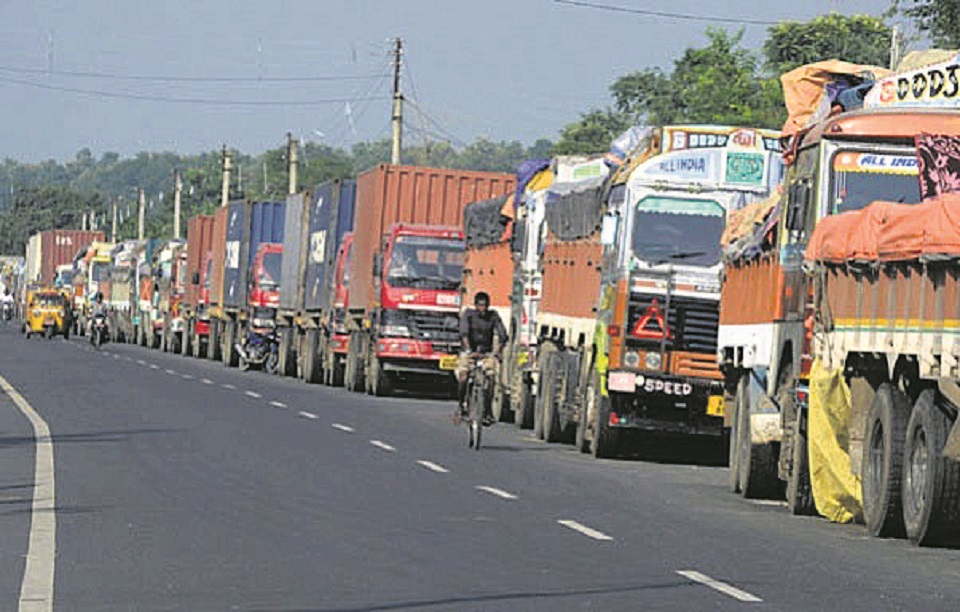
KATHMANDU, April 21: Nepal’s trade deficit crossed Rs 12.67 trillion in the first nine months of the current fiscal year, exposing a stubborn reliance on imports and weak export growth. Even goods that could be produced domestically continue to depend on foreign supply, pushing the deficit higher each year.
According to the Department of Customs, the deficit rose by 13.04 per cent compared with the same period last year. Total foreign trade expanded by 14.40 percent to Rs 17.13 trillion, but the structure remains heavily import-driven. Nepal runs a trade deficit with more than 100 countries, making it a long-term economic challenge.
Government pledges to reduce the deficit by boosting domestic production have yet to deliver results. Policies such as export subsidies and campaigns like “Made in Nepal” have failed to generate meaningful momentum in exports.
Exports showed modest improvement, rising by about 18.5 percent to Rs 222.93 billion by mid-April, up from Rs 188.19 billion last year. Soybean oil led exports at Rs 90.71 billion, followed by cardamom (Rs 10.70 billion), carpets (Rs 7.44 billion), and sunflower oil (Rs 6.94 billion). However, reliance on raw or semi-processed goods limits long-term impact. Without industrial expansion, technology transfer, and value addition, export growth will remain fragile.
Imports, meanwhile, surged to Rs 1.49 trillion, up 13.82 percent. Fuel topped the list at Rs 250 billion, followed by vegetable ghee and oil (Rs 129 billion), machinery parts (Rs 108 billion), iron and steel (Rs 105 billion), electrical equipment (Rs 99.73 billion), and vehicles (Rs 83.07 billion).
Agricultural imports also remained high, with rice alone accounting for over Rs 32.51 billion. More than 638,000 tons of paddy, rice, and related products were imported. Edible oil imports exceeded Rs 105 billion.
High imports of fuel, machinery, metals, vehicles, and electronics highlight growing consumption but weak domestic production. Import growth itself is not the problem. The real issue is the failure to build local industries and expand export capacity.
Despite policy focus on import substitution and export promotion, results remain limited. Without a clear, workable strategy that links energy, agriculture, tourism, and small industries to production and exports, the trade deficit will remain a structural burden.
People’s News Monitoring Service

Login to add a comment