







Kathmandu, April 14: The government has missed its own 15-day deadline to form a powerful asset investigation committee, raising fresh doubts about its anti-corruption drive.
On March 27, the government led by Prime Minister Balen Shah had announced the formation of a high-level committee to investigate hidden wealth, corruption, and impunity. The plan, included in its 100-point governance reform agenda, aimed to scrutinize the assets of major political leaders and senior officials. However, the deadline has passed without any progress.
The proposed committee was to include experts in law, finance, revenue, and investigation, and work in two phases. It would first examine public office holders from 2005/06 onwards, followed by those who served between 1991 and 2004/05.
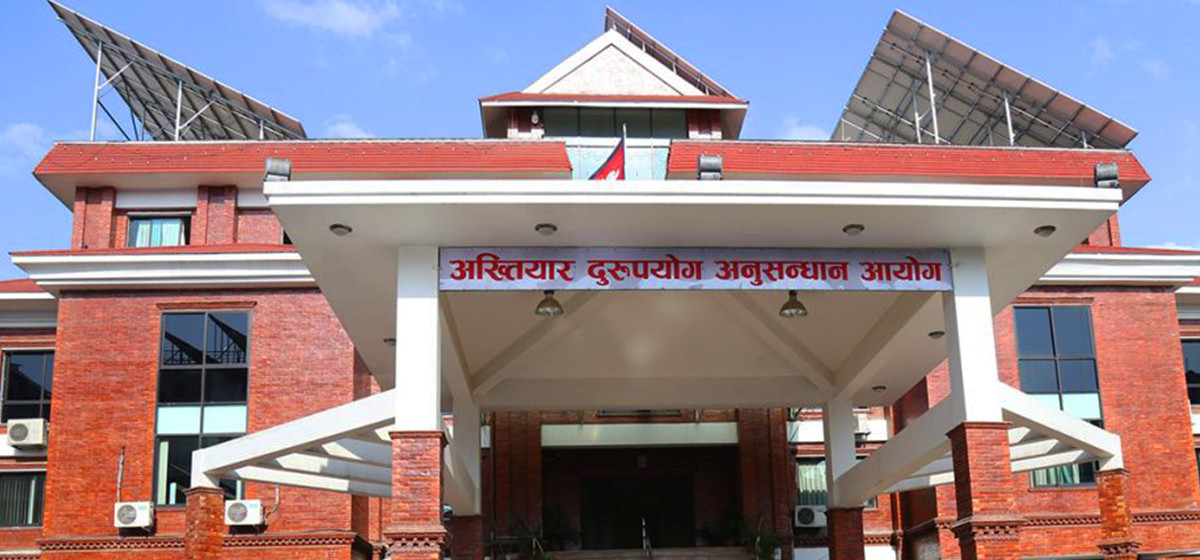
The delay comes amid long-standing concerns over weak anti-corruption mechanisms. The Commission for the Investigation of Abuse of Authority (CIAA), the country’s constitutional watchdog, continues its routine work but lacks authority to investigate policy-level corruption arising from Cabinet decisions. Analysts argue that granting such powers could deter politically motivated decisions.
Public expectations for accountability had risen during recent protests, where corruption was widely blamed for the country’s slow development. Although the previous government had pledged to reopen corruption cases, it prioritized elections, leaving that agenda largely unaddressed.
Meanwhile, Home Minister Sudan Gurung recently met CIAA Chief Commissioner Prem Kumar Rai, reportedly urging action in line with public demands and government priorities. The meeting, however, has not been officially explained, and the minister’s office has remained silent.
Such direct engagement has drawn concern. Former officials say ministers should not influence constitutional bodies, warning that the CIAA’s independence must be preserved.
The issue has gained urgency amid controversy over the Giribandhu Tea Estate land swap in Jhapa, where allegations of policy-level corruption persist. Complaints have already been filed with the CIAA, but the case remains stalled due to legal constraints.
Under existing law, the CIAA cannot investigate decisions made collectively by the Cabinet. Section 4(b) of the CIAA Act, 1991, explicitly bars such inquiries. As a result, even cases involving large-scale irregularities and political links have seen no meaningful progress.
Without legal reform, the CIAA remains unable to pursue policy-level corruption cases, including the Giribandhu controversy. Despite preliminary inquiries in the past, investigations have not moved forward due to jurisdictional limits.

Login to add a comment