







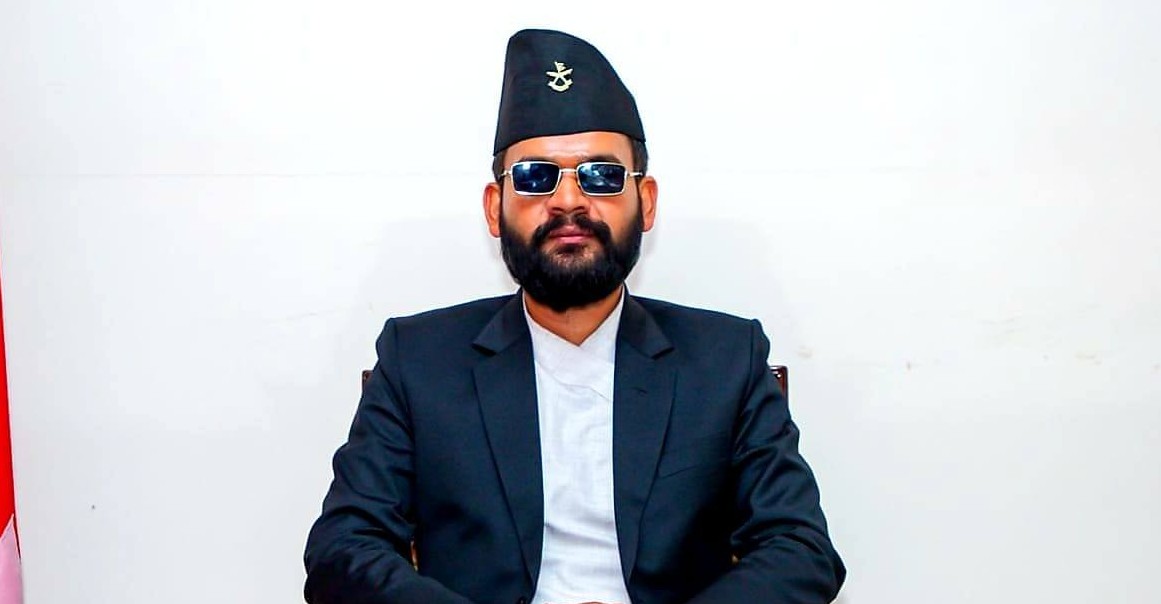
By Pushpa Raj Mainalee
A new government has been formed in Nepal under the leadership of Balendra Shah (Balen), and it is anticipated to prioritize anti-corruption and good governance, drawing on his track record as Mayor of Kathmandu. Immediate action against high-profile corruption cases, transparent investigations, and prompt accountability are likely to be early priorities. The administration is also expected to streamline public service delivery by reducing regulatory red tape, introducing time-bound service guarantees, and strengthening accountability mechanisms across civil ministries. These governance reforms aim to restore public trust and ensure that state institutions operate efficiently and transparently.
In the realm of social justice, the government is expected to push for universal access to quality healthcare by expanding free treatment in major public hospitals and reducing out-of-pocket expenses for citizens. Education reform is likely to focus on a merit-based, transparent system while curbing the commercialization of education to ensure equal opportunity. A long-pending land issue—especially concerning landless and squatter communities—will likely be addressed through a fast-tracked land commission tasked with providing tenure security and sustainable solutions. These measures reflect Balendra Shah’s emphasis on equity and his campaign promises to uplift marginalized groups.
In terms of infrastructure and the economy, the government is expected to emphasize the completion of stalled “national pride” projects by establishing stringent timelines and increasing capital expenditure—a challenge even during his mayoral tenure. Another key goal is to reduce excessive reliance on the federal government by strengthening federalism through the provision of adequate financial resources and administrative authority to provincial and local governments. With a focus on retaining youth in the country, job creation is likely to be promoted through IT hubs, agricultural modernization, and tourism development. A “Nepal First” approach to foreign policy is expected to ensure that bilateral engagements and development partnerships are pursued without compromising national sovereignty, while maintaining balanced and pragmatic relations with neighboring China and India.
However, the administration faces significant challenges. While Balendra Shah has demonstrated success at the local level, he lacks firsthand experience in leading a complex coalition government at the federal level or navigating Nepal’s intricate central bureaucracy. Improving fiscal discipline, particularly in capital expenditure, will be essential. Furthermore, managing high public expectations for rapid results on corruption and governance—while implementing long-term, sustainable reforms—will require careful balancing. Translating these ambitious goals into practical policies and maintaining political stability will be crucial to the government’s success.
The term “previous republican governments” in Nepal refers to the succession of coalition-led administrations that followed the abolition of the monarchy in 2008. Their perceived failures stem from structural, political, and governance-related challenges.
Chronic political instability has been a major issue. Nepal has had over a dozen governments since 2008, most lasting less than two years. Frequent leadership changes made long-term policy planning difficult, with ministers often prioritizing short-term political survival over sustained implementation. Coalition politics, dominated by major parties such as the Nepali Congress, CPN-UML, and the Maoist Centre, frequently resulted in deadlock, as key decisions were delayed due to internal disagreements.
Public trust was further eroded by corruption and weak accountability mechanisms. Although constitutional bodies such as the Commission for the Investigation of Abuse of Authority (CIAA) exist, enforcement has often been inconsistent. High-profile corruption cases involving politicians and officials have frequently been delayed or left unresolved, reinforcing a culture of impunity. Large-scale infrastructure projects—often labeled “national pride” projects—have suffered from cost overruns and delays, reflecting governance weaknesses and a lack of political will.
The implementation of federalism, introduced by the 2015 (2072 BS) Constitution, has also faced serious challenges. Disputes over resource allocation, jurisdiction, and capacity-building at provincial and local levels have hindered progress. Central governments have often struggled to devolve meaningful authority and financial resources, leading to inefficiencies and public frustration, particularly in health, education, and local infrastructure.
Furthermore, successive governments have failed to deliver on transformative economic promises. High youth unemployment has driven many young people to seek employment abroad. The lack of a coherent industrial policy, bureaucratic delays, and an inconsistent investment climate have discouraged both domestic and foreign investment.
These issues reflect a broader crisis of political leadership. Many leaders have been perceived as prioritizing party interests over national welfare and remaining disconnected from grassroots concerns. This disillusionment has contributed to the rise of alternative political forces such as Balendra Shah’s Rastriya Swatantra Party (RSP), whose appeal lies in offering a break from the perceived failures of traditional parties. Thus, the shortcomings of previous republican governments—political instability, corruption, weak federal implementation, and unmet economic expectations—have created space for a new, outsider-led government to emerge as a credible alternative.
The People’s Expectations from the New Government
Public expectations are extremely high following the formation of a government led by Balendra Shah. Many Nepalis see this as a historic opportunity for systemic change after years of dissatisfaction with political instability, corruption, and unfulfilled promises. These expectations can be broadly categorized as follows:
1. Strong Anti-Corruption Measures
A swift and uncompromising crackdown on corruption is the most widespread expectation. The public demands transparent investigations into high-profile cases—both past and present—and accountability regardless of political affiliation. There is also an expectation of systemic reforms, including mandatory asset declarations, real-time public tracking of procurement, and strong whistleblower protections.
2. Effective Governance and Service Delivery
Having observed Balen’s hands-on and results-oriented approach as Mayor of Kathmandu, citizens expect similar governance at the federal level. This includes prompt grievance redressed, reduced red tape, and efficient public service delivery. Digitization and simplification of services such as passports, citizenship, and land registration are highly anticipated.
3. Employment and Economic Recovery
With rising youth migration, economic revitalization is a top priority. The public expects job creation through agricultural modernization, IT sector growth, and tourism development. A stable and attractive investment environment is also crucial. Many view the completion of stalled infrastructure projects as a key benchmark for success.
4. Social Justice: Land, Health, and Education
Citizens expect improvements in healthcare, including better-equipped hospitals, free essential medicines, and reduced personal expenses. In education, there is demand for stronger public institutions and transparent scholarship systems. Addressing landlessness and squatter issues—especially in the Tarai and urban outskirts—is seen as a critical test of the government’s commitment to social justice.
5. A New Political Culture
Perhaps the most significant expectation is a transformation in political culture. People want a shift away from patronage-based, party-centric politics toward transparency, accountability, and merit-based governance. Reducing unnecessary state expenditures, ensuring transparency in appointments, and strengthening federalism through genuine decentralization are key demands.
6. Sovereign and Pragmatic Foreign Policy
The public expects a balanced foreign policy that safeguards national interests without undue influence from any external power. The “Nepal First” approach is widely supported, emphasizing respectful relations with both China and India, while ensuring that foreign aid and investments are transparently managed and effectively utilized.
The Burden of High Expectations
Because this government presents itself as a departure from past practices, public expectations are exceptionally high. Many view this as a crucial test for the success of the republican system. The key challenge for Balendra Shah’s administration will be to manage these expectations while delivering visible early results and laying the groundwork for long-term structural reforms.
Failure to meet these expectations could quickly lead to public disillusionment, given the strong hopes associated with this political transition.

Login to add a comment