







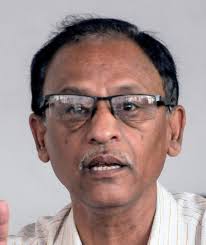
By P Kharel
Now that the American Eagle mulls landing in the Shia-land, the die is, indeed, cast. The United States in coordination with its most reliable partner in West Asia, Israel, launched an attack on Iran on February 28. In the process, the target country’s supreme leader Ayatollah Khamenei, and hundreds of others, mostly girl students, were instantly killed. In the subsequent aerial clashes, the US, Israel and several others hosting American military bases in the region have suffered deaths and other losses.
The clash might have triggered a long-war of different variants in the ensuing years and decades not only in West Asia but elsewhere too, such as hit-and-run cases together with other acts of violence.
Iranian military has sounded a defiant note, warning that it will avenge the death of the 87-year-old powerful spiritual who swayed the oil-rich Shia majority country’s political landscape since 1989. Ayatollah Khamenei succeeded Ayatollah Ruhollah Khomeini who inspired the 1979 successful revolution that overthrew the US-restored imperial rule of the Shah dynasty in 1953 after a military coup at the behest of an Anglo-American thrust.
IMPLICATIONS: One of the sweeping implications of the US-Israel attack is that aggression against another independent and sovereign country is “legitimised” for all practical purpose, whether it flouts the United Nations’ Charter and other international laws or not.
Until the 1979 Revolution, Iran’s urban areas had a booming economy but the semi-urban and inner core saw people living in squalid conditions. Fruits of development did not percolate down to the majority of Iranians while Western press trumpeted the great moderniser and reformer that the Shah as projected to be. This hurt the conservative communities and the clergies deeply. They have been avenging that encroachment and exploitation during the Shah years.
The mainstream West and its allies have defended the aggression and, in the process, legitimised in advance such interventions for others powers to gear up with, whose domino effects would encourage stronger neighbours to bully their way in imposing their will on militarily weaker and geographically vulnerable nations.
Israel’s NATO impunity and an annual American aid of about $4.5 billion together with the supply of some of the most lethal weapons in its arsenal that also houses nuclear weapons denied to Iran offer the Jewish state much support. It is also privy to highly sensitive and extensive information gathered by the American intelligence agencies and those by the latter’s European allies. Japan, Australia and South Korea also chip in.
During the Panchayat decades, Nepal stood against the Soviet military interventions in Czechoslovakia during King Mahendra’s time in 1968 and in Afghanistan during King Birendra’s reign in 1979. King Gyanendra risked his throne by insisting on China being given an observer status it sought in the South Asian Association for Regional Cooperation in November 2005.
That was against the wishes of New Delhi, whose ire cost Nepal’s royalty dear. King Gyanendra’s refusal to entertain Indian Prime Minister Manmohan Singh’s proposal to make Nepal India’s protectorate like Bhutan evaporated New Delhi’s last hopes of cashing in on the disturbances it created in Nepal through the Maoists it financed. Consequently, the country lost political stability and invited chaos in governance since 2006.
In the latest war in Iran, Latin America’s Brazil and Africa’s South Africa do not fear condemning the American aggression in Iran or kidnapping of Venezuela—something the eternal UN Security Council permanent member-in-waiting India has not been able to echo. Pakistan expressed its dissatisfaction despite the five-star treatment Trump accorded its Field Marshal Syed Asim Muni whose Prime Minister Shehbaz Sharif was invited to Trump’s inaugural ceremony in January 2025.
India’s Prime Minister Narendra Modi sent his Foreign Minster S. Shankar to wangle an invite to the inauguration. Despite waiting for three days, Shankar returned home empty-handed. The rude rebuff had stinging political implications at home. Trump’s grouse against the largest democracy’s three-time prime minister was that Modi avoided meeting presidential candidate Trump in 2024 in order not to displease the Democratic Party of incumbent President Joe Biden.
VULNERABILITY: After the September youth uprising, tagged Gen Z movement, led to Prime Minister KP Oil’s resignation in Nepal, the United States issued a statement congratulating interim Prime Minister Sushila Karki, which is not unusual. Conspicuous was its commendation of Nepal Army Chief Ashok Raj Sigdel’s handling of the youth uprising in September. By clear implication, Washington supported what the army did as effective and what it skipped doing as creditable restraint.
Iran vows vengeance, shortly summoning all its power. It has the reference of its neighbour Afghanistan’s record throughout history that showed resilience in outlasting forces considerably more powerful but its unflagging drive and determination ultimately drove the invaders out of their soil.
Nepal’s spring-well of remittances that contribute to a lion’s share of its economy, some 1.8 million of its youth works in West Asian countries, mostly engaged in low-waged jobs. Prolonged war in that region would affect their earnings, which would have adverse impact on the flow of the much-needed remittances at home.
The US-Israel attack is code-named Operation Epic Fury, but whose Fury really? The answer is somewhere between Washington’s silence and Tehran’s retaliation that offset the initiators’ plans. There is intense speculation that Iran has significantly expanded its nuclear infrastructure, with an ability to produce a series of bombs at a short notice.
Even if the American Eagle has targeted Iran, the non-committal Sino-Russian posture has disappointed Iranians while many others review their think about the two superpowers’ delay in direct support or entirely abandoning a strategically important nation next door.
Tehran challenges Washington to try Iran’s land invasion. Its strategy is to drag the US deeper into the war that could prove to be a humiliating trap a la Vietnam and Afghanistan. A protracted war will fuel the American public’s fury to epic proportions.

Login to add a comment