







By Nirmap P. Acharya
Highly uncertain since the old Government structure is shattered, though it was not robust, but existed, and the new structure is far from holding it firmly and functioning with high morale! Irony is that the people who called the protest were out of sight and had no role in the new government. Their demand was first to disband social media and control corruption, later added resignation of the pm when 19 youths died in the protest, but nothing to do with scrapping the constitution and changing regime! Unfortunately, there is no formal legal mechanism to form the Government. No mechanism to hold the Government accountable to the people and make new laws! If this government fails to hold an election, there will be a complete void in the constitutional mechanism.
Certainly, the recent upheavals in Nepal, triggered by the “Gen Z protests” and the government’s resignation, have created a critical juncture for the country’s political future. Based on the provided search results, Nepal faces several possible political directions, each with its own challenges and implications. Here’s an analysis of the potential pathways:
Possible Political Directions for Nepal
Political Direction Key Features Challenges
Continuity with Old Guard – Leadership remains with major parties (NC, UML, Maoist Center) – Elections held under interim government – Lack of genuine reform – Public distrust persists – Potential for renewed protests.
Rise of New Political Forces – Emergence of Gen-Z-led party – Leadership figures like Balen Shah – Focus on anti-corruption and reform – Organizational inexperience – Navigating existing political structures – Cohesion issues.
Substantive Institutional Reform – Overhaul of bureaucracy, police, judiciary – Anti-corruption measures – Decentralization of power – Deep-seated resistance from vested interests – Time-consuming process – Need for sustained pressure.
Democratic Backsliding or Authoritarian Turn – Military involvement in politics – Populist authoritarian figures – Restrictions on civil liberties – Further erosion of public trust – International isolation.
Constitutional Crisis and Legal Uncertainty – Challenges to dissolution of Parliament – Supreme Court deliberations – Delay in elections – Political vacuum – Policy paralysis – Prolonged instability and uncertainty
1. Continuity with the Old Guard
· The major political parties—Nepali Congress (NC), CPN-UML, and CPN (Maoist Center)—have shown reluctance to change their leadership despite the protests. Leaders like Sher Bahadur Deuba (NC), K.P. Sharma Oli (UML), and Pushpa Kamal Dahal (Maoist Center) remain in power, and these parties may still dominate the upcoming elections.
· These parties are likely to condition their participation in elections on security guarantees and investigations into the protests, which they frame as “targeted attacks”. They may also challenge the dissolution of Parliament in the Supreme Court, potentially delaying elections.
· However, this path risks further public disillusionment, as it fails to address the core demands for accountability and generational change.
2. Rise of New Political Forces
· The Gen Z protests could lead to the emergence of a new political party representing youth interests. Kathmandu Mayor Balendra Shah (Balen) is a potential leader, given his popularity among young people.
· Such a party would focus on anti-corruption measures, job creation, and institutional reform. However, it faces challenges in organizing quickly enough for elections and navigating the existing political landscape.
· If successful, this could break the cycle of revolving leadership among the old parties and bring fresh perspectives to governance.
3. Substantive Institutional Reform
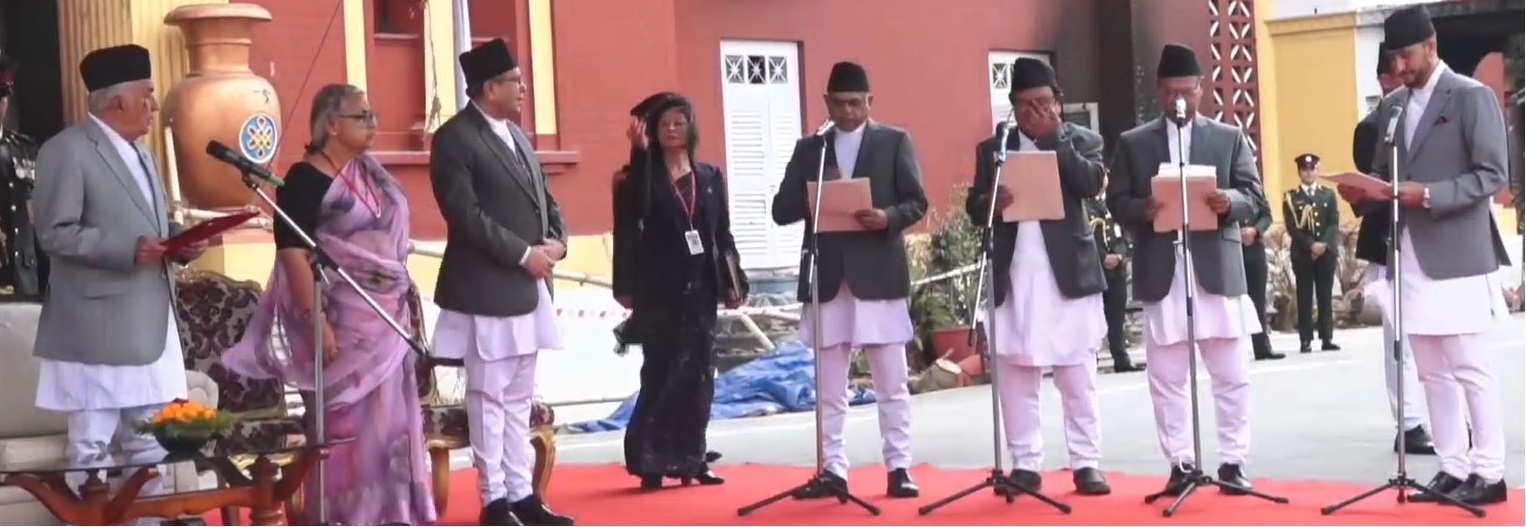
· The interim government, led by former Supreme Court Chief Justice Sushila Karki, could prioritize institutional reforms to address systemic corruption and weak state capacity. This might include overhauling the bureaucracy, police, and judiciary to ensure merit-based appointments and reduce political interference.
· Reforms could also focus on decentralizing power to provincial and local governments, as previously discussed by the Oli government regarding redundant public institutions.
· However, this path faces significant obstacles due to “path dependence” and resistance from entrenched interests.
4. Democratic Backsliding or Authoritarian Turn
· If the interim government fails to maintain stability, there is a risk of military involvement or the rise of authoritarian figures. The protests already saw the army enforcing curfews, and some speculate about infiltration by groups supporting the deposed monarchy.
· Alternatively, if the old parties return to power without reforms, they might use increased authoritarian measures, such as the social media ban that triggered the protests, to suppress dissent.
· This direction could lead to further isolation and economic decline.
5. Constitutional Crisis and Legal Uncertainty
· The dissolution of Parliament is being challenged as unconstitutional by major parties. If the Supreme Court invalidates the dissolution, it could lead to the restoration of the previous House of Representatives, creating further political confusion.
· This scenario might delay elections and prolong the transitional period, increasing the risk of further violence or instability.
Conclusion
Nepal’s future political direction will likely be determined by the interplay between the old guard’s resilience, the Gen Z movement’s ability to organize, and the interim government’s effectiveness in initiating reforms. The best-case scenario involves a peaceful transition to a more accountable and inclusive government through elections, followed by substantive institutional changes. The worst-case scenario could see prolonged instability, authoritarian regression, or even a return to violence. The international community and domestic actors must support efforts that prioritize institutional reform and youth engagement to break Nepal’s cycle of revolutions.

Login to add a comment