







 By Nirmal P. Acharya
The world has entered an eventful year. The five permanent members of the UN Security Council are currently divided between the US and the UK on one side, China and Russia on the other, with France close to the US and the UK.
Nepal is a country tucked away in the Himalayas, but it can’t seem to stay out of trouble. Recently, we have seen frequent visits by senior US officials, especially military officials. As recently as March 25, Christopher Smith, Major General of the US Pacific Command, arrived in Kathmandu.
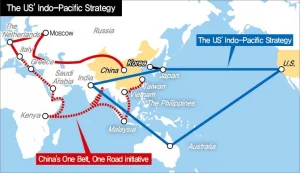
In effect, the US is trying to tie Nepal to its chariot through the MCC program. The US ambassador to Nepal has publicly stated that the MCC is part of the US Indo-Pacific strategy. The ambassador’s statement is confirmed by the fact that the general of the United States Pacific Command visits at any time.
Singaporean Prime Minister Lee Hsien Loong and his wife arrived in Guangzhou on March 27 for a 6-day visit to China. Despite the perennial presence of the US troops at Singapore’s Changi Naval Base, PM Lee has refused to take sides. His visit to China at a tense moment in the South China Sea stand-off between the US and Chinese naval and air forces shows his boldness. Let’s see what Prime Minister Lee does on this trip.
I personally do not believe that the US Indo-Pacific strategy can stop China from putting an MCC in the Himalayas. The reason is simple. In the 1950s, when the People’s Republic of China was founded, the United States assembled a 16-nation coalition to fight a war against China in North Korea, but could not defeat China and had to sign an armistice in Panmunjom, North Korea. Given the position of China’s national power today, the actual value of the Indo-Pacific strategy is highly questionable.

Login to add a comment