








By Meera Rajbhandari Amatya
Purnamaya Dyohla (name changed) of Bhaktapur, Bhelukhel, who has just turned 18, loves to bathe while playing with water. However, her desire is limited to desire.
Purnamaya is a Kirat girl, but due to the decision made by Jayasthithi Malla in Kathmandu Valley, her ancestors have been placed in the category of Newari Dalits. Dhyola is still deprived in the public stream.
Three private water tanks sell water in the Bhelukhel settlement of Bhaktapur. A jar of water costs 30 rupees and other water costs 7 rupees per bucket.
There is also a well near the settlement for drinking water. However, the people of the Dyohla caste say that the people of the supposed higher level have been forbidden to touch that well and other wells and streams of the city in the past.
The memories of upper caste people chasing the so-called Dalit and hitting them with a bamboo stick are still fresh because they entered the village by stooping and playing as children, saying “Podyat Walah! Podyat Walah! (Podey, so-called Dalit came, Podey came). The water in the public place was not within the Podey people’s reach, which has become just like the fruits in the sky for Purnamaya and the other adolescents.
There is a government tap in the middle of the settlement. However, it has been twenty years since it stopped raining. The situation of private streams is also the same. Recently, during the House of Representatives and local-level elections, water suddenly fell in the private streams at the interval of 1 day. Residents think that the era has changed, and our days have also come. However, as soon as the election was over, the tap dried up.
And the dream of many girls, including Purnamaya, to bathe while playing with water, has now been limited to the same 7 rupees bucket of water.
However, apart from the settlement, there is not much water coming to the other settlements. Yet, the Dyahla community complains that the water supply staff has arranged for a little more water in the opposite direction than in Bhelukhel.
Complaints that Kirat has been made a Dalit
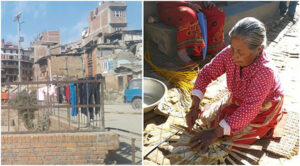
Jayasthiti Malla, who captured Bhaktapur and became king, took control of Bhaktapur (Nepal Sambat 500).
Based works he divided people into different castes in the process of social reform. He divided the four varnas into 64 castes, Brahmin, Chhetri Vaishya and Shudra. Under this, in one number, the Charmakar to 64 Dhijs, Bipna or Brahmins were arranged and their clothing, food, marriage, feasts and activities were explained. Jayasthiti Malla laid down the rules as to which caste should be cremated and where. However, the leaders of the Dyahla caste say that injustice has been done to them.
Jayasthiti Malla, while dividing caste or varna, made the so-called Dyohlas or Dyohpalas, who were called Podeys or Doms under the Shudras, into Shudras, Chandals or Dalits. Elders of the Dyohla community say that they are divided into lower castes because they are poor or economically disadvantaged.
Mailababu Dyohlaah, president of the Dyohlaah Samaj, says that his community has nothing to do with Arya Samaj or Hindu Varnashram-based Shudras.
This race, which considers itself to be of the Kirat clan, is completely nature-worshipping. The Dyolahas consider the “Digu” deity to be the “Kula deity”, which has no form and shape. They worship shapeless stones. This community is scattered in the eastern part of Bhulukhel.
Even though Jayasthiti Malla was the king, Bhardar and others did not like him, so it seems that in the name of improving the social life of Nepal, in order to consolidate his influence on the ruling power, he reduced the indigenous tribes and other communities to the Hindu Varnashram.
In the name of “Based on the division of labor”, they were divided into different castes and sub-castes and based on that, these castes were brought to a low level of economic and social status.
These Dyohla or Dyohpah:la: castes were ultimately enrolled under Shudra under Jayasthiti Malla. They were given the status of Dalit in the current language, and they could collect the tax for performing death rituals which are burning dead bodies in the burial place. They were not allowed to wear any dress and ornaments like upper-class people and they weren’t allowed to get into the city in the evening even if they enter, had to cover their bodies with net-like apparel.
Now the era has changed. The garbage of Bhaktapur city was washed away by the Hanumante river. However, the economic, social and political situation of the Dyohpahla caste, who were forced to become Shudras in the name of social reform on the banks of the Hanumante River, is similar.
Even after the entry of new-line political figures, including Maoists, who succeeded in establishing a republic by fighting a people’s war for ten years in the name of a transformed society and a new Nepal, the situation of these people is still there.
Whether it is the legal system of untouchability and non-discrimination provided in the Civil Act of 1964 or the fundamental rights contained in the articles of the revised Constitution of New Nepal 2016. Even the state has not been able to change the political behavior of these tribal tribes. The way they are treated by society is very different.
A caste protecting the temple
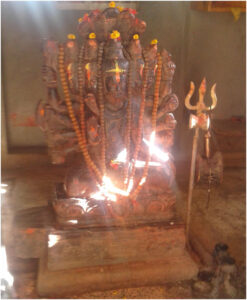
The Dyohla or Dyohpahla, who say that their ancestors lived here, were in the past guardians of temples, in charge of jewellery, keeping the environment around the temple balanced and safe.
Bisket Jatra starts in Bhaktapur at the beginning of every new year. After worshipping at the Bhairava temple near the bamboo stick with green leaves at the top (lingo) burial place in Bhelukhel, after cutting the snake, the head of the snake is taken to Tamari (Taumadhi) village where the lingo is located.
After that, the dyhalas take “Samaya Baji” (a special dish or dish including beaten rice, meat and black soybeans) and return to Bhelukhel to the place where the lingo is picked up. After that, the Bisket Jatra starts after other castes throw the Yoshin (a divine tree).
The tradition of raising pigs and ducks by the Dyohlas is also connected with the culture here. In Taleju Bhawani Temple of Bhaktapur, every year on Dashain, a pig must be offered for sacrifice.
Similarly, in some traditional activities of Taleju, Dyohlas have a role. The cane baskets woven by these Dyholas were also a must during Dashain: there is a mandatory tradition to be presented in the puja as well.
By refusing to be a Dalit, Mailababu did not fall into the equation.
Mailababu Dyohla who is himself an old worker of UML. However, he says that he had to be deprived of this year’s proportional member of parliament position because of the Dalit quota.
“There can be no higher position than one’s self-respect and identity,” says Maila Babu, who rejected the Dalit quota.
At present, international human rights declarations and conventions have arranged for the respect and protection of the dignity, equality and rights of all mankind.
Even though there are strong constitutional provisions in Nepal that give priority based on ethnic diversity, culture and religion, the state has not been able to ensure the rights accordingly because the people of Bhelukhel are tribal.
As these Dyohalas have been traditionally present in the pujas, pilgrimages and festivals in every Shaktipeeth and temple in the valley including Bhaktapur, it is necessary to curb their right to live to preserve their identity and existence and to preserve the diverse culture of Nepal. Because, so far, they have not received the land ownership certificate.
When will the day come when an adolescent girl like Purnamaya Dyohla won’t have to pay 7 rupees for a bucket of water and will be able to take a bath till she dies?
The youth in the fight for identity
Due to discrimination and exclusion by the state in the past, access to education has been challenged, so the Dyohla community is still being deprived of the facilities and respect it gets from the state and society.
Most of the youths are still illiterate. 19-year-old Naveen Dyohla has now passed 12th standard because his brother admitted him to Adarsh Vidya Mandir by hiding his surname Dyohla and keeping it as a Nepali surname to educate himself. He is proud of being able to read.
Unlike today’s youth, most of Naveen’s time is now spent searching for the history, birthplace and identity of his generation. However, now Naveen is not satisfied with the fact that in the past his brother hid his caste just to study. He is not satisfied that the state has kept the Dyolas in the Dalit quota.

Login to add a comment