








By Meera Rajbhandari Amatya
This year, India exhibited the concept of democracy, socialism, and inclusive politics to the world by appointing Draupadi Murmu, a woman leader of the indigenous community, as the head of state at the highest level of political leadership. Draupadi Murmu is the first woman to be decorated as the head of a tribal nation in India.
Indian Prime Minister Narendra Modi and former US President Donald Trump are at the peak of discussion in Asia and the world. Their working style has been discussed in the world. It should be considered a coincidence that when Trump was running for the post of President again, Kamala Harris, an American citizen of Indian origin, entered the election field for the post of Vice President and finally she was elected to the post as pride and honour for the women of the entire world.
9 August is a special day for indigenous people of the world. The 28th World Indigenous People’s Day was celebrated around the world with the main slogan, “The role of indigenous women in the preservation and transmission of traditional knowledge.” In addition, from the year 2022 to 2032, the campaign is also celebrated as the decade of indigenous languages. 40 per cent of the world’s 7,000 languages are in danger. The reason is that most of those languages are not taught at the school level and are not used in the public sector or official, or even if they are, used very little.
The year 2022 is declared by the United Nations as the “Indigenous Language Decade” for the advocacy of indigenous culture, it will be established as a milestone for the campaign to preserve indigenous languages. After ensuring linguistic rights in the Constitution of Nepal 2015, the local languages of most districts have been included in the curriculum, after that, the language of the indigenous tribes and the culture and history associated with it have gradually been promoted and developed.
Shankar Limbu, Secretary of Lawyers’ Association of Human Rights of Nepalese Indigenous People (LAHURNIP), who is advocating for the rights of indigenous nationalities for a long time, said that this slogan should be taken as a campaign for the preservation and transmission of civilization of the indigenous nation.
It makes sense that this year’s slogan of the United Nations addresses the indigenous women should be defined as practitioners, protectors, and promoters of civilization, especially because women have been protecting the traditional skills and knowledge of the indigenous people, in this way they can be symbolized the main pillar of civilization.
Language is vital. If civilization is to be preserved, language must be preserved. Language is the medium to identify the country’s culture, history, geography, and series of human development. In that sense, the “Indigenous Language Decade” addressed by the slogan of the United Nations this year will be a milestone to understand the identity of the new generation of indigenous nationalities.
The role of indigenous women in the preservation and transmission of traditional knowledge:
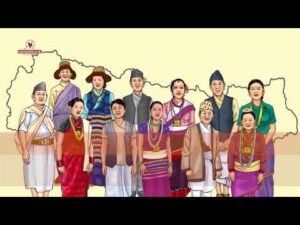
Traditional knowledge is a body that accumulates knowledge, practices and representations created and developed by humans with a history of interaction and expansion with the natural environment. Traditional knowledge, indigenous knowledge and local knowledge generally refer to knowledge systems embedded in the cultural traditions of regional, tribal, or local communities. The World Intellectual Property Organization and the United Nations have claimed that both traditional knowledge and traditional cultural expressions are indigenous knowledge. The traditional knowledge of tribal tribes includes the necessary techniques for traditional agriculture and hunting, knowledge of plants, medicine, crafts, water, and air. Such knowledge has been traditionally used for the survival and sustenance of indigenous life and livelihood.
Indigenous women are the backbone of indigenous communities. They have a special role in the preservation and transmission or transmission of traditional ancestral or traditional knowledge of indigenous people. They have an integral collective and community role as protectors, caretakers and guardians of natural resources and traditional scientific knowledge.
Many indigenous women are leading in the defense of tribal lands and their special areas and are advocating for the collective rights of tribals globally. But the precious campaign of indigenous women as defenders of their community’s human rights has not been appreciated. Still, they are being discriminated against based on gender, class, caste, and socio-economic status. Poverty, illiteracy, very low rate of literacy, low level of health, lack of access to basic sanitation, limited access to credit and employment, limited participation in political leadership, domestic and sexual violence and the right to self-determination, self-governance and right to ancestral land etc. There are social, economic, and political differences and discriminations that have been going on since tradition.
However, indigenous women of some communities have played a small but important role in the decision-making process in communal and national areas. They are engaged in a campaign to protect their land and the declining biological diversity.
This year’s slogan of World Indigenous Day is “Let’s reclaim the special role of these heroines” under the theme of the role of indigenous women in the preservation and transmission of traditional indigenous knowledge.
World campaign on human rights or self-rights or natural rights of indigenous people:
In 1923, on behalf of the tribal leadership, Deskaheh went to Geneva to advocate for the human rights of indigenous peoples at the United Nations. He was the chief leader of the Haudenosaunee tribal nations or groups in North America.
Haudenosaunee, also known as People of Long House, means a group of communities with their own culture, religion, tradition, and philosophy of living way of life. Which is a group of 6 tribal nations namely Mohawk, Oneida, Onondaga, Cayuga, Seneca, and Tuscarora. He went to the UN to advocate for the right of the indigenous peoples or their people to live under human rights, to protect the right of the people to live in their own traditional law, their own land, and their own faith, but he was not allowed to speak there, and he was back to his home country in 1925.
Although he did not get to speak for the rights of his community in the UN or to express his opinion, the generation after him continued to favour his vision of the right to live of the indigenous peoples.
A religious leader of the Maori religion for the land rights of the indigenous nations, W. Ratan had decided to travel to London to address his demands to establish his rights or ownership over the land against the violation of the Treaty of Waitangi with the ancestral land owned by the Maori community.
His demand was not addressed there and later he sent his delegation to the UN in 1925 but that demand was not addressed there either.
With time, the UN has set up various institutions to implement policies and policies on various topics to curb the issues of the world’s indigenous peoples’ livelihoods, culture, access to water, land, and forests, as well as political, economic and access towards communication.
Advocacy campaign for rights of the indigenous nation in Nepal:
In the past, many revolutionary writers such as Siddhidas Mahaju (Amatya), Bir Nemwang and many other revolutionary writers were not only victims of prison but also displaced from the country for the assurance of human rights including linguistic and cultural rights of indigenous nationalities, are still preserved in the pages of history.
It was also a barbaric era during the Rana regime, when the mother, who could not speak Khas Nepali, was forbidden to speak “Nepal Bhasa” even during her last meeting with the hanged martyr Gangalal.
Nepal Bhasa is not only a language, but also the language of the original Nepali, which was used to register Nepal in the UN, and which has its own, script, date, time, pala, and the original Nepalese language was suppressed for centuries by the former rulers. There is plenty of room for speculation.
Identification, use and transliteration of indigenous words in campaigns:
On Monday, 2 Saun 2018, Narad Muni Thulung wrote an article in the Gorkhapatra daily, “Nepal and Indigenous Kirant”, a written debate on the indigenous issues of Nepal started. The movements have continued until now to establish the identity and natural human rights of the tribals. The Nepal Foundation for Development of Indigenous Nationalities (NFDIN), and the Indigenous Nationalities Commission have also been established after the introduction of the 2015 constitution.
NFDIN is carrying out a campaign to preserve the culture, art, heritage, language, history, and other fields of indigenous nationalities. Similarly, from the private sector, there is the Federation of Nepalese Indigenous Nationalities Journalists and eight linguistic communities affiliated with it, Rai Gurung, Tamang, Newa: Magar, etc., and organizations under various indigenous nationalities. Currently, the organizations associated with the indigenous nationalities of Nepal, which are spread all over the world, are trying to make the identity of the indigenous nationalities of Nepal known even in foreign lands. Even after hard work and fighting with various challenges in a foreign land, the indigenous communities belonging to Nepal are working for the pride of Nepal’s independence, sovereignty, self-respect, nationality and nationalism to make known to the international world.
In the end, “The role of indigenous women in the preservation and transmission of traditional knowledge” – the slogan addressed by the United Nations must be recognized as special “heroines”. This year’s World Indigenous People’s Day with the slogan, “Decade of Indigenous language”, best wishes to all people, including the indigenous peoples of the world.
amatyameera@gmail.com

Login to add a comment