






Interview
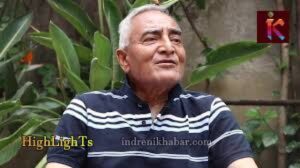 We chose to interview political analyst and senior journalist turned politician Shrish S. Rana on the present chaotic political situation in the country. Excerpts of the interview as given below:
Question: It seems, all the organs considered to be important for functioning a nation have already been spoiled. The Nepal Army, the last hope among the people for rescuing the nation from a chaotic stage, has remained a silent spectator. How have you analysed the country’s situation?
Answer: We see partisan appointments in the U.S. also. But such appointments are tempered with the public need to seem least partisan. After all, the president or the governor or the senates or legislature in the U.S. are partisan and appointments cannot but be for partisan good to. But the need to appear non-partisan there is sold by the appointees’ public performance, resume and other credentials. The importance given to such traits to justify and seek support from all sides of the political spectrum assures the public of fair play and lends credence to public appointments in a manner befitting the office.
The reason this does not happen here is that our political behaviour is different. It is presumed that public opinion must be dominated by political organizations. The organization must be all-encompassing in order to monopolize public opinion. A political enterprise is launched by a few who draft the many under a leadership which nurses and nurtures support within the party through the distribution of spoils that must be gathered at any cost for the very survival of the party.
The predominance of party supporters in all organs of society makes it possible and fosters the monopoly. That this is at the cost of the system is ignored as it benefits the party, the ruling wing or the ruler. The system is thus a stepping stone. Building it for all is much less a priority than using it for the benefit of the few.
It has been quite a while since analysts predicted that the nature and style of the Indian system would gradually change from the British model it attempted to copy simply because the mass culture that must ultimately prove decisive through participation in a democracy overwhelms the Westminster model idealized. In the Nepali case, practice is to emulate the art of possibilities evinced as democracy in India. After all, at one phase in Indian democracy, a president of the republic could utter statements tantamount to claim that India was Indira and Indira was India.
It was during Indira Gandhi’s time, mind you, that the notion of ‘committed bureaucracy’ was being sold to a civil service nurtured on principles of independence in the administration. The very first institutions to be touched upon on the advent of multi-party-ism in the 1990s were the appointment of judges, police and civil service, corporate entities and the Tribhuvan University. In case the end result was not seen, please refer to the contents of my resignation letter to the government from the office of Gorkhapatra Corporation Chairman and General Manager where I had said that the situation fostered would adversely affect professional management. That was in 1991. By the time of 2006, we had this strange phenomenon of police chiefs rolling one after the other to jail for corruption which was only to reflect upon the professional management of law and security ultimately propelling the Maoist movement that displaced the 1990 system and hastened the continued partisanization of state institutions.
Your question on the army is deliberately left least dealt with here. I have for long been saying that a professionally managed army monitors national security and must choose its own space and moment in assessing when it should act. Its relations under the current system with the Presidency is at best tenuous while, under the 1990 constitution traditional, modern and constitutional prescriptions were very conveniently adjustable. This is a national security perspective, indeed, one of the reasons why a return to the 1990 constitution is urgent.
Q. Now the Court has also shown its interests in Bhagnandapolitics. Isn’t it a syndrome of failure of the system?
A. In a country in which foreign analysts claim a judicial decision to have ‘saved’ the constitution, system collapse isn’t just indicated by the Judiciary recommending to a sitting, an elected legislature (sovereign) the appointment of a particular individual as prime minister by a particular deadline. Horse trading is a normal trait of a system gone awry. Nobody is saying it, but the media is silent on how a private conversation between the prime minister and the chief justice on the trade should hit the headlines. Another indication of system collapse, especially when a fresh government appointee should resign on that account. Is Deuba saying the trade actually occurred?
Q. In his Dasain greetings the former King has clearly analysed the present anomalies in the country. Finally, he has stated that a monarchy without democracy and a democracy without monarchy seems irrelevant.
The King may be right but how can it be possible to restore the erstwhile removed institution?
A. Much of my time as a minister of state for communication and information was spent explaining the king’s action in using Article 27, of the 1990 constitution to take over government asking for a three-year reprieve to conduct the national elections. Why things were not adequately explained earlier is beyond me but much of the opposition against the king embryoid against the background of the constitution not prescribing such an action by the king.
I have explained time and again that an elected prime minister, Sher Bahadur Deuba, was within his constitutional rights to ask the king to dissolve the house for elections. His demands for reappointment to the prime minister’s post after he had exceeded the time limit for the elections to have taken place was not constitutional. In the event of an elected house being dissolved and promised elections aborted, the use of Article 127 by the king to salvage the constitution would have been facilitated had the political parties represented in the dissolved parliament concurred on who should head the government. A democratic constitution is always threatened when elections do not take place. It is even more threatened when disagreement among the constituent political parties impede elections. It is not for nothing that the protector of the constitution and national security should have seen fit to use Article 27 to attempt to secure elections. It is in why he was opposed and impeded in this holy task by the political parties that the mystery of Nepali politics lies.
The problem is that partisan politics where no political party benefitted from the king conducting elections opposed the king’s measure and failed the effort. The blame on the king is on the failure and not on the constitutionality of his behaviour. Since jurists and the media and civil society and educators here are all partisan, the cabal prevailed in condemning the king and failing him. The ‘foreign’ role in this is now an admitted phenomenon. Lost in the process is the constitutionality of the king’s actions. Since the hype that the king had exceeded his constitutional powers was allowed to stream roll with nary a word on constitutionalism our wise guys failed the king and the country. The king is guilty of one thing. He failed. He should not have imperilled the country by failing. Those who did not support him failed the constitution. This is a constitutional fact. But we are still told the king did wrong in taking over.
This has resulted in a constitutional quirk. We are all aware that the constitution is not working and cannot work since the original crime, that done to the 1990 constitution, put the politician above the constitution. So much is now told of the impudence with which secularism, confederation and republicanism was imposed in the country through the use of an elected constituent assembly which even extended its own constitutional limits and, through no amendments, allowed a chief justice to head and form an election government. They are all indicators that our politicians place themselves above the constitution and such a system is inimical to democracy and constitutionalism. These are well recognised and much talked about facts. Correcting this would mean scrapping the constitution outright since it manifests the unconstitutional. Scrapping the constitution would mean the reactivation of the 1990 constitution since a constitutional vacuum in the country is itself unconstitutional.
I have been saying that such a regression was bound to occur and our politicians should accept the mistakes brought about by the impudence wheresoever’s the promptings came from and whatsoever the intents. A massive public apology is overly due from the political sector to the lay public for overstepping the limits of constitutionalism.
Or, else, the public must come to the streets and defy partisan controls to demand this apology and scrap the constitution. A well-sustained movement to reinstate and activate the 1990 constitution on the streets should demand that the king take up its constitutional role as defined by the 1990 constitution and move to protect it. It is only then that a change can occur. It should occur on grounds of constitutionalism until which time we are operating at the whims of politicians who can and do their will over a constitution that now has to be guided by a supreme court whose justices are part of government by decision.
That the king saw what he did of the country as stipulated in the Dasain message is to no one’s surprise. Every Nepali with eyes and common sense sees it and his Dasain observations are in tune with the prevailing public desperation. How he shall proceed having said this is his business and the business of every Nepali who agrees with him. I am sure he is aware of his previous failures and their results for him to achieve much-needed success. That he will do so constitutionally is also borne by the fact that, despite many temptations and exhortations, the king refused to waiver from his obligation to the constitution despite many public and private exhortations but instead chose to vacate the throne instead. Now that the people ask for his reinstatement. it is they who must facilitate his constitutional enthronement.
Q. Indian ambassador Ranjit Rae, who is known to be one among the actors of the 12-point Delhi agreement, in his book, “Kathmandu Dilemma” has tried to define Nepal as not a fully sovereign country. Furthermore, he has expressed surprise at why Nepal didn’t follow the Bhutan model. Today, those leaders who had signed the Delhi agreement are either in power or in opposition but they have not declined such controversial remarks by an Indian diplomat. Are the Nepali leaders preparing grounds for the Bhutanisation of Nepal?
A. The extremities of non-productive republican politics has not only made public the extent of incapacitation in the political sector welcomed by our politicians under the current dispensation. Among the other silver lining is that it rolled back the curtains on the extents of Indian designs and the machinations therefrom borne by this country. Such an uncovering allowed the layperson to make a comparison between the activities of our political parties under the so-called democratic rule and the performance of the country under the monarchies. Moreover, the public is now even better informed about partisan activities before the panchayat and after it in order to compare national performance.
Ranjit Rae is not the only Indian diplomat who would prefer Nepal to be subservient to Indian interests. His conduct in Nepal was accordingly. He admits that he was facilitated in his task by none other than Nepalis who sought his consultations throughout their functioning. I am sure that is not done by Bhutan’s king, prime minister and ministers who I am told are very vigil about Indian and foreign dabbling in their affairs. This Dasain I was impressed by a former Bhutan Prime Minister’s Dasain message thanking his ‘Shri Pancha Maharaj Dhiraj’ for his sagacious leadership in his kingdom. That he spoke in Nepali on an occasion when the Bhutan king shared Dasain Tika with his populace does carry a message, I presume, also for the Indians.
The fact is that anti-Indian criticism was not encouraged under a monarchy in Nepal that held ties with India precious in spite of Indian ambitions of the nature Ranjit Rae advocates. I contested national elections (1994?) on a platform that stated that the Congress and the Left together were baring mother Nepal at the behest of foreign forces (a little over three hundred votes). Up north in Lapsfedi I was approached by a group of school teachers asking me how I could couple the left with the Nepali Congress who, to them as always, was ‘pro-Indian. I gave them the Mahakali example and, moreover, pointed out that the democratic movement took place to sabotage the nationalist confrontation of King Birendra on policies relevant to the assertion of a sovereign state. The Mahakali imbroglio since then makes evident that the communists can no longer espouse its traditional holier than thou standpoint over Congress. It is no wonder that so much is expressed currently at recent statements by the fringe left on the monarchy and the constitution. Particularly the pro-monarchy hopefuls are a bit too exuberant perhaps. It has taken this left so long to see a utilitarian monarchy. The fact is that people not unlike Ranjit Rae are aware that Nepali politicians organize with the Indian patronship and wouldn’t mind a Bhutan-type relationship with India. Some decades earlier Nepali politicians, one learns, were bargaining for the number of seats in the Indian parliament. The Indian role in the sabotage of a Nepali democracy is only now being reviewed in very high Indian circles. Perhaps it should also be reviewed in the context of India’s policy towards its neighbours. How Inia is denying itself an engine role in integrated South Asian resurgence and how Nepali politics has aided this at Indian behest perhaps is a story best told elsewhere. Rae cannot be faulted for his conclusions on these, he would have done well to spell out the faults in the system that the Delhi agreement made possible. We are amidst change and it is for Nepal also to re-evolve into a fully sovereign state and adjust accordingly.

Login to add a comment