







By Our Reporter
Political stability was supposed to mark a new beginning for Nepal. After years of unstable coalitions, frequent changes of government, and policy paralysis, voters handed the current government a commanding mandate. The expectation was simple: a strong government would finally deliver what weak governments could not. Laws would move faster, reforms would gather pace, and Parliament would become a productive institution rather than a battleground for political point scoring.
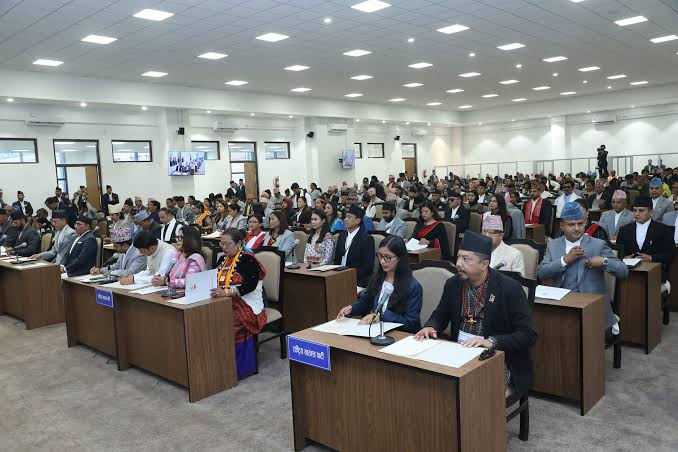
That promise is beginning to fade. Instead of debating major reforms, Parliament has increasingly found itself trapped in endless exchanges between the ruling side and the opposition. Sessions that should be devoted to scrutinizing bills and refining public policy are often dominated by procedural disputes, political accusations, and controversial statements. The problem is not merely political behavior. It is structural. Parliament cannot legislate when it has too little legislation to consider.
The Constitution envisions Parliament as the country’s supreme lawmaking institution. But Parliament cannot manufacture its own legislative agenda. In Nepal’s parliamentary system, the executive carries the primary responsibility of preparing bills, registering them in the House, and steering them through committee deliberations and final approval. While lawmakers can introduce certain private members’ bills, the overwhelming majority of legislation that shapes governance comes from the government.
A legislature without bills is like a courtroom without cases. It may remain open, but it cannot perform its core function. The irony is impossible to ignore. Previous governments often defended their slow legislative record by pointing to coalition politics. Every bill required lengthy negotiations among coalition partners. Internal disagreements delayed decisions before proposals even reached Parliament. Opposition parties also possessed greater leverage to stall legislation.
Those explanations no longer carry the same weight. The present government enjoys a comfortable majority. It does not need to bargain for every vote. It has the political numbers to introduce reforms, amend outdated laws, and modernize the country’s legal framework. If legislative business remains limited despite those advantages, responsibility naturally falls on the government itself.
Recent parliamentary proceedings reflect this imbalance. Instead of lengthy committee reviews of new legislation, public attention has repeatedly shifted to heated exchanges, controversial remarks by ministers and lawmakers, procedural disruptions, and partisan confrontation. These moments generate headlines, but they produce little public value. Citizens did not elect representatives to exchange insults. They elected them to write better laws.
The absence of a steady legislative pipeline also weakens accountability. Ministers are expected to defend proposed laws, explain policy choices, answer questions from lawmakers, and justify government priorities. When few major bills reach Parliament, opportunities for meaningful scrutiny decline. Ministers appear less frequently, policy debates become shallower, and Parliament gradually shifts from being a lawmaking institution to becoming a stage for political theatre.
A government’s success is measured not by how long it survives but by what it accomplishes. Every major reform, whether in education, health, public administration, investment, digital governance, or economic development, eventually requires legal backing. Delays in legislation delay implementation. Ministries cannot fully execute ambitious policies if the legal framework remains incomplete. Investors seek regulatory certainty. Citizens expect better services. Both depend on timely lawmaking.
Lawmakers also share responsibility. Members of Parliament should study bills, propose amendments, raise constituency concerns, and strengthen legislation through informed debate. Parliament functions best when representatives actively participate in committee work rather than limiting themselves to speeches during plenary sessions. However, lawmakers can only examine legislation that actually reaches them. Without a regular flow of government bills, even the most committed parliamentarians have fewer opportunities to contribute meaningfully.
The solution is neither complicated nor politically impossible. The government needs a clear legislative calendar covering every parliamentary session. Ministries should complete drafting work before sessions begin instead of rushing bills at the last minute. Parliamentary committees should receive proposals early enough for thorough examination. Ministers, including the Prime Minister, should maintain regular attendance in the House to answer questions and defend government initiatives. Legislative planning should become a central measure of government performance rather than an afterthought.
Equally important, both the ruling party and the opposition should recognize that disagreement is an essential part of democracy, but obstruction cannot become Parliament’s defining feature. Robust debate over substantive legislation strengthens democratic institutions. Endless political confrontation in the absence of legislative work weakens them.
Nepal finally has what many previous governments lacked: political stability and a strong parliamentary majority. Those advantages should translate into better governance, not quieter legislative chambers. Every day Parliament sits without meaningful business is a lost opportunity to reform institutions, improve public services, and strengthen the economy.
The people did not vote for stability simply to reduce the frequency of government changes. They voted for results. Those results begin with laws, and laws begin in Parliament. The government must therefore restore Parliament’s purpose by providing it with a steady stream of meaningful legislative business. Only then can the country’s most important democratic institution fulfill the role the Constitution intended and the public expects.

Login to add a comment