







By Our Reporter
The physical assault on a doctor at Narayani Hospital in Birgunj a few weeks ago has once again exposed a dangerous fault line in Nepal’s healthcare system. On one side are doctors demanding safety and dignity at work. On the other are patients and their families who often feel ignored, frustrated, and left without answers when treatment fails. Both concerns are real. Neither can be dismissed.
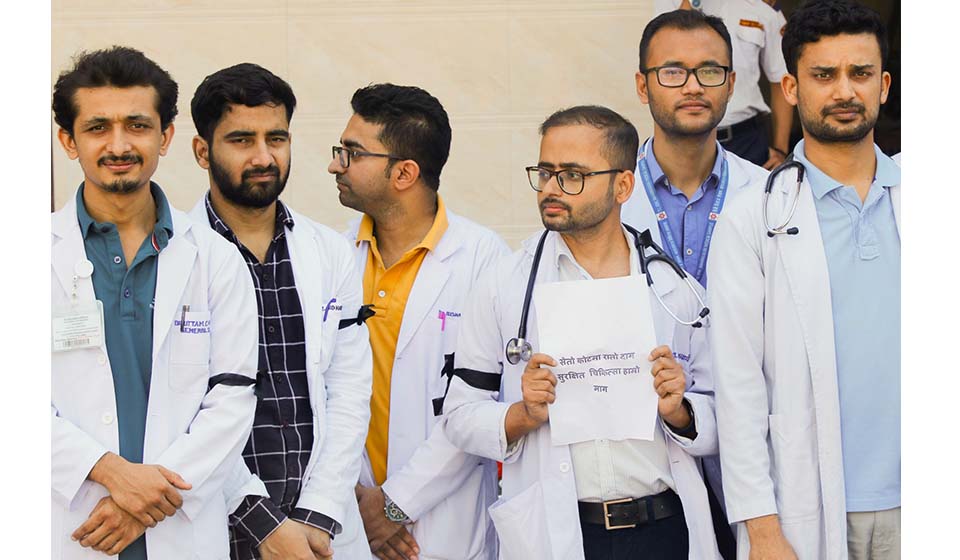
The attack on Dr. Pramod Ram following the death of a 45-year-old patient was a criminal act that deserves swift legal action. No doctor should fear physical violence while treating patients. Hospitals must remain places of healing, not battlegrounds where grief turns into assault. If attacks on healthcare workers continue unchecked, Nepal risks creating an environment where skilled professionals choose to leave the country rather than practice under constant threat.
Yet protecting doctors alone will not solve the problem. Violence is often the final outcome of a deeper crisis built on mistrust, weak accountability, poor communication, and slow justice. Unless these underlying issues are addressed, similar incidents will continue to surface.
The government has already enacted the Health Workers and Health Institutions Security Act to protect medical professionals. The law exists, but enforcement has remained inconsistent. Every attack on doctors should trigger immediate arrests, speedy investigations, and meaningful punishment. A law that remains on paper offers little protection. The state must demonstrate that violence against healthcare workers carries serious consequences.
Patients also deserve confidence that complaints of medical negligence will be examined fairly, independently, and without institutional bias. This is where the Nepal Medical Council faces an equally important responsibility. Every year, dozens of complaints reach the council, but only a handful result in disciplinary action. Whether this reflects a lack of negligence or weaknesses in the investigation process, public perception has become a problem. Many families believe the system protects doctors more than patients.
That perception is dangerous because when people lose faith in formal justice, they are more likely to seek justice through anger. The Medical Council should therefore strengthen public confidence by ensuring investigations are transparent, timely, and evidence based. Every complaint deserves a clear explanation. Families should know why a doctor is cleared or why disciplinary action is taken. Justice must not only be delivered but also be seen to be delivered.
Hospitals also have responsibilities that extend beyond medical treatment. Many disputes begin with poor communication rather than poor medicine. Families often complain that they receive little information about a patient’s condition, possible risks, or treatment options. When a patient suddenly dies, unanswered questions quickly become suspicion.
Proper counselling can reduce that mistrust. Hospitals should establish dedicated communication teams to keep families informed throughout treatment, especially in emergency and critical care cases. Honest conversations about risks, complications, and realistic outcomes cannot prevent every tragedy, but they can prevent misunderstandings from escalating into violence.
Government hospitals, in particular, must also confront longstanding concerns over patient care. Many Nepalis believe they receive different treatment depending on whether they visit a public hospital or a private clinic. Whether fully accurate or not, such perceptions weaken trust in the public healthcare system. Improving service quality, reducing waiting times, strengthening hospital management, and enforcing professional standards are just as important as expanding health infrastructure.
Doctors, too, must recognize that public trust is earned every day through professionalism, empathy, and communication. Medical expertise alone is no longer enough. Listening to patients, explaining treatment decisions, and treating every individual with dignity are now essential parts of quality healthcare.
At the same time, the ongoing protests by doctors have highlighted another difficult question. While their demand for security is legitimate, suspending outpatient services has placed thousands of patients in distress. Cancer treatments have been delayed. Patients with chronic illnesses have missed scheduled consultations. Families who travelled long distances have returned home without care. Emergency services may have continued, but the disruption has still imposed a heavy burden on vulnerable people.
Professional protests should never unintentionally punish those who are themselves victims of a struggling healthcare system. The government should use this moment to bring together doctors, hospital administrators, patient rights groups, the Nepal Medical Council, and security agencies to develop lasting reforms. Hospitals need stronger security protocols. Complaints must be investigated by independent and credible mechanisms. Public hospitals require better management and patient communication. Medical professionals deserve protection, while patients deserve transparency and accountability.
This debate should never become a choice between doctors and patients. Both stand on the same side of the healthcare system. A frightened doctor cannot provide the best care. A patient who has lost faith in the system cannot fully trust treatment. Nepal needs policies that protect both.
Violence has no place in hospitals. Neither does negligence. The country’s healthcare system will regain public confidence only when doctors can work without fear, patients receive respectful and quality care, and every allegation of wrongdoing is handled quickly, fairly, and transparently. That balance, rather than confrontation, is the only path toward a stronger and more trusted health system.

Login to add a comment