







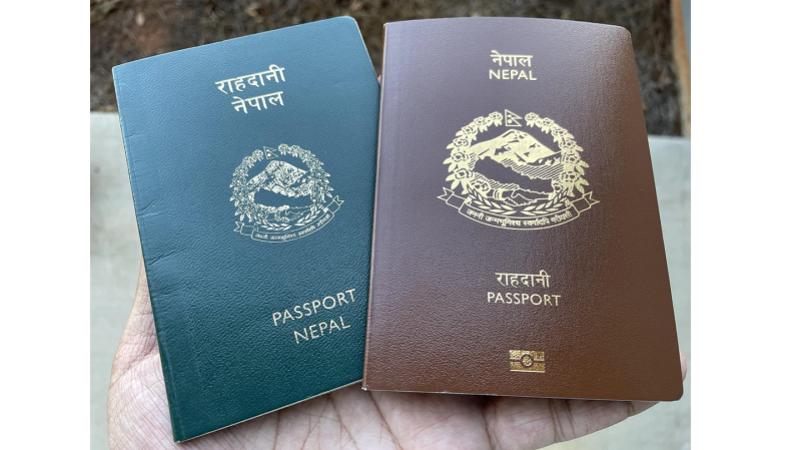
KATHMANDU, June 30: Nepal could face a passport shortage within two weeks as uncertainty continues over the printing of new passport booklets following a corruption case linked to the procurement process.
The government currently has about 50,000 passport booklets in stock. While daily demand is around 6,000 passports, authorities are issuing only 3,000 to 4,000 each day. At that rate, the remaining stock is expected to last only about two weeks.
The government has yet to explain how passport services will continue once the current supply is exhausted. Officials at the Department of Passports, the Ministry of Foreign Affairs and the Prime Minister’s Office have declined to comment publicly.
The uncertainty began after the Commission for the Investigation of Abuse of Authority (CIAA) filed corruption charges against 18 people, including Department of Passports Director General Tirtha Raj Aryal, over alleged irregularities in passport procurement.
Prime Minister Balen Shah’s team has instructed officials to cancel the passport printing contract, but the department has not started the process. The current stock of around 700,000 passport booklets procured during the Sushila Karki government is expected to be exhausted by the end of the Nepali month of Asar.
A Foreign Ministry source said government employees are unwilling to take responsibility for the passport project because of fears of legal consequences.
Although the CIAA has filed a corruption case, it has not sought cancellation of the contract. German firms Muhlbauer and Veridos, which won the tender, have already installed the equipment needed for passport production. The German Embassy has informally warned that cancelling the contract could lead to legal action and compensation claims.
The passport contract is also under review at the Supreme Court, making officials even more reluctant to act.
The CIAA alleges that tender conditions were changed to allow the purchase of lower quality passport booklets, causing losses to the state. Officials now fear approving payments to the contractor, worried they could face prosecution if they authorise payment for booklets that investigators have described as substandard.
“If payments are withheld, the contractor may stop printing passports,” a department official said.
If the current contract is cancelled or suspended, the government may have to return to French company IDEMIA, which previously supplied passports at a higher price. That could increase the cost of each passport by about US$1.50 to US$2, based on current exchange rates.
People’s News Monitoring Service

Login to add a comment